A Game About Fixing Old Phones and Consoles: A Small Studio 12 Years Into Indie Games Sold 100,000 Copies on Day One and Recouped Its Budget in 12 Hours
Mandragora is a very small indie game studio founded in Moscow by programmer Evgeny Kisterev and illustrator Dmitry Pazyuk, later relocated to Armenia, with a remote team spread around the world. Their first mobile game made $500; their second asked for $15,000 on a crowdfunding site and raised $100. They kept going, making the survival game Skyhill and the cozy apocalypse game I Am Future. On August 6, 2026, their new game ReStory, published by tinyBuild, launched on Steam: players run an electronics repair shop in mid-2000s Tokyo, taking apart, cleaning, soldering and reassembling old phones, handheld consoles, digital pets and music players. Priced at $19.99, it had about 700,000 wishlists before launch. According to figures shared by tinyBuild's CEO, the game recouped its development budget within 12 hours, passed $1 million in gross sales and sold 100,000 copies in about 24 hours; it sold 300,000 copies in a week and passed 500,000 by mid-September, with about 95% positive Steam reviews.
Process
Do you still remember your very first flip phone? Or that handheld console whose screen you cracked after dropping it? Or that virtual pet that starved to death more times than you'd care to admit?
Most of them have long been tucked away deep in storage drawers, or thrown out altogether.
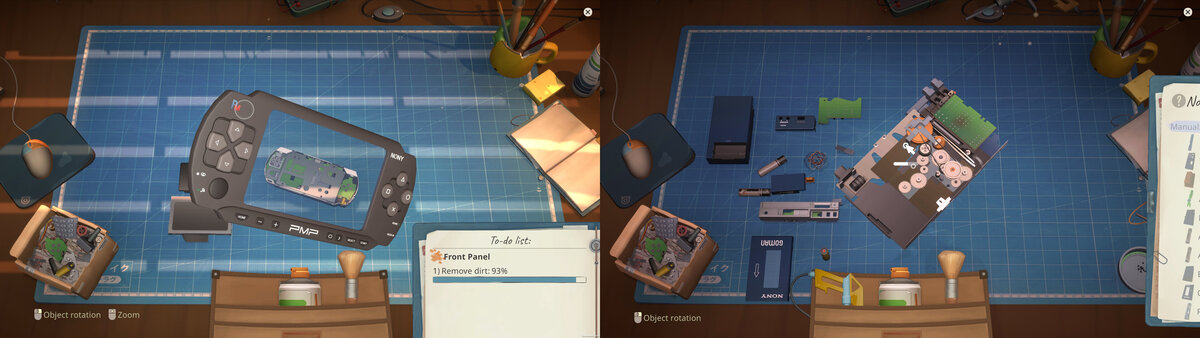
In August 2026, a video game placed those exact relics right back in front of hundreds of thousands of players. In this game, you run a cozy little electronics repair shop in mid-2000s Tokyo. A customer walks in with a dead retro handheld: you take it apart, blow away decades of accumulated dust, diagnose the broken component, solder in a replacement, touch up the paint, and screw every tiny bolt back into place. You press the power switch — the screen flickers to life, and the customer's personal story takes another meaningful step forward.
That game is called ReStory. According to public metrics shared by the CEO of its publisher, tinyBuild, the game recouped its entire development budget in just 12 hours, surpassing $1 million in gross revenue. It sold roughly 100,000 copies in 24 hours, crossed 300,000 within a week, and eclipsed 500,000 copies by mid-September.
Behind this smash hit is a modest indie studio named Mandragora. Over a decade ago, their very first commercial game made a grand total of $500.
This is not a fairy tale about teenage prodigies striking it rich overnight. On the contrary, it is the gritty account of ordinary developers getting knocked down, rebuilding from scratch, and slowly figuring out the industry over twelve long years. From $500 to $3 million-plus, there lies more than a decade of quiet perseverance, several forgotten titles, and a repeatable playbook they meticulously pieced together along the way.
Phase 1 · A Knitted Deer That Made $500
The Mandragora journey began with two young developers working day jobs at a mainstream gaming studio.
Evgeny Kisterev was a programmer; his colleague and friend Dmitry Pazyuk was an illustrator. Working side-by-side in the same company, they gradually nurtured the dream of creating their own independent games.
Their debut project was called Knitted Deer: a handcrafted yarn deer galloping across a knitted fabric landscape, soundtracked by energetic 8-bit drum & bass music. The prototype made a splash at regional indie events, taking home the "Most Promising In-Development Game" award at the Indie Game Cup and earning a nomination for Best Mobile Game.
Brimming with optimism, the duo partnered with a mobile publisher to finish and ship the title. Then, they promptly boarded a flight to India for a celebratory vacation, "waiting to make millions."
Reality hit hard. The game ended up making a grand total of $500.
Phase 2 · Crowdfunding $15,000, Raising Just $100
They refused to give up. Bringing on a few more collaborators, the team started work on their second concept, Skyhill: a businessman checks into a penthouse luxury suite, only for a bio-apocalypse to strike. With the building overrun by mutated horrors, he must fight his way down from the 100th floor to survive.
For about a full year, they built this game entirely after hours, during nights and weekends. They traveled to gaming conferences, showed early builds, and diligently documented their development journey for the public.
While submitting the game to Steam Greenlight, they launched an Indiegogo crowdfunding campaign seeking a modest $15,000.
When the campaign closed, they had raised exactly $100.
Kisterev would later reflect that the visual presentation at the time was "so terrible, we wondered what we were even thinking." So, in the summer of 2014, he and his artist made a radical decision: they redrew every single art asset across the entire game from scratch. The game lingered on Steam Greenlight for four agonizing months, finally winning community approval only after the brand-new art style was uploaded.
In February 2015, Skyhill signed with veteran German publisher Daedalic Entertainment and launched on Steam later that year, earning solid coverage from media outlets and content creators. When it was later ported to mobile, Kisterev noted in a 2016 interview that the mobile version was generating several thousand dollars every day.
In the month leading up to Skyhill's launch, Kisterev spent nearly every waking hour reaching out to streamers and YouTubers across Russia and Europe, offering preview keys and inviting them to play. He credited much of the game's initial momentum to that relentless grassroots outreach. That realization became an enduring operational doctrine for the studio: Building the game is only half the battle; getting it in front of people is the other half.
They also faced criticism head-on. Reviewers praised Skyhill as "the kind of game you close, only to reopen thirty minutes later," yet many players complained about repetitive loops. Kisterev emphasized that negative community feedback was something "we simply could not afford to ignore."
At that stage, Mandragora had only three full-time team members.
Phase 3 · From Moscow to Armenia, From Apocalypse to Cozy Healing
Over the following years, Mandragora continued experimenting with diverse genres: a sequel titled Skyhill: Black Mist, an action brawler called Freaky Awesome, and in 2023, the Early Access launch of I Am Future.
I Am Future was a "cozy post-apocalyptic survival" game: civilization has crumbled, but you spend your peaceful days on a lush skyscraper rooftop growing crops, fishing, repairing automated helper bots, and living at a leisurely pace. Published by tinyBuild, the title sold over 100,000 copies during Early Access on Steam alone before graduating to a 1.0 release in 2024 and expanding to PlayStation 5, Xbox, and Nintendo Switch.
During this period, the studio underwent structural evolution. Originally founded in Moscow, Mandragora formally transitioned into an Armenia-based studio, operating as a decentralized, remote team distributed across multiple countries. Self-described as a "small, passionate independent studio," they had been experimenting continuously with fresh mechanics and themes since 2014.
I Am Future left the studio with two vital assets: a proven working relationship with publisher tinyBuild, and a crystal-clear creative insight — players genuinely love the calm, mindful satisfaction that comes from fixing broken things.
Phase 4 · A Theme That Strikes an Emotional Chord
In December 2025, during an online showcase focused on cozy and wholesome games, Mandragora revealed their newest title: ReStory: Chill Electronics Repairs.
The thematic premise was ingenious.
Set in mid-2000s Tokyo, the game tasks players with restoring vintage electronic treasures: flip phones, desktop consoles, portable gaming devices, virtual digital pets, cassette walkmans, digital cameras, and classic home electronics. The roster even secured official licensing from Atari, featuring faithfully recreated hardware like the Atari 2600 and Atari Jaguar.
The restoration loop was meticulously broken down into tactile, physical micro-actions: unfastening shells, dusting boards, identifying fried components, soldering fresh circuits, repainting worn casings, and snapping everything back together. Alongside repairs, players manage their storefront: balancing books, accepting commissions, and hunting for spare parts through an in-game simulated web browser. Every customer carries their own backstory, with narrative dialogue branching based on how you interact.
Why did this concept resonate so powerfully with a global audience?
- Pure Nostalgia: 2000s-era gadgets represent the formative childhood and teenage memories of today's core Steam demographic (gamers in their 20s and 30s);
- Therapeutic Decompression: Taking an abused, grimy object and patiently returning it to pristine, working order provides immediate tactile stress relief, akin to the runaway success of games like PowerWash Simulator;
- Organic Virality: The visual progression of teardowns, ultrasonic cleaning, and reassembly is tailor-made for TikTok clips, YouTube Shorts, and Twitch livestreams.
Within just one week of its public announcement, ReStory's Steam wishlist tally surged past 100,000, propelling it into the Top 400 most anticipated games on Steam and outranking numerous big-budget productions.
Phase 5 · Wishlists Are the "Pre-Orders" of Indie Games
In the modern PC gaming landscape, wishlists are the ultimate lifeline. When a player adds a title to their Steam wishlist, the platform automatically pings them via email and app notifications upon release or sale events. The larger the pre-launch wishlist pool, the higher the launch day velocity, which in turn triggers Steam's algorithmic recommendation engines.
Mandragora recognized this reality early on. Back in 2022, Kisterev shared on his Telegram channel that I Am Future jumped from 500 to 2,500 followers in a single week after appearing in two digital game showcases — a 5x increase.
With ReStory, they executed this playbook at an unprecedented scale:
- December 2025: Official announcement at a dedicated cozy game showcase, harvesting over 100,000 wishlists in week one;
- Open Playtest: A public playtest build peaked at 1,800 concurrent players — a figure that surpassed the full releases of all previous Mandragora games except I Am Future and Skyhill;
- June 2026: A featured demo during Steam Next Fest, quickly emerging as one of the most played and discussed demos of the festival.
By the time launch day arrived, ReStory had accumulated an astonishing ~700,000 wishlists.
Phase 6 · Recouping the Budget in 12 Hours
On August 6, 2026, ReStory officially launched on Steam at a base price of $19.99 (accompanied by a standard 10% launch discount).
The ensuing commercial velocity caught even the publisher off guard. Alex Nichiporchik, CEO of tinyBuild, shared real-time backend milestones on X (formerly Twitter):
- Within 12 hours, the game crossed $1 million in gross sales, completely recouping its total development budget;
- Its day-one wishlist conversion rate reached an astounding 8.1%, which Nichiporchik described as "mind-blowing";
- In approximately 24 hours, it sold 100,000 copies, logging a peak concurrent player count of over 15,000 on day one;
- Backend screenshots shared publicly showed cumulative gross Steam revenue reaching $2,003,126, translating to $1,767,123 in net revenue after platform chargebacks and taxes within the initial days.
What does an 8.1% day-one conversion rate mean in practice? Against a 700,000 wishlist base, roughly 57,000 existing followers purchased the game immediately on day one, while the remaining ~43,000 sales came from organic viral traffic propelled by Steam's top-seller charts. Every single wishlist accumulated over the preceding eight months converted into cold, hard cash on launch morning.
Mandragora posted a brief, emotional statement on Steam: "We are completely blown away."
The momentum did not slow down. Within one week, sales eclipsed 300,000 copies, with weekend concurrent users climbing above 19,000. Industry outlet App2Top reported that by August 10, total gross revenue had reached approximately $3 million. By mid-September, cumulative units surpassed 500,000. By early October, the game maintained over 11,000 player reviews with a ~95% "Overwhelmingly Positive" rating, standing as the highest-rated release in tinyBuild's corporate history.
Doing the rough math: 500,000 units at a nominal $19.99 equates to nearly $10 million in gross retail value. The actual net take-home is naturally lower: regional pricing adjustments and launch discounts compress average ticket size, Steam claims its standard ~30% platform cut, and remaining net revenues are split between the publisher and the studio according to contractual terms. While exact royalty tiers remain private, for a lean, remote indie outfit, this capital injection represents life-changing financial security.
Crucially, the studio did not rest on its laurels. Over the first two weeks post-launch, they shipped multiple hotfixes; in late September, they delivered a free content update introducing a brand-new repairable device and customer storyline, paired with an explicit roadmap committing to long-term feature support.
Thinking
1. Behind an "Overnight Sensation" Lies Over a Decade of Failure
Selling 100,000 copies on day one looks like pure magic from the outside. Yet prior to this breakthrough, Mandragora endured a mobile game that earned $500, a crowdfunding campaign that raised $100, an indie project scraped together during late-night hours over an entire year, and twelve years of relentless genre pivots.
Breakthrough success is rarely the product of a first attempt. It is the cumulative byproduct of learning from failure, refining craft, building an audience, and cementing industry partnerships.
2. A Great Theme Is the Intersection of Emotion and Core Gameplay
ReStory capitalized simultaneously on two potent psychological levers: deep nostalgia (iconic 2000s electronics) and mindful decompression (the tactile satisfaction of restoring something broken to working order). The former hooks the user's attention in a single glance; the latter keeps them glued to the screen for hours.
Indie creators do not need to build the biggest or most mechanically dense universe. They need to discover a concept that can be summarized in a single compelling sentence while triggering immediate emotional resonance.
3. Wishlists Can Be Intentionally Engineered
The 700,000 wishlists behind ReStory did not magically appear on launch morning. They were systematically cultivated across three clear milestones: announcement showcase, open playtest, and Steam Next Fest. The remarkable 8.1% day-one conversion rate proved those wishlists represented genuine, qualified intent.
For independent developers, pre-launch wishlist volume virtually dictates the ceiling of your launch window. Marketing does not begin on launch day; it begins the precise second you announce your project.
4. With the Right Publisher, Small Teams Can Win Big Wars
Mandragora is a lean, globally distributed team of creators. Partnering with tinyBuild allowed the developers to focus 100% of their energy on crafting an exquisite gameplay loop, while the publisher handled marketing, QA, platform relations, and financing. Having collaborated previously on I Am Future, mutual trust was already rock-solid.
For small studios, aligning with an experienced, reputable publisher compensates for critical marketing and capital deficiencies. You sacrifice a portion of royalties, but in exchange, you drastically increase your project's odds of breaking through the noise.
5. Find the Direction of Your Next Game Inside Your Last One
The repair mini-games in I Am Future received disproportionate love from players. Rather than ignoring that data point, Mandragora extracted that exact mechanic, polished it to a mirror shine, and expanded it into an entire standalone experience.
Your most reliable creative inspiration is often hiding in plain sight within the player feedback of your past work. Watch closely what your audience enjoys most, then double down on it.
Action
Step 1: Uncover a theme from what you know and miss most (1 week) Reflect on your childhood and teenage years: what objects, environments, or pastimes evoke the strongest emotional memories? Is there an inherent process within them that feels inherently relaxing and satisfying?
Step 2: Validate the core fun with a minimum playable prototype (1–2 months) Build only the singular core interaction — such as "unscrewing a phone, cleaning the motherboard, and screwing it back together." Put it in front of trusted peers and observe whether they voluntarily ask to keep playing.
Step 3: Go public early to start compounding interest Publish your Steam store page immediately. Participate in digital showcases, share behind-the-scenes development clips on social media, and treat wishlist velocity as your single most important health metric.
Step 4: Amplify attention with a polished demo and Steam Next Fest Polish a tightly scoped, high-quality demo slice and register for Steam Next Fest. Monitor player completion rates and wishlist conversion, iterating on design flaws based on real telemetry.
Step 5: Evaluate publisher partnerships objectively If you lack marketing expertise, media connections, or completion capital, approach publishers armed with playable prototype builds and verifiable wishlist traction. Compare royalty splits, milestone funding, and track records across prospective partners.
Step 6: Respond aggressively to community feedback post-launch The first two to four weeks post-launch define your user sentiment. Ship hotfixes rapidly, communicate transparently, roll out free quality-of-life updates, and publish a clear content roadmap to demonstrate respect for early adopters.
Step 7: Treat every release as a springboard for your next project Catalogue the specific mechanics and lore elements your community celebrates most. That breakout detail may very well form the foundational hook of your next commercial triumph.
Not for you if:
- You expect your very first indie game to become a viral commercial hit — the overwhelming majority of successful developers weather multiple failed launches first;
- You dislike marketing, community management, or interacting continuously with players throughout development;
- You cannot endure extended periods of fluctuating, uncertain income while building your catalog;
- You insist on creating strictly for yourself without any regard for what players actually desire or enjoy.