How Twin Sisters Turned a $25 Basement Experiment Into a $20M/Year Bath Bomb Empire
Caroline and Isabel Bercaw started making bath bombs in their basement with $25 when they were in middle school. The twist? Each bomb hides a surprise toy inside. That simple idea landed them on Target, Walmart, and Ulta shelves nationwide, earning $20M/year.
Process
Around 2013, two middle-school twin sisters in Minnesota — Caroline and Isabel Bercaw — hit a small but persistent consumer frustration: every time a bath bomb finished dissolving, the tub was empty. Nothing left.
"What if there was a surprise inside?"
That thought, plus $25 in raw materials, launched a multi-million dollar brand from their family basement.
The Bercaw sisters started hand-pressing bath fizzers with mini toys, charms, jewelry, or messages hidden in the center. They weren't selling bath bombs — they were selling the anticipation of unwrapping a mystery. Each fizzer became a tiny treasure hunt.
Their first sales came at local craft fairs, where the sisters noticed a consistent pattern: customers weren't sniffing different scents. They were asking "what's inside this one?" The blind-box mechanic turned a commodity bath product into a collectible experience. Repeat buyers came back because every bomb contained something different.
Growth kicked in when a local boutique owner discovered them on Instagram and sent a DM asking to stock the product. Soon, a dozen independent shops around Minneapolis carried Da Bomb fizzers.
Around 2016, the sisters — still in high school — appeared on ABC's Shark Tank. While the national TV exposure drove an immediate order spike, the real game-changer happened backstage: Target's buying team saw the episode. Caroline and Isabel flew to Target headquarters, pitched the buyers with their story and product samples, and secured a nationwide shelf placement.
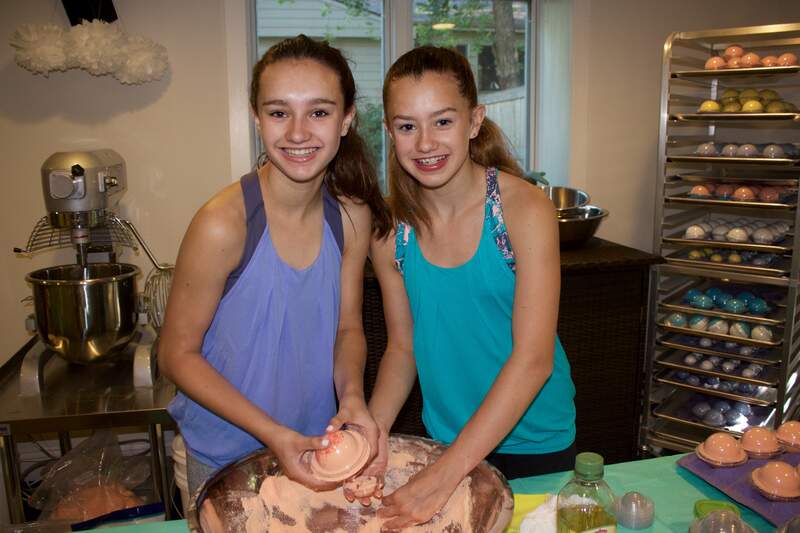
From there, Da Bomb detonated across American retail. Walmart. Ulta Beauty. CVS. Their product line expanded from a handful of SKUs to 130+, spanning seasonal gift boxes, birthday kits, advent calendars, and — in 2024 — the viral "Extreme" line featuring pickle, chicken soup, hair ball, and stink bomb scents that blew up on social media.
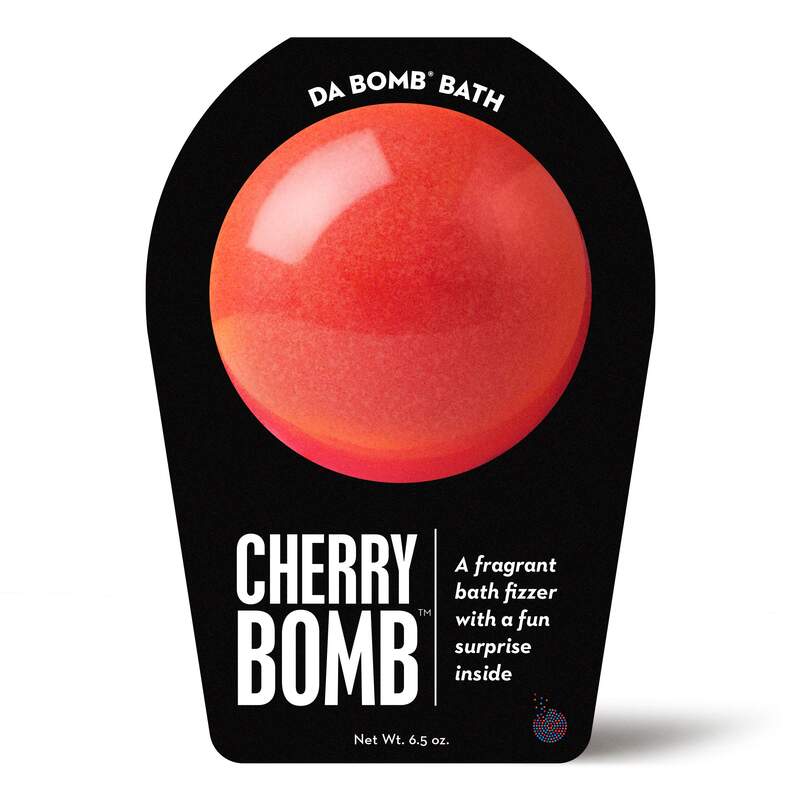
Crucially, the Bercaws never outsourced production overseas. Every bath bomb is still handmade in the USA by over 150 employees. This positioning lets them hold an $8 price point at Target while competing against $2-3 mass-produced imports — because their customers aren't buying a bath bomb. They're buying the look on someone's face when they find the surprise inside.
In 2019, the sisters were named to Forbes 30 Under 30 in Retail & Ecommerce. In 2024, they appeared in Vogue. By 2022-2024, Inside Edition and multiple media outlets confirmed Da Bomb's annual revenue at approximately $20 million.
The company has also funded 20 clean water projects through a nonprofit partnership, serving approximately 10,000 people.
From $25 to $20 million. From a basement to Target. Two middle-school girls added one small thing to a dissolving ball of baking soda — and built a 150-employee empire on the power of a good surprise.
Sources: Da Bomb official website dabombfizzers.com, Money.com, Inside Edition, Forbes, People.com
Thinking
What makes Da Bomb worth studying isn't the feel-good "two little girls made it big" narrative — it's how they used a near-zero-cost product twist to unlock nationwide retail distribution in an intensely mature category.
1. Product innovation isn't about the formula. It's about consumer psychology.
The bath bomb market was already crowded. Lush dominated the "natural essential oils" and "premium fragrance" lanes. The Bercaw sisters didn't compete on formulation — they changed the psychological game. Everyone else sold "sensory relaxation during bath time." Da Bomb sold "the look on someone's face when they unwrap a surprise."
Why does this switch matter? Traditional bath products are consumables — you use them, they're gone, you repurchase out of habit. Da Bomb's fizzers are collectibles — every bomb contains a different toy. Today it's a unicorn, tomorrow a mermaid. Users aren't buying for the bath. They're buying to complete the set. The repurchase logic shifts from "I ran out" to "I need them all."
Even better: the "unknown" inside every bomb makes each one inherently shareable. Thousands of "bath bomb unboxing" videos on YouTube and TikTok are free user-generated advertising.
2. Their founder story was the strongest retail entry ticket.
Target's buying team fields hundreds of supplier pitches daily. Why did two high school girls land a nationwide contract? Because their founder narrative — twin sisters, middle school start, $25 launch, basement manufacturing — is a perfect shelf story.
Target customers aren't looking for "another bath bomb brand." They're looking for something worth telling a friend about. Da Bomb prints the sisters' photo and story on every package — the product literally sells itself from the shelf. For a Target buyer, stocking Da Bomb isn't adding a SKU. It's adding a story customers will stop to read.
3. "Handmade in USA" isn't sentiment — it's pricing power.
Mass-produced bath bombs from China sell for $2-3 on Amazon. If Da Bomb competed on price, they'd get crushed. The "Handmade in USA" label gives them the power to charge $8 at Target — a 3-4x premium that creates enough channel margin for nationwide retail distribution.
This isn't a feel-good play. It's a business strategy. "Handmade in USA" means higher production costs, yes. But it also means: ① clear differentiation on Target/Walmart shelves against generic imports; ② no direct price comparison with Amazon commodity sellers (different country of origin); ③ a "supporting American jobs" brand narrative that retailers love.
4. They didn't take Shark Tank money — and that was probably right.
While specific deal details haven't been officially confirmed, what's widely reported is that the Bercaw sisters ultimately didn't accept any shark's investment. This isn't failure. For a brand-driven CPG company that doesn't need heavy upfront capital, taking investment too early means diluting equity and losing control. They grew at their own pace, step by step into retail — and that's more durable than burning VC cash for growth.
Sources: Da Bomb official website, Forbes, Inside Edition, Money.com, and multiple media outlet analyses
Action
If you want to extract replicable lessons from Da Bomb's playbook, here are actionable steps:
Step 1: Find the "category blind spot" — don't build a better product, build a different product.
The bath bomb market had plenty of good products. Nobody had thought of "bath bomb + blind box." Your job isn't to make a "better bath bomb." It's to find a consumer psychology switch nobody has tried in a mature category.
How to find it? Ask yourself three questions:
- How does the user feel AFTER using the product in this category? (The Bercaws discovered: "Disappointment — nothing left behind.")
- Can you turn "one-and-done consumption" into "a new discovery every time"?
- Can your product make users WANT to take photos/videos and share them? (Da Bomb's surprise unboxing is TikTok-native.)
Good for: people with deep familiarity in a specific consumer category (even just as a heavy user).
Step 2: Validate social shareability at minimum cost before scaling.
The Bercaws didn't pitch investors or build a factory first. They spent $25 on materials, set up a table at local craft fairs, and watched real customer reactions. When every customer asked "what's inside?", the social-sharing potential was validated.
What you need isn't a perfect business plan. It's:
- Make 20-30 samples
- Sell them at a market/pop-up/WeChat Moments, and watch the first reaction
- If customers ask "what IS this?" before asking the price — you've found product-market fit
Not for you if: you want to skip offline testing and jump straight to running online ads. This path won't work for you.
Step 3: Turn your personal story into your strongest acquisition asset.
The Bercaw sisters walked into Target not because their product was best, but because their story moved the buyers. The same logic applies everywhere — Xiaohongshu buyers and TikTok influencers all prefer products with a story.
You don't need to be a twin. But you do need to answer: why YOU, specifically, to build this? What's the unique, non-obvious connection between your personal history and the product? Polish that story into one sentence. Put it on the package. Put it above the fold on your product page.
Good for: people with distinctive personal backgrounds. If you think "I'm not special" — dig deeper into your own story.
Step 4: Defend one irreplaceable differentiator. Never compete on price.
Da Bomb's "Handmade in USA" label shielded them from head-to-head price wars with $2-3 imports. Your product needs a similar moat — a differentiator that makes price comparisons irrelevant.
Possible labels:
- Region-specific raw materials ("Yunnan Pu'er tea extract," "Xinjiang lavender, hand-picked")
- Specific craft certification ("intangible cultural heritage handcraft," "traditional herbal formula adapted")
- Specific social purpose ("one-for-one donation," "employs X disadvantaged group")
Not for you if: you just want to sell cheap stuff at volume. Factory sellers have already bled that road dry, and you won't beat them.