A 24-Year-Old London Ad Worker Started Growing Veg on His Balcony in Lockdown and Turned It into a Monthly Grow-Your-Own Box: Delivered Across London by a Small Team of Drivers, Now Claiming 100,000 Growers
During England's first lockdown in 2020, Sam Smith, who worked in advertising in London, started growing vegetables on his flat balcony. He noticed many friends were doing the same but didn't know what to grow or where to buy compost and pots, and gardening advice online felt 'serious, stuffy.' For young city dwellers without a car, getting compost, seeds and pots together was hard. He registered POT GANG LTD in June 2020 and launched Pot Gang as a side hustle in July: a monthly box with three types of seasonal seeds, pots, all the compost needed and simple instructions, plus a WhatsApp help line called the Potline. In the first year, he and a small team of drivers delivered boxes across London. In early 2024, the business outlet TechRound reported 45,000 growers; today the website claims more than 100,000, at £24.99 a month with pause or cancel anytime. It isn't strictly a one-person company: from 2021 to 2024 a co-director held 25% to 50% of the shares, and since 2025 the company has been owned by a holding company, Faraday Gang Ltd.
Process
In spring 2020, England went into its first national lockdown. Young Londoners were stuck in flats without gardens, and many found the same way to pass the time: growing something on the balcony.
Sam Smith was one of them. A Shepherd's Bush native who went to school in Hammersmith, he was 24 and working in advertising. He later said he was "never really a gardening guy"; he just wanted to eat fresher, more varied food and waste less.
As he grew, he spotted a business.
Stage 1: Everyone Was Growing, but No One Knew How
Sam noticed that many of his friends had also started growing during lockdown; it was all over Instagram stories and WhatsApp groups. But hardly anyone really knew what they were doing: what to grow, how to grow it, where to buy things.
In February 2021, he told the local outlet South West Londoner that anything out there relating to pots and gardening was "very serious, stuffy vibes!" The more practical problem: "If you don't have a car, particularly living in the city, it's hard to know where to get all the compost, seeds and pots from."
Garden centres tend to sit outside the city, and a bag of compost is big and heavy. For someone in a flat with no car and a small balcony, the first hurdle to growing wasn't skill; it was getting everything together.
His idea was simple: put what you need in a box, deliver it every month, keep the instructions simple, and make growing feel easy and fun.
Stage 2: Registering a Company and Running It on the Side
Companies House records show that POT GANG LTD was registered on June 20, 2020, with Sam as director. Pot Gang launched in July. It was still a side hustle; Sam kept his advertising job.
In summer 2020, he described the product to West London Living: a box at the start of each month (or every two months, your choice) with three types of seasonal seeds, pots to grow them in, all the compost you'll need and loads of super simple guidance, so you can start growing right away. He said it cost a bit less than buying all the components yourself.
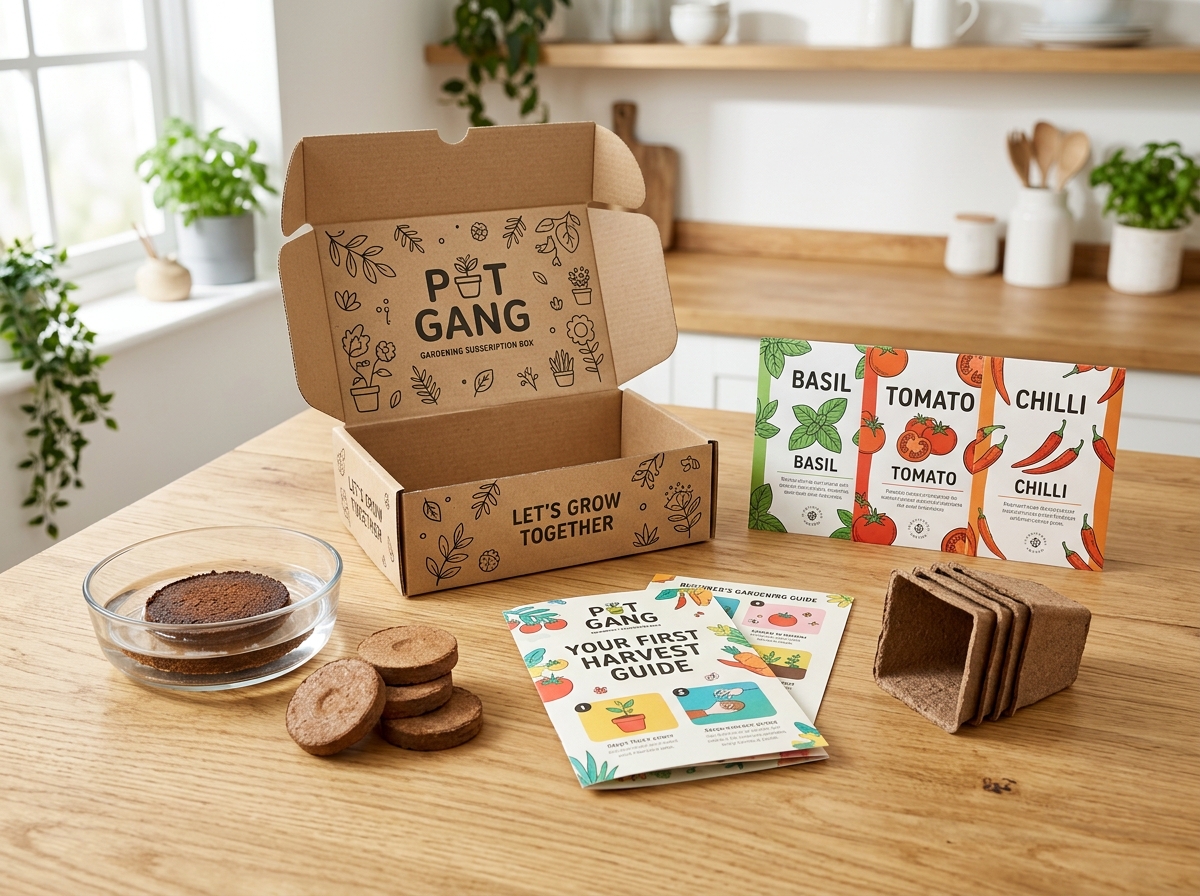
How much space do you need? "Not much, just a bit of outdoor space on a balcony or patio," he said. Indoor growing boxes were in the pipeline at the time.
He also gave the brand a mission: "I want to build the biggest group of reformed plant killers in the world." In other words, even if everything you've ever grown has died, the box should help you succeed.
Stage 3: Delivering Himself and Opening a WhatsApp Line
Early Pot Gang was hands-on. According to South West Londoner, Sam and a small team of drivers delivered the monthly boxes across London.
He also launched the Potline: a WhatsApp service where subscribers could send Sam questions about their plants or pictures of their progress.
Sam explained why: "If you're someone like me it was a new world and it's a bit of an uncertain thing which can easily go wrong." With the Potline, "I feel like I've got a personal relationship with a lot of our members."
The brand's tone was deliberate: "I wanted it to feel young, urban and fun and not that serious." The name Pot Gang itself has a bit of street attitude, unlike traditional gardening brands.
The seeds weren't just the usual tomatoes and basil. The Hackney Gazette reported one month's box: Sutton broad beans, Greek cress and mung bean sprouts; Pot Gang also encourages growing varieties many people have never heard of, such as mibuna and verte de cambrai (a French lettuce). Sam's reasoning: "If you live your life shopping in a supermarket, you have a pretty limited palette without even realising it." His advice to readers was just as direct: try growing what's not on the shelf.
Stage 4: Customers Were More Varied Than Expected
At first, Sam had young Londoners in their twenties in mind. But according to the Hackney Gazette, people of all ages signed up, from twenty-somethings to parents looking for a lockdown activity for their children. He said the audience was much more varied than he'd intended at the beginning, "but that has been great."
According to an April 2021 report by Passionfruit, Pot Gang's early growth came mainly through family, his girlfriend, local mum groups and local media.
Lockdown hurt many businesses but helped Pot Gang. "The more time you spend at home, the more appealing the idea of having nice activities to do becomes," Sam said. But he didn't see it as just a lockdown idea; he thought people were becoming more environmentally conscious. The price then was £20 a month, and his plan was to develop more growing kits and expand to other UK cities.
DLD College London later invited him to tell students how he built Pot Gang during lockdown.
Stage 5: From Side Hustle to Company
Pot Gang didn't stay Sam's solo side project. Companies House records show:
- In December 2021, Bryony Brightman became a director and held 25% to 50% of the shares. She stepped down as director in February 2024 and ceased to be a person with significant control in March.
- From February to August 2024, another director, David Battey, briefly served.
- Since June 2025, the holding company Faraday Gang Ltd has owned more than 75% of the shares, and Sam is no longer listed personally as a person with significant control. The public record doesn't show who ultimately controls Faraday Gang, and this article doesn't speculate.
- The registered office is in the Bon Marché Centre in Brixton, London.
So Pot Gang isn't strictly a one-person company. Sam founded it and has always been a director, but it has had a co-shareholder and is now owned by a holding company.
Support isn't just Sam anymore either. In January 2024, TechRound named Pot Gang its Startup of the Week, reporting 45,000 growers, with WhatsApp support handled by "Gang Manager" Tom; Pot Gang had also collaborated with well-known brands and taken part in events like Earth Day.
As of October 2026, the website says "100,000 growers so far," at £24.99 a month, with pause, skip or cancel anytime; a 4.9 average from 1,081 reviews; and free seeds if nothing sprouts. It also says The Sunday Times named it the best gardening box and that it has been featured on BBC News, Sky News and BBC Radio 4. Beyond the monthly subscription, it sells gift subscriptions, one-off boxes and gardening gear.
These numbers come from the website or press coverage; Pot Gang hasn't published revenue or profit. A customer story from subscription tool Smartrr says that within two months of adopting its subscription portal, Pot Gang's subscription revenue grew 289% and active subscriptions 105%, with 95% of orders coming from subscriptions. But the story is undated and is vendor marketing, so treat it as a reference only.
Thinking
1. The best business ideas often come from your own problems. Sam wasn't a gardening expert. Precisely because he was a beginner, he knew where beginners get stuck: not knowing what to grow, no car to fetch compost, advice that felt too serious. He built the product for his earlier self.
2. It's not just seeds and soil; it's the hassle of getting everything together. Seeds, pots and compost aren't rare; any garden centre has them. Pot Gang solves the hassle of gathering them as a city dweller, and picks what to grow each season for you. Subscriptions fit naturally: plants are seasonal, so there's something new to grow each month.
3. Beginners most need someone to ask. Growing goes wrong easily, and when leaves turn yellow, beginners tend to give up. The Potline lets customers ask a real person when something goes wrong. For a subscription business, customers who succeed are the ones who keep subscribing. Answering personally in the early days also let the founder hear customers' problems directly.
4. Timing amplified demand, but the demand wasn't just lockdown. Lockdown got many people growing, and Pot Gang rode that wave. But it kept going after lockdown, and its claimed number of growers has more than doubled since 2024. The need, city people wanting to grow something but not knowing how to start, was always there.
5. Brand tone is the differentiator. Traditional gardening brands feel serious, expert and aimed at older people. With a street-style name, casual instructions and lines like "reformed plant killers," Pot Gang tells an old-fashioned activity in a young voice. That's where Sam's advertising background came in.
6. Know which numbers can be verified. Pot Gang's company records are public, but its customer numbers, reviews and awards come from its website, its growth figures from a vendor case study, and its revenue isn't published at all. When studying cases like this, know where each number comes from.
Action
1. Look for opportunities in your own beginner experience. Think of something you've recently started learning: baking, coffee, keeping a cat, working out. Where did you get stuck at the start? What was hard to gather? What advice was too technical? Those are possible product ideas.
2. Start with a kit that gets everything together. Put the few things a beginner needs in one box, with instructions in plain language. Sell it locally first and, like Sam, deliver it yourself so you meet customers directly.
3. Open a channel where people can ask you directly. Use WhatsApp or another messaging app so customers can reach you when they run into problems. Answer personally at first; it's the fastest way to learn what needs fixing.
4. Give people a reason to buy every month. If your category is seasonal or consumable, consider a subscription: change the contents by season or refill on a schedule. Make pausing, skipping and cancelling easy, which lowers the barrier to signing up.
5. Use tone to stand apart from traditional brands. If your industry feels serious, try telling the same story in a lighter, younger way: the name, the instructions, your social media content.
6. Start with your local network and local press. Begin with family and friends, local community groups and local media, which is how Pot Gang got started. Local outlets are often happy to cover a young local founder's new business.