$200 Start: Sisters Seal Real Flowers in Resin, Hit $65k on Etsy Year One
Sisters Lindsay Ann and Courtney Joy started with $200 in materials, pressing real flowers petal-by-petal into resin jewelry. Year one on Etsy: 2,300+ orders, $65,000 in revenue. No funding, no employees at launch — one of the first real-flower jewelry brands in the US.
Process
The Beginning: Two Sisters and Their Mother's Garden
Lindsay Ann Gottschall and Courtney Joy Bleier are sisters who grew up in a house filled with art supplies and a mother's garden that bloomed year-round. The colors of that garden — violet pansies, white daisies, blue hydrangeas, red roses — were etched into their visual memory, becoming the foundation for everything they would later build.
Both sisters followed creative paths. Lindsay graduated from art school, tried acting, and made beaded jewelry on the side to pay bills — not knowing those scattered craft skills were quietly laying the groundwork for a business. Courtney earned a Master's in Art Education and taught elementary school kids how to paint and sculpt. Both had an almost instinctive sensitivity to beauty and seemingly infinite patience for handwork.
In 2009, the sisters moved in together in Miami. Every evening, they sat in the living room brainstorming: what product could fuse their love of beauty and craft — and actually get strangers to pay for it?
Late one night, Lindsay stared at a pansy she'd plucked from their mother's garden and pressed in a book. Days had passed. The color was still there, but the life was gone. A thought crystallized: What if you could seal a real flower inside clear resin — turn it into a necklace, earrings, a ring — trapping it forever at the exact moment it looked most beautiful? Never wilting. Never fading. Every vein real and visible. Forever alive.
Courtney listened, was quiet for a moment, then said the words that changed everything: "Let's try it."
The brand name wrote itself. Lindsay's middle name was Ann. Courtney's middle name was Joy. Put them together: Ann + Joy. Simple. Warm. Like a handwritten note.
Phase 1: The $200 Launch — Planting the First Seed in the Kitchen
No business plan. No market research. No fundraising. They went to a craft supply store and bought exactly three things: epoxy resin, silicone molds, and metal hardware. Total: $200.
They already had tools. No need to rent a studio — the kitchen table was the workbench. No staff — two sisters, four hands, one sourcing flowers and mixing colors while the other poured resin and demolded. No ad budget — the plan was to open an Etsy shop and let the product speak for itself.
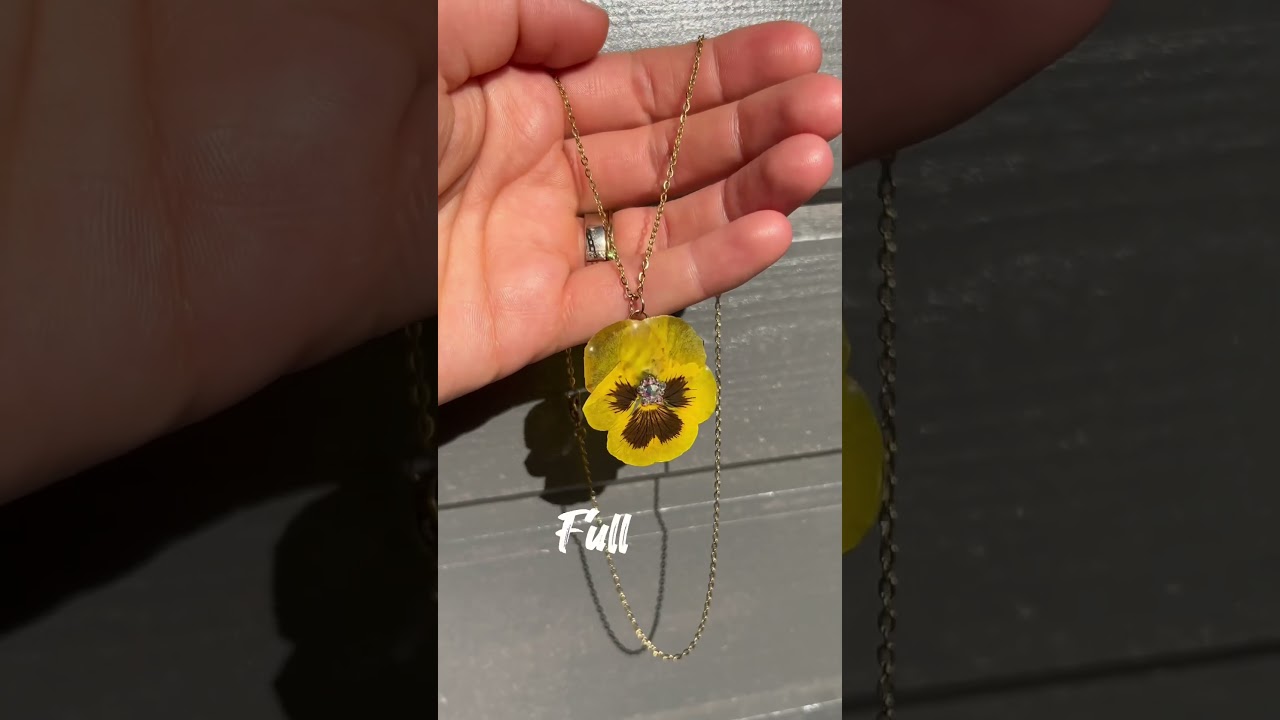
The process sounds simple but was punishingly time-consuming: first, pick flowers from the garden or flower market. Cut them. Use a professional flower press to flatten each petal — too fast and they shatter, too slow and they oxidize brown. Once fully dried, arrange the petals one by one in silicone molds. Then mix the epoxy — the ratio of Part A to Part B has to be exact, or it won't cure properly. Pour the resin, then use a needle to pop every microscopic bubble. Wait 24 hours for curing. Demold. Sand the edges. Attach a chain or ear hook.
A single simple pendant took at least two hours. But what came out — a real flower suspended in crystal-clear resin, light passing through the petals so they almost looked like they were still breathing — was something no machine could replicate.
In 2017, they photographed their first pieces and uploaded them to Etsy. They used a phone camera and window light — no professional equipment, no post-processing. What they didn't know was that Etsy's editorial team was constantly scanning new listings, hunting for truly original product categories unique to their platform. Ann + Joy landed on their radar on day one.
Phase 2: Year One Explosion — Etsy's First-Mover Bonus and 2,300 Orders
The numbers started talking within three months: 100+ orders, $3,000+ in revenue. For a $200 investment, a kitchen operation, and two sisters doing this part-time, that was an explosive signal.
Etsy started voting with its traffic. Their necklaces appeared on the homepage, in editorial emails, at the very top of search results for "real flower jewelry," "botanical jewelry," "natural gemstone alternatives" — every adjacent keyword. This wasn't paid placement. This was the platform's reward for creating a genuinely new product category. Etsy needed proof that "you can find things on Etsy you can't find anywhere else," and Ann + Joy's real-flower resin jewelry hit that need perfectly.
More crucially: they were absurdly early. In 2017, the "real flower resin jewelry" category on Etsy barely existed. Search "real flower jewelry" and you'd get plastic fakes or dried flower specimen jars. Almost nobody was doing "real flowers sealed in wearable clear resin jewelry." Competition was effectively zero, and all the platform's search traffic flowed directly to them.
By year's end, the numbers had crossed into a different order of magnitude: 2,300+ orders, $65,000 in revenue. For a business that needed no office, carried no inventory risk (made-to-order), and had margins above 80%, this revenue meant: Courtney could keep teaching elementary art, and Lindsay Ann went full-time by the end of year two.
They'd never taken a business class. Never hired a consultant. Never spent a dollar on advertising. They did one thing: found a product nobody else was making, then made it as beautiful as humanly possible.
Phase 3: Copycats, COVID, and When the Moat Starts Leaking
The good times lasted about two years. By 2019, cracks appeared.
The formula "real flower + resin = viral product" was no longer a secret. Imitators flooded in. Some were direct copycats — same flowers, same clear resin pendants, same camera angles. Others were factories in China and Southeast Asia — they could mass-produce similar-looking products at a tenth of the cost and sell them on Etsy and Amazon at lower prices.
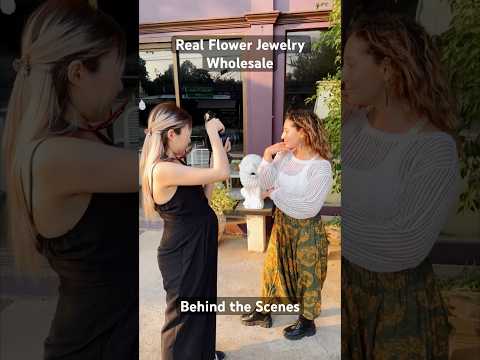
Ann + Joy didn't fight on price — racing factories to the bottom is suicide. Instead, they chose three paths: continuous product iteration — new flower combinations, new jewelry formats (rings, bracelets, hair pins), always staying one step ahead of copycats; wholesale expansion — getting into boutique gift shops, florists, and wedding planners, B2B clients who value reliability over rock-bottom prices; and building a stronger brand personality through content — YouTube tutorials and behind-the-scenes videos that showed the handcraft process and the real story of two sisters making things together, an emotional connection no factory could replicate.
Then came the bigger storm. Spring 2020. COVID shut down retail. Weddings — a major revenue source for bridal jewelry — were canceled en masse. Wholesale orders evaporated. Online sales grew, but supply chains broke, shipping went haywire, and material costs spiked. Every squeeze hit this fragile little business at once.
And then came a word scarier than any pandemic.
Phase 4: Cancer — When Everything Almost Went to Zero
In mid-2020, Lindsay Ann started feeling unwell. At first she assumed it was stress-related digestive issues — running a business during a pandemic was anxiety enough. But the test results stunned everyone: stage 4 appendiceal cancer.
Stage four. Appendiceal cancer. Those two words together tell any adult everything they need to know. Lindsay was barely in her thirties, fighting to pull her brand through a global crisis, when she was wheeled into an operating room.
The sisters made a painful but clear-eyed decision: shut down the Etsy store. No "vacation mode" pretense, no auto-reply illusion — they closed it. They wrote a short, honest note in the shop announcement explaining what was happening. Then Lindsay began six months of treatment: multiple surgeries to remove tumors, six rounds of chemotherapy, ICU stays, near-death moments.
Courtney, during those months, was both her sister's caregiver and the brand's sole guardian. She didn't launch new products. Didn't promote anything. Didn't make a single business decision. She just waited — for her sister to survive.
March 2021. A miracle arrived on the scan results: Complete Remission. No detectable cancer cells. For a stage four patient, this was about as good an outcome as exists. Weeks later, the Ann + Joy Etsy shop reopened. They didn't announce their return with fanfare. They just did what they'd done on day one: photographed the new pieces, uploaded them, and waited.
The customers came back.
The ones who remembered — the ones who'd bought a pansy necklace and later, when a friend asked "where did you get that?", had said "Ann + Joy" — flooded back within the first week. Wholesale clients resumed orders. Not because of any ad spend. Because they survived. A real, vulnerable, ultimately triumphant story is more powerful than any marketing copy ever written.
Phase 5: The Craft Moat — Why Factories Still Can't Replace Them
Ann + Joy is still operating today. Every piece is still made by hand. The process hasn't changed: find the right flower, cut it, dehydrate it, dye it if needed, place petals one by one into a mold, pour tinted epoxy, wait for curing, sand and polish. A simple pendant still takes at least two hours. Prices still run from mid-teens to over forty dollars — far above mass-produced factory alternatives.
So why haven't factories killed them with lower prices after all these years?
The answer is craft irreproducibility. The hard part of real-flower jewelry isn't the "seal a flower in resin" action — anyone can learn that basic operation in ten minutes on YouTube. The hard part is that every flower is different. This pansy's petals are half a millimeter thinner than that one's, requiring a shorter dehydration time. This batch of hydrangeas is bluer than purple and needs a tiny amount of green pigment to correct the tone. This season's daisies have higher water content than summer daisies — press them for the same duration and they'll mold instead of dry. These micro-judgments require thousands of hours of repetition to become muscle memory.
A factory can mass-produce jewelry that "looks like real flowers" — printed petal patterns, plastic fake flowers, assembly-line standardized resin formulas. But put a factory piece next to an Ann + Joy piece, and anyone can tell the difference in three seconds: real flowers have tiny imperfections — that vein isn't perfectly straight, that petal edge has a hint of scorch, that color isn't uniform but gradient. These "flaws" are exactly what signals "this is real."
Ann + Joy call themselves "one of the first companies to make real flower jewelry." That first-mover timing isn't marketing fluff — it's the fundamental reason they exploded on Etsy in year one, and it's the fundamental reason they're still alive after the triple assault of copycats, COVID, and cancer. When a product category is still a wasteland, the first person who walks in just needs to walk far enough. Everyone behind them is forever playing catch-up.
Source: Side Hustle School Episode 1254 · Starter Story · Ann + Joy
Thinking
Why Ann + Joy went from $200 to $65,000: three structural advantages worth extracting
1. First in the category = Etsy's free algorithmic traffic
In 2017, real-flower resin jewelry was essentially a blank category on Etsy. Ann + Joy's early success was largely a function of the platform's natural preference for novel categories — when you're the only seller for a search term, the algorithm has every reason to rank you first. This time window has passed for this specific niche (it's now competitive), but it reveals a transferable rule: on any platform, finding a category with demand and no supply matters more than being better than competitors.
2. Handmade = premium pricing + natural anti-imitation protection
Ann + Joy's jewelry sells at 2–3x factory alternatives because "placed petal by petal by hand" is literally part of the product. Every piece is different — that's quantifiable scarcity. And the imitation barrier for handmade goods is higher than it appears: factories can copy the look but can't mass-produce the process or the emotional backstory. When imitators flooded in, Ann + Joy had a real brand story (sisters + mother's garden + Lindsay's cancer journey) — an emotional moat no factory product can build.
3. Personal story = cheapest brand asset possible
The brand name comes from the sisters' middle names. Product inspiration came from their mother's garden. The founder story includes cancer and remission. None of this was manufactured — it's just true. Real stories convert Etsy's core customer base (people who want to buy from someone) at far higher rates than generic product listings. The emotional resonance becomes repurchase rate and word-of-mouth, both of which cost nothing.
What to replicate vs. what can't be copied
Replicable: ①Timing logic (find a demand + no supply pocket before competition forms); ②Handmade premium logic (visible craft = defensible price); ③Etsy first-mover dynamics
Not directly replicable: Real-flower resin jewelry is now crowded; Lindsay's specific illness story can't be copied (but it proves that authentic personal narrative has compounding brand value)
Action
Step 1: Find your "2017 empty category"
The logic: on any marketplace, a category with demand but insufficient supply is today's opportunity.
How to find it:
- Search Etsy for something you believe should exist but aren't sure anyone is doing
- Check result count: <200 results = blank opportunity; 200–2,000 = early competition; >2,000 = mature niche
- Focus on material or technique combinations: Ann + Joy's core was "real flowers + resin" — neither element was new, but the combination was
Step 2: Validate for under $200
Ann + Joy's founding principle applies to any handmade side hustle:
- Use only material costs to test — no studio, no employees
- Make 10–20 pieces, photograph, list
- Watch 30 days of organic search traffic (no advertising)
- Only expand production if you see natural conversion
$200 isn't the ceiling — it's the upper limit for a minimum viability test.
Step 3: Etsy setup done right
- Product photography is the most important spend: natural light + light background + detail close-ups > everything else
- First 5–10 listings: use as many search keywords as possible in titles and tags (material + category + occasion + gift recipient + use case)
- Pricing: Ann + Joy priced at 2–3x above factory alternatives — if your handmade product can't beat factory pricing, the problem is the positioning or photos, not the price
- Accumulate first reviews: offer discounts to friends/family in exchange for honest reviews — 10–20 positive reviews dramatically improve search ranking
Step 4: When imitators arrive
Ann + Joy's core strategy against copycats was: deepen brand personality so the price premium comes from you as a person, not just the product.
Tactics:
- Add your founder story to product pages (first person, under 100 words)
- Include a handwritten note in every package
- Regularly post the making process on social media, not just the finished product
- Develop wholesale (wholesale buyers look for brand stability — imitators don't have it)