A Designer Quit His Job to Sell Brigadeiros From a Bike With His Cousin and Best Friend — From a Hounded Street Cart to a R$1.25M Confectionery
Matheus Duarte was a graphic designer at Procon in Rio. In 2017 he quit and, with his cousin Jessica and childhood friend Thayanini, made brigadeiros — Brazil's national sweet — in his parents' apartment, first trying to sell from an adapted bicycle (it failed), then as a street cart. Some weeks brought under R$150; he was thrown out of shops and watched acquaintances cross the street to avoid him. During the pandemic Instagram turned the street cart into a brand with celebrity clients; in 2021 they opened a store, Casa Afagá, and in 2024 revenue passed R$1.25M (~$220K) — with zero outside funding or loans, a three-person cart grew into an 18-person team.
Process
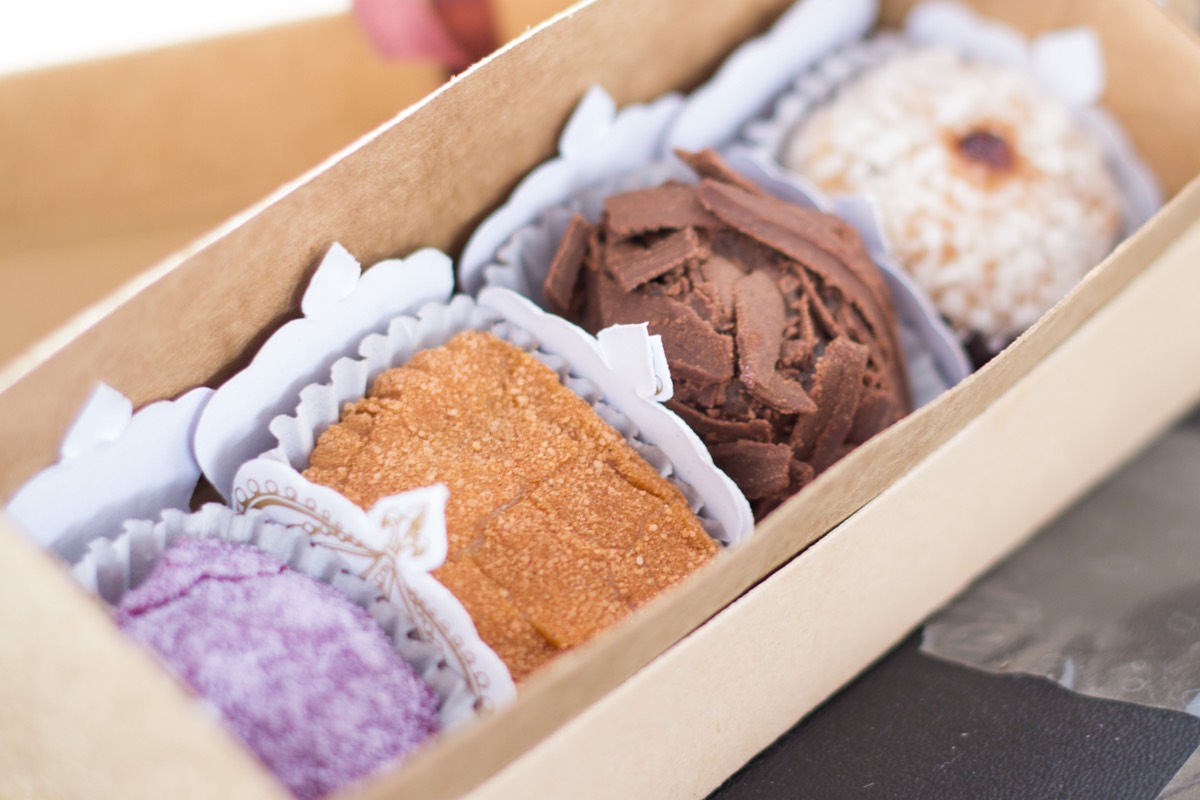
Matheus Duarte used to be a graphic designer at a Procon (consumer-protection agency) in Rio. Today the Brazilian dessert brand he founded with family and friends, Afagá, does R$1.25 million (~$220K) a year, with celebrities lining up. But the business began with a bicycle that couldn't sell, and a stretch of street life people crossed the road to avoid.
Stage 1 — The start (2017): a designer quits, fails to sell sweets from a bike, and takes to the street
In 2017, Matheus quit his graphic-design job at Procon and, together with his cousin Jessica Veras and childhood friend Thayanini Magalhães, decided to make brigadeiro — Brazil's national sweet, a chocolate ball of condensed milk and cocoa. At first he tried selling from an adapted bicycle — it didn't work.
So the three switched to being camelôs (street vendors): making the sweets in Matheus's parents' apartment in Penha, then wheeling the cart out to wealthy neighborhoods like Ipanema (Tuesdays and Thursdays around Rua Visconde de Pirajá).
The start was brutal: some weeks brought in under R$150. Harder than the lack of money was the dignity: "I was thrown out of shops, and I'd see acquaintances cross to the other sidewalk just to avoid running into me," is how he sums up those street years. Most people would quit in that shame. These three didn't.
Stage 2 — The pandemic turn: Instagram turns a street cart into a brand with celebrity clients
The break came with the pandemic. During that time, their Instagram (@afagabr) grew fast. The product and reputation they'd ground out over years on the street were amplified, all at once, by that megaphone.
Celebrity clients came knocking — Brazilian actors like Camila Pitanga, Renata Sorrah, and Paulo Betti became customers. A once "hounded street cart" had become a dessert brand with real online pull. The people who catch an opportunity cleanly when it arrives are usually the ones who'd already stocked the cart on the street.
Stage 3 — From a single brigadeiro to a product line + a physical store (2021)
They didn't stop at one brigadeiro. The line expanded from brigadeiro to bolo no pote (cake in a jar), chocolate bars, Easter eggs, and later their signature — a sea-salt caramel cake.
In 2021, they opened their first physical store, Casa Afagá, on Rua Uruguai in Andaraí, and upgraded it into a café: matcha lattes, brunch, bentô cakes with funny phrases. They use the national hit brigadeiro as the hook to pull customers in, then raise average order value and repeat rate with higher-ticket cakes, gift boxes, and coffee.
Stage 4 — Past the million mark: R$1.25M in 2024, targeting R$2M in 2025
Through all of it, they took zero outside funding and no loans. A three-person street cart, reinvesting profit step by step, grew into an 18-person team.
In 2024, Afagá's revenue passed a million for the first time — R$1.25 million to be exact (~$220K). For 2025 they project R$2 million (with over R$1M expected in the first half alone), and plan to open their first subsidiary in 2026 at the Taste Lab food hall in Tijuca.
A bicycle that couldn't sell and a stretch of street life people crossed the road to avoid had become, eight years later, a celebrity-favorite Brazilian dessert brand pulling in millions of reais a year.
"I was thrown out of shops, and I'd see acquaintances cross to the other sidewalk just to avoid running into me." — Matheus Duarte (paraphrased from public interviews)
Source: Time Out Rio · Terra · Instagram @afagabr
Thinking
Insight 1: A "street cart" is the cheapest possible market test — validate first, open a store later
Most people get the order backwards: spend on rent, build-out, and inventory first, then pray someone walks in. Afagá did the opposite — an adapted bicycle plus their parents' kitchen, putting the product straight into real customers' hands on the street. If it didn't sell, all they lost was ingredients.
A street cart isn't a "lowly form you only resort to when broke"; it's an underrated, near-zero-cost demand test that, before you sink money into heavy assets, tells you brutally and honestly whether anyone will pay — and whether they'll come back. Validate "does anyone buy this" with the lightest method first, then talk about opening a store. Get that order right and you dodge the single most fatal mistake founders make.
Insight 2: Surviving the dignity low of "being chased off, friends avoiding you" is itself a moat
Matheus was thrown out of shops and watched acquaintances cross the street to dodge him — a shame that deters 99% of people. But those very street years sharpened both the product and his thick skin and selling instinct.
Cold-start hardship is itself a moat: the people willing to endure it, and endure it for long, are vanishingly few. This is the same hidden thread as "a slow start is a filter" in so many cases — competitors aren't beaten by your product; they're deterred by the unseen, unrewarded, eye-roll-laden days. Whoever outlasts that stretch has already won on the road no one else will walk.
Insight 3: Opportunity (the pandemic/Instagram) isn't luck — it's a megaphone for those who already stocked the cart
It's easy to credit Afagá's takeoff to "the luck of the pandemic + Instagram." But the truth: they'd already spent three years grinding out product and an audience on the street, and Instagram simply amplified that accumulation all at once. Under the same pandemic tailwind, anyone without product or reputation caught nothing.
This is the most important reframe about "luck": the megaphone is open to everyone, but only those who stocked the cart in advance can catch it. Rather than waiting for a tailwind, keep refining the product and accumulating repeat customers and content during the no-traffic days — so that when some platform tailwind or viral moment arrives, you're the one who takes off.
Insight 4: Use a "national hit" as the hook, then steer customers to higher-ticket items
Brigadeiro is a sweet every Brazilian loves and understands — a perfect hook product: low decision barrier, fast word-of-mouth, easy first purchase. But a single brigadeiro has a low ticket and a low ceiling.
Afagá's cleverness: acquire with the national hit, then steer the same customers to higher value with bolo no pote, Easter gift boxes, sea-salt caramel cake, and a café menu. It's a "low-barrier acquisition + high-ticket monetization" combo. When you choose products, be clear which one is your traffic-driver and which are your profit-makers.
Insight 5: No funding — grow on cash flow, and keep pace and brand in your own hands
Three people to 18, cart to store to subsidiary — Afagá took no outside money and no loans, reinvesting profit the whole way. Slow, but every step stood firmly, with brand and growth pace entirely in their own hands.
For an ordinary person with no resources or connections, this is actually the most realistic and the most stable path: not hostage to capital, not anxious about repayments, letting the business earn the money for its own next step. Its ceiling may be lower than venture-backed startups, but its survival odds, its freedom, and its resilience are all far higher.
Action
Step 1: Validate with the cheapest "cart" first — don't open a store right away
Before signing a lease, building out, or stocking up, put the product in front of real customers with the lightest method — a cart, a market stall, pre-orders, taking orders over Instagram. Confirm two things: will anyone pay, and will they come back. The cheaper the test, the more times you can afford to be wrong. Burn "validate first, scale later" into your founding sequence.
Step 2: Pick a "repeat-friendly, extendable" hook product
Find a signature item that's not hard to make, has a low decision barrier, and can extend into a series (like brigadeiro for Afagá). Use it to pull customers in, then layer higher-ticket lines on top (cakes, gift boxes, set menus, subscriptions). Don't roll out a long list of SKUs on day one — earn one strong hit first, then build the lineup.
Step 3: Stock the cart during the no-traffic days, and wait for the megaphone
Don't sit waiting for a tailwind. In the days when nobody's watching, keep refining the product, accumulating repeat customers, and banking content. Platform tailwinds, viral moments, celebrity reshares — these "megaphones" will come eventually, but they only amplify what already exists. The more solidly you've stocked up, the cleaner you catch the moment.
Step 4: Tell your struggle story — give the brand a human face
Afagá's "from a hounded street cart to a celebrity dessert shop" arc is itself the best marketing. A real origin story travels further and earns more trust than any polished ad. Tell customers honestly why you started, what you endured, and how far you've come — people buy not just the product but the person behind it.
Step 5: If you can grow on cash flow, don't rush to raise money
Prefer reinvesting profit over borrowing or raising right away. Slower, but every step stands firm, and pace and brand stay in your hands. From cart to subsidiary, reinvest one footstep at a time — this path may not be sexy, but it's the most realistic, highest-survival way for an ordinary person to scale.
Not for you if: you can't stomach facing customers and rejection in person on the street; or you want to "open a store in one leap" and won't validate demand cheaply first; or you expect overnight virality — they ground it out on the street for three years before the moment that amplified everything arrived.