Nurse Couple Bet Their $30K House Savings on A2 Dairy Mac & Cheese, Started With ChatGPT — $1M in 20 Months
Pennsylvania nurse couple Samantha and Kevin Dwoskin discovered A2/A2 dairy while managing Kevin's Crohn's and Samantha's decade-long dairy intolerance. They bet their $30K house savings, taught themselves with ChatGPT, and built a 100% A2 mac & cheese brand — fully bootstrapped, zero outside money, $1M in 20 months.
Process
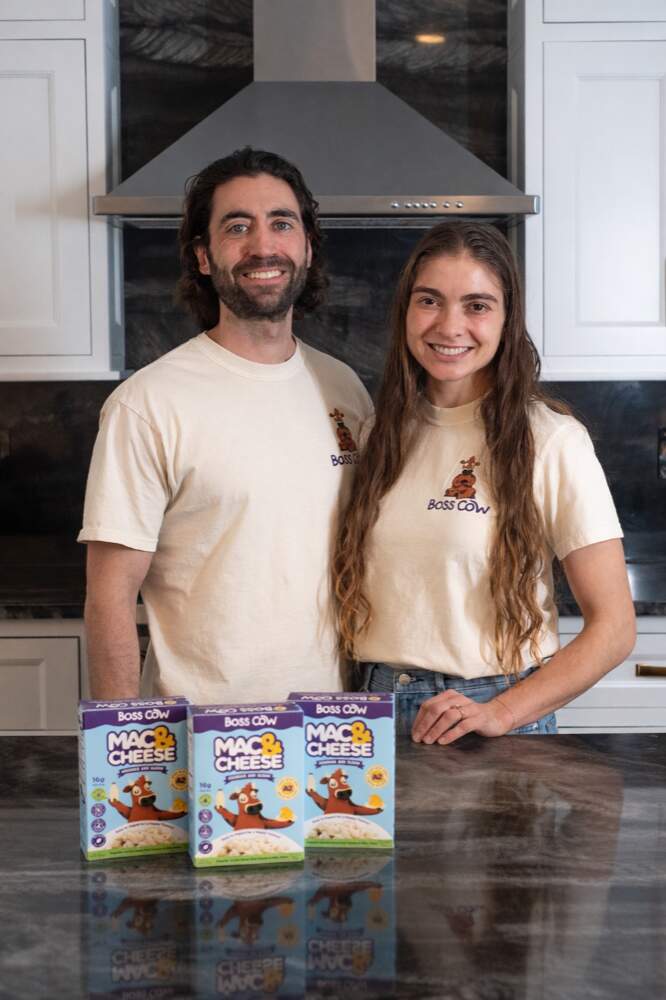
Samantha and Kevin Dwoskin are a married couple from Pennsylvania. Samantha is 32, a pediatric nurse practitioner. Kevin is 37. Their business didn't start with a business plan — it started with their guts.
Kevin has Crohn's disease. Working remotely after Covid, he overhauled his diet — switching to whole foods to help heal his condition. While researching, he came across a farm's blog post about something called A2/A2 dairy.
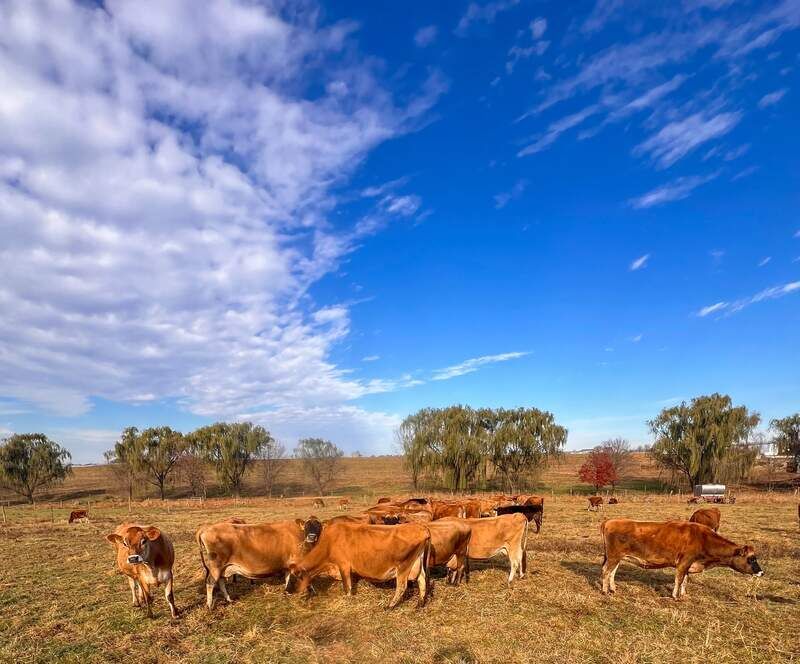
Regular cow's milk contains two beta-casein proteins, A1 and A2. For many people, the discomfort from dairy traces back to the A1 protein. But milk from certain cows (a specific genotype) contains only A2 — and people who are sensitive to typical dairy can often digest it without issue.
For Samantha, this was a revelation. She hadn't had dairy in over a decade — enduring the inferior taste of dairy-free alternatives to escape severe stomach discomfort. When she tried A2/A2 milk with no adverse effects, she reintroduced cheese, ice cream, and butter back into her life.
From Cookies for Friends to a Business
They had no plan. It started as a passion project — making A2/A2 dairy products for themselves. When Samantha set out to find A2 cookies, she realized none existed on the market. So she made her own. They sent A2 cookies to friends and family, and they were a hit.
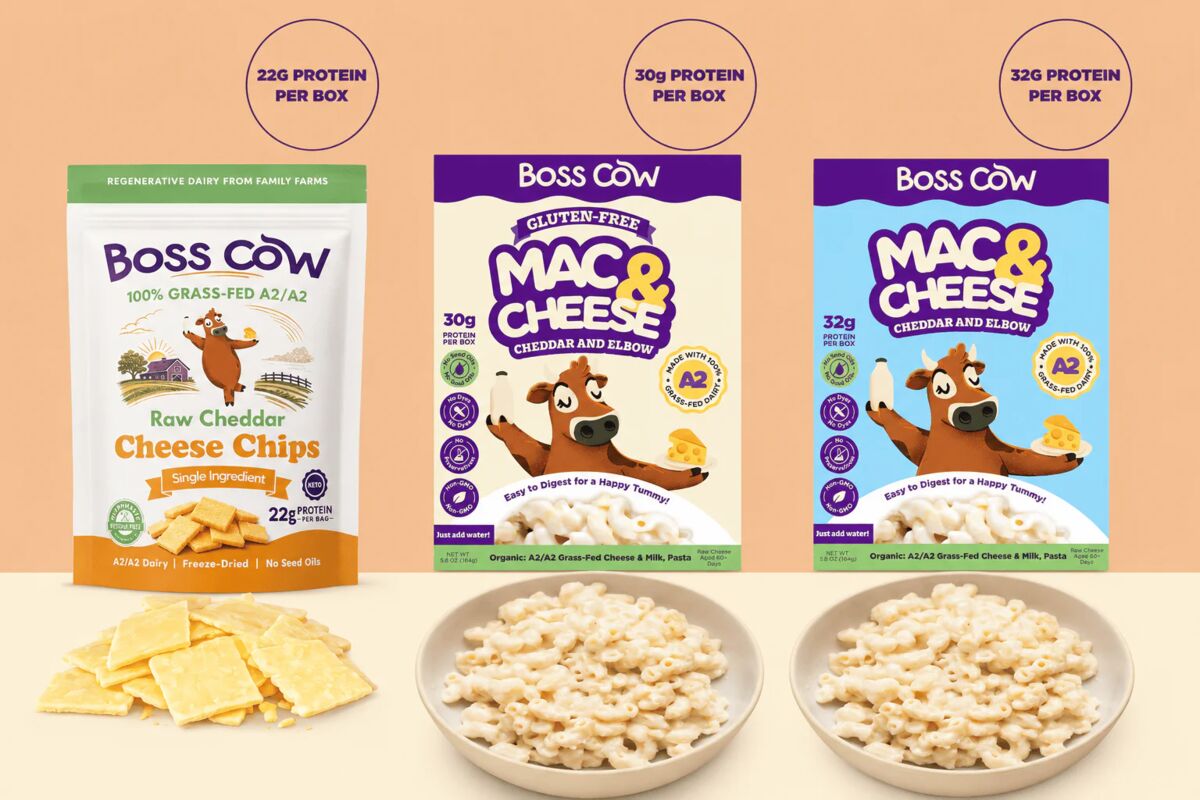
"If it's this popular, let's try selling something." They sold the cookies at farmers markets and online. But they quickly pivoted to something they loved and missed eating that also had a longer shelf life: mac & cheese.
No R&D Budget — So They Drove Around and Learned It Themselves
Developing a new food product normally costs up to $100,000 in R&D alone. They didn't have it. So they did it themselves — driving around for many months meeting farmers to learn about A2/A2 dairy, regenerative agriculture, and their supply chain.
The startup capital was $30,000 from their savings that they'd originally planned to use to buy a house. They put it toward ingredients, equipment, branding, and a website. 100% self-funded — zero outside investment, including from friends or family.
And one of their key self-teaching tools was ChatGPT (back in 2023, when it wasn't nearly as capable as it is now) — using it to research, learn, and execute every aspect of the business.
The Biggest Obstacle: Finding a Manufacturer Who'd Say Yes
Their biggest unanticipated challenge was finding co-manufacturers willing to work with their unique ingredients — A2/A2 dairy plus zero tolerance for preservatives, additives, or anti-caking agents. You can't just walk into a mac & cheese manufacturer and ask them to make it your way. This barrier blocked most people — but it also meant that once they broke through, competitors couldn't easily replicate them.
The Growth Curve
Around month 7, they started consistently seeing revenue in the $10,000/month range — driven by marketing research, trial and error, and data-driven optimization of their website and paid advertising.
The real explosion came when two things landed at once: manufacturing capacity for the mac & cheese was unlocked AND the marketing engine was turned on — right as they became experienced on the marketing side. The timing was perfect.
In 2025, about 20 months after launch, they crossed $1 million in annual revenue.
"Looking back on what we've created from literally nothing and seeing how far we've come — it feels really good." — Kevin Dwoskin
The A2 Source
Today and Beyond
The 2026 goal is $3M in annual revenue, plus a new product line launching soon to reach a new customer segment. From two people's gut problems to a million-dollar health food brand — built not on funding, but on betting their house money on something they need to eat every day.
Source: Entrepreneur Interview · Boss Cow
Thinking
Moat 1: The Founders Are the Product's First — and Most Demanding — Users
Boss Cow didn't start from "how big is the market." It started from Kevin's Crohn's disease and Samantha's decade of dairy intolerance. That means two things: ① they have near-obsessive standards for quality (because getting it wrong means their own bodies suffer); ② they intuitively understand the customer, because they ARE the desperate customer who searched the whole market and found nothing. In health food — a category built entirely on trust — this "founder as extreme user" origin is the single hardest advantage for capital or big brands to replicate. A big company can outspend you on marketing, but it can't manufacture a founder who genuinely lived ten years of the pain.
Moat 2: Ultra-Narrow Niche + Zero-Compromise Formula = Built-In Competitive Wall
A2/A2 dairy is rare to begin with; layer on hard constraints of zero preservatives, zero additives, zero anti-caking agents, and their biggest pain point (finding a co-manufacturer who'd say yes) becomes their strongest moat. Once they spent months working out this supply chain — finding the factory willing to use A2 milk and produce additive-free — any latecomer has to walk the same brutal path. The narrow niche scares off 90% of competitors; the remaining 10% still have to clear the supply-chain gate.
Moat 3: Using AI to Collapse a $100K R&D Barrier Down to Under $30K
This is the part of the case most aligned with the AI era. Traditionally, developing a new food product (formulation, compliance, supply chain design) might cost $100K and require consultants. The Dwoskins used ChatGPT (the much weaker 2023 version) plus hands-on driving-around learning to save that money. The point isn't that ChatGPT made the product for them — it's that AI dramatically pushed out "the boundary of what a regular person can self-teach," letting two nurses understand regenerative agriculture, A2 genotypes, food compliance, and e-commerce marketing on their own. The real leverage of the AI era isn't getting AI to do your work — it's being able to do what previously required a whole team.
Moat 4: Validate Demand With Cookies, Then Pivot to a Long-Shelf-Life Core Category
This is an underrated tactic. Cookies were their lowest-cost litmus test for "does the market actually want A2 baked goods" — fast to make, instant feedback when given away. Once demand was validated, they immediately pivoted to a commercially superior category: mac & cheese (long shelf life, stockable, wholesalable, high repeat rate). Many founders die by falling in love with their first product form. The Dwoskins validated with cookies and scaled with mac & cheese — that validate-then-scale sequence is very smart.
Action
Step 1: Find Your Product in a Real Problem You've Already Solved for Yourself
All of Boss Cow's momentum came from the founders' own health pain. Ask yourself: is there a problem you struggled with for a long time and eventually found a solution to — one you couldn't buy anywhere? That solution is very likely something others are searching for too. Health, parenting, pets, chronic conditions, special diets — in these high-emotion, high-trust categories, "I am the person tormented by this problem" is the strongest possible starting point.
Step 2: Validate Demand With the Lowest-Cost Product Form First
Don't start with the most complex, most expensive, longest-R&D product. The Dwoskins made cookies first (fast, cheap, easy to give away) to validate "does the market want A2 food" through real reactions from friends and family. Your first product should be the form that lets you see genuine purchase intent fastest — not the form you ultimately want to sell. Upgrade to the core category after validation.
Step 3: Use AI as Your R&D Consultant and Supply-Chain Mentor
The Dwoskins self-taught knowledge that would normally cost $100K in consultants, using ChatGPT. Today's AI is far stronger than the 2023 version. Before you invest in any physical product, use AI to drill into these questions: What does this category's supply chain look like? What are the compliance requirements? How do you find co-manufacturers? What should the price range be? Treat AI as a 24/7 startup advisor that knows a little about everything — it can minimize the "money burned through ignorance."
Step 4: Treat "Hard-to-Find Supply Chain" as an Opportunity, Not an Obstacle
Most people quit when they hit "no manufacturer will make this." Flip it: if this is hard for you, it's equally hard for your competitors. The Dwoskins spent months driving around to find a factory willing to make additive-free A2 products — and that grind became the very wall that keeps others out. When you find a step that's especially hard to break through, don't rush to quit — ask: once I break through it, will it become my moat?
Step 5: Do the Right Things Before Scaling — Don't Hire Help Too Early
The Dwoskins have a lesson: early on they hired cheap help, which "didn't move the needle and wasted time, energy, and money." Kevin's advice: "Research, learn, and execute every aspect of your business as much as you possibly can before looking to others for help." A small team's core advantage is zero coordination cost, fast decisions, and intimate knowledge of every step. Before you truly understand how every gear of the business turns, hiring too early is often buying the illusion of "looking like progress."