She Started Making Slime at Home, Then Shut the Shop When the Craze Faded: After a Relaunch, TikTok and YouTube Shorts Brought It Back — Friday 7pm Drops Sell Out in About Two Minutes, 110,000+ Jars Sold in 2021
Andrea O. was a YouTuber making fashion and lifestyle vlogs. During the 2016–2017 slime craze she posted a video of herself making slime; it got hundreds of thousands of views overnight, and viewers kept asking to buy it. In February 2017 she started Peachybbies at home with her mom and sister. By mid-2019 the craze had faded, sales plummeted and she shut the store. That year she met Tyler, who became her business partner; together they invested about $30,000 and relaunched on Black Friday 2019. In summer 2020 she started posting on TikTok consistently, growing from about 20,000 followers to 1 million by year's end; in February 2022 her YouTube Shorts jumped from under 100,000 views a month to about 100 million. They have never paid for ads. New slimes drop every Friday at 7pm ET and often sell out in about two minutes. In 2021 they sold more than 110,000 jars at $14 to $17 each. By 2022 the team had 30-plus people and moved into a 25,000-square-foot facility in Austin. Today the YouTube channel has 10.6 million subscribers.
Process
To be clear up front: Peachybbies is now a small company with dozens of employees, and it didn't start as a one-person operation either. It began with Andrea, her mom and her sister, and later her business partner Tyler. No outside funding has been found. It's included because of how ordinary its start was: a vlogger and one video of her making slime.
Business Insider referred to her only as Andrea O. to protect her privacy, and this article does the same.
Stage 1: One Video Turned a Vlogger into a Seller
In 2014, Andrea started a YouTube channel, andreaXandrea, making fashion and lifestyle vlogs. "I always wanted to be a full-time content creator," she later said.
In 2016 and 2017, slime suddenly took off among American teens. She posted a video of herself making it. "I had a few thousand subscribers at the time, but my video making slime got hundreds of thousands of views overnight."
The comments started asking the same question: could they buy her slime? "People who watched my videos kept asking me if they could buy the slime I made." In February 2017, she founded Peachybbies.
It started as a family operation: her mom and sister helped out, working from the house. There were only two textures, jelly and cloud-creme, plus charms and scents, at about $17 each, and restocks sold out in minutes. She admits: "I had no idea what I was doing, so there was a big learning curve."
Stage 2: The Craze Faded, and She Shut the Store
The slime craze came fast and went just as fast. By mid-2019 it had faded and sales plummeted. Andrea shut the store and went back to focusing on YouTube, paying the bills with a handful of brand deals. Her partner Tyler later recalled that in early 2019 the company was "making basically no money."
That same year, she met Tyler online. He was a professional poker player looking for a change. The two went to slime events together, and Tyler felt that with the right infrastructure, there was still opportunity. He convinced Andrea to try again.
Together they invested about $30,000 in a new logo, website and packaging, a new mixer and inventory, and got back to work in the living room as 50/50 partners. Peachybbies relaunched on Black Friday 2019. The first six months, Andrea says, were "slow but steady."
Stage 3: From Instagram to TikTok
For the first six months after the relaunch, they focused almost entirely on Instagram. The reason was simple: a 10-minute YouTube video took Andrea two or three days to film and edit.
In February 2020 they formed an LLC. That summer Andrea moved from Florida to Texas, and the shop moved from an apartment into a house. At the same time, she started posting on TikTok consistently. She had about 20,000 followers then; by the end of 2020 she had 1 million.
Orders followed. In September 2020 they leased their first warehouse, 1,300 square feet; by year's end they had their first employee; in April 2021 they moved into 5,000 square feet. In 2021 they sold more than 110,000 jars of slime at $14 to $17 each. A batch took about an hour and made around 100 jars, and they made 50 to 75 batches a week.
Stage 4: YouTube Shorts Suddenly Exploded
In early 2022 they started posting two YouTube Shorts a day. "We were uploading two videos a day for like two months straight and they were only getting a few thousand views each. Then BOOM, everything started getting 500,000+ views."
The numbers were extraordinary: before January 2022 the channel got under 100,000 views a month; in February it got about 100 million. As Andrea put it: "The algorithm all of a sudden decided we were worth viewing, lol."
Celebrities helped too. Kim Kardashian and her daughter North shared Peachybbies slime on their TikTok account, @kimandnorth, and Kim gave it a full review on her Instagram stories. "When celebrities like Kim Kardashian and her daughter North share our product unexpectedly, sales skyrocket," Andrea said.
When Business Insider profiled her in April 2022, the company had 20 employees and 4.5 million TikTok followers, and she was 25.
Stage 5: Fridays at 7pm, Sold Out in Two Minutes
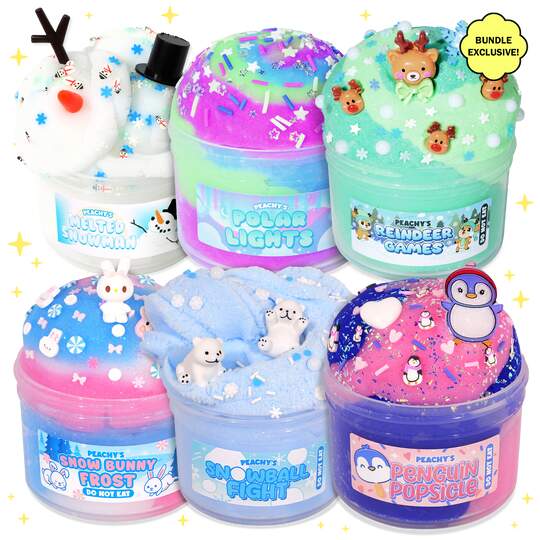
Peachybbies has always sold the same way: limited drops on its website every Friday at 7pm Eastern. In 2022 each drop had 40-plus varieties with 100 to 300 jars each, and "the store sells out in maybe two minutes." At peak, nearly 50,000 people were on the site at once for the Friday launch, and many customers set timers for exactly 7pm.
The scarcity isn't purely a marketing tactic. Tyler explains that slime needs to sell within a month or two to stay fresh, and production and staff are limited. They also set rules: only list what's already packaged by Friday, and don't list any slime with fewer than 20 units — those are kept for customer-service replacements.
New products come from a weekly routine: "Each week I put together a list of 20 new slime ideas. After I narrow it down to five, I make test batches." Many are named after food, like Chocolate Chip Cookie Dough and Dunkaroo Dip, and their TikToks use fake food props in real packaging. Tyler found that what sells depends mostly on the theme and label, not the texture: one called "De-Stress Dough," with a cute brain on the label, sold out in about four minutes, while others took around 20.
They have never paid for ads. "We haven't spent a penny on paid ads, which is very unusual in the ecommerce world," Andrea said. Their only promotion is an email blast 30 to 60 minutes before each restock, costing about $2,000 a month. Once they forgot to send it, and that restock took about 30 minutes to sell out. In 2022 their repeat-customer rate was over 40%, up from the 20s the year before.
Stage 6: A Content Company or a Slime Company?
Peachybbies makes everything in-house. Tyler's reasoning is unusual: "If you outsource the manufacturing, you have nothing to film. You've lost your main marketing funnel." He even said: "I see us mainly as a social media marketing company."
Andrea sees it the same way: "If we have nothing to sell, then what's the point of making content…but if we don't have content to promote us, then eventually we won't be able to sell any slime!" She splits her time roughly 50/50 between content and product. In 2022 Andrea filmed the main TikTok account (5 million followers) herself, while two full-time creators ran a second account, posting 14 times a week.
In August 2022 they moved into a 25,000-square-foot facility in North Austin, with a team of 30-plus, many working part-time weekend shifts. In the new building, each department's carts are color-coded — blue for content, red for the slime kitchen — because at the old warehouse people kept "stealing" each other's carts. "I honestly can't believe how far we've come in these past two years," Andrea said in her moving video.
In September 2024, Peachybbies was the 35th most-viewed YouTube channel in the US. As of October 2026, the channel has 10.6 million subscribers and 12.8 billion views; the website still drops new slime every Friday at 7pm, offers subscriptions, and there's an Amazon storefront.
Some people think selling slime is kids' stuff. Andrea's answer: "Don't underestimate any industry!" She points to the Snuggie, a blanket with sleeves, which people also laughed at — and it sold over 30 million units. "Slime is an amazing sensory toy for things like stress and anxiety. I personally use it to help ground myself when I start to panic."
Thinking
1. Audience first, product second. Peachybbies didn't build a product and then look for customers; viewers asked to buy first. A creator's biggest advantage is knowing whether people want something before investing in making it.
2. Shutting down isn't the same as failing. When the craze faded in 2019, Andrea closed the store. A few months later she started again with a new partner, a new brand and new channels. Many businesses don't work the first time; on the second try, the lessons and the audience are still there.
3. A complementary partner matters. Andrea is strong at content and execution; Tyler at strategy and infrastructure. His judgment and investment reopened a store that had already closed.
4. Tying content to production is a moat. Making everything in-house means there's always something to film: mixing, adding ingredients, packing. Outsourcing could cut costs but would cut off the most important source of marketing.
5. Limited drops solve several problems at once. A fixed weekly drop keeps the product fresh, keeps production manageable and trains customers to set timers. A repeat rate rising from the 20s to over 40% is the result of that habit.
6. Platform waves arrive suddenly; be ready to catch them. TikTok in 2020 and YouTube Shorts in 2022 both brought explosive growth. They could catch those waves because they'd been posting consistently for a long time and already had the space and team to scale.
Action
1. Film what you're already doing. If you have a craft or a hobby, post consistently and see what viewers respond to — and whether they ask where to buy.
2. Let audience demand tell you what to sell. Watch for questions that keep coming up in comments and messages. When lots of people ask "Can I buy this?", it's time to try selling.
3. Drop new products on a fixed schedule. A set weekly or monthly drop tells customers when to show up. It helps you control inventory and builds repeat buyers.
4. Making the product yourself is your best content. Don't rush to outsource. The making, the packing and the new-product tests can all become videos.
5. When a business stalls, pause before giving up. If the market cools, you can close the shop for a while, keep your accounts and audience, and restart once you find a new approach or a new partner.
6. Find a partner who covers your weak spots. If you're good at content, find someone strong in operations, finance or strategy, and vice versa. Agree on equity and roles before you partner up.