Saving Sleep-Deprived Parents Worldwide: How Espen Janson Scaled Napper's AI Baby Sleep Predictor to 61M SEK Revenue
Napper began as a baby sleep app a Stockholm dad on parental leave built for his own daughter; it hit the App Store in December 2019. Co-founders Espen Janson (CEO, ex-Stardoll), Viktor Lindberg and Clarence von Rosen didn't build yet another feeding-and-diaper log — they focused on predicting a baby's next nap. They saturated Norway and Sweden first: 47% of babies born in Norway in 2024 and 39% in Sweden were registered in Napper. The company took only modest angel money, and the founders kept about 80%. Revenue grew from about 15.5M SEK in 2023 (3.4M operating profit) to nearly 61M SEK in 2024 (about 2M operating profit); Swedish company data puts 2025 at 83.3M SEK with 0.8M profit.
Process
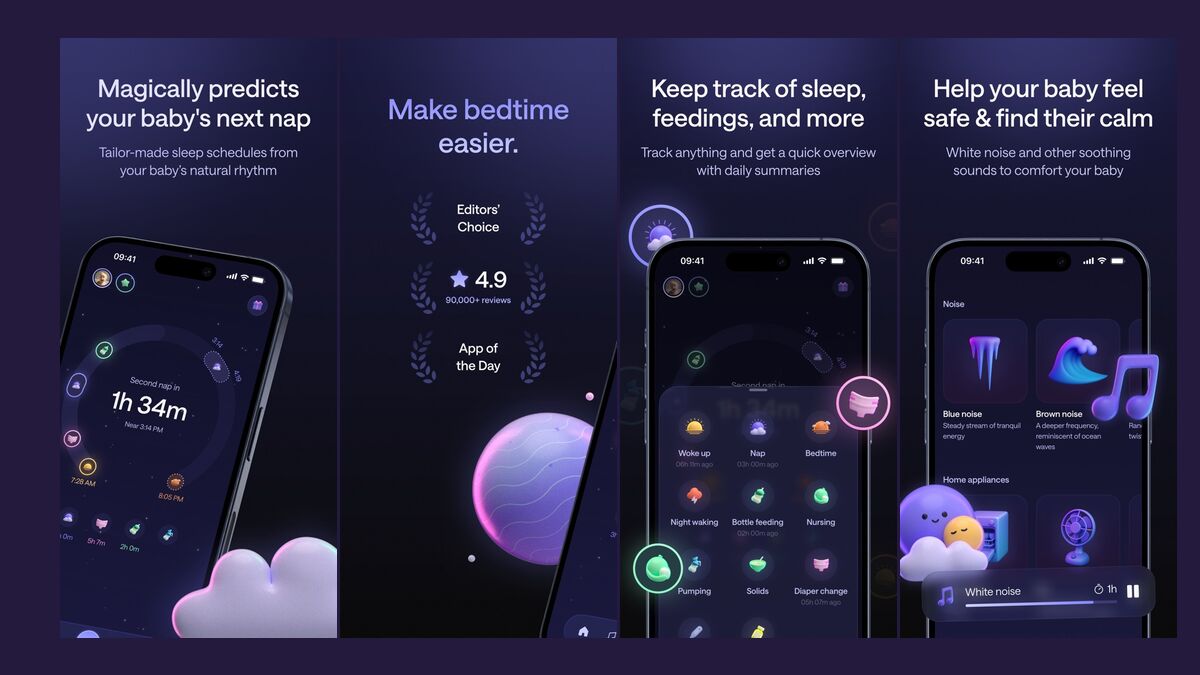
One of the questions new parents ask most often is: "When should the baby nap next?"
Put the baby down too early and they squirm, not tired yet; too late and they're overtired and cry instead. Many baby sleep apps can only help you log how long the baby slept and how often they fed — they can't answer that question.
Napper answers it directly: based on a baby's natural sleep rhythm, it predicts the next nap and bedtime.
The app comes from Stockholm, and its three co-founders are Espen Janson (CEO), Viktor Lindberg and Clarence von Rosen. The public numbers:
- 2023: about 15.5M SEK in revenue, 3.4M operating profit;
- 2024: nearly 61M SEK in revenue (about $5.7M), almost 4x growth, about 2M operating profit;
- 2025 (per Swedish company data): 83.3M SEK revenue, 0.8M profit;
- Market penetration: 47% of babies born in Norway in 2024 and 39% in Sweden were registered in Napper;
- Capital: only modest angel investment; the founders still owned about 80% in 2024.
A note: Napper has grown into a multi-person team (public databases show roughly 20–50 people), so it isn't a solo business. But it barely relied on funding and won two small national markets through word of mouth — a path small teams can learn from.
Phase 1 · A dad's parental-leave project (2019)
According to its App Store listing, Napper was originally built by a dad on parental leave for his "not-so-sleepy baby girl." He tried existing sleep tools, thought "I could do this better," and built the first version. Napper launched on the App Store on December 22, 2019.
CEO Espen Janson previously worked at the Swedish games company Stardoll; Viktor Lindberg handles full-stack development; Clarence von Rosen is the third co-founder and a board member.
Phase 2 · From logging to predicting
Most baby apps are digital diaries: how much milk, how many diaper changes, how many hours of sleep. Logging alone doesn't help parents make decisions.
Napper's core is a personalized schedule prediction:
- It builds a daily schedule from the baby's natural sleep rhythm and infant sleep research;
- The schedule adjusts automatically as the baby grows and sleep needs change;
- The home screen simply shows "Second nap in 1h 34m."
Around that core it offers:
- Tracking for feeds, diaper changes and more, with daily summaries;
- White noise, lullabies and nature sounds;
- Sleep courses and advice;
- Multiple caregivers sharing one baby and one subscription — parents, grandparents and nannies all see the same schedule.
It's a subscription business, and new users get a 7-day free trial.
Phase 3 · Saturating Norway and Sweden first
Napper didn't spread worldwide from day one. It first reached extremely high penetration in the Nordics:
- In April 2024, investor Henrik Torstensson wrote that about 25% of Norwegian families with a baby under 18 months were using Napper, with Sweden close behind;
- For all of 2024, 47% of babies born in Norway and 39% in Sweden were registered in Napper.
Norway has only about 5.5 million people, Sweden about 10 million. In markets that small, new parents' social circles overlap heavily — prenatal visits, parenting groups, friends and family recommending things to each other — so a good app spreads quickly. The company hasn't disclosed its acquisition channels, but penetration like that points to strong word of mouth.
On the App Store, Napper holds a 4.9 rating and has earned Apple's Editors' Choice and App of the Day.
Phase 4 · 2023: little capital, already profitable
In 2023, Napper made about 15.5M SEK in revenue and 3.4M SEK in operating profit — roughly a 22% margin.
On capital, it took only modest angel investment. Swedish tech outlet Breakit reported that its backers include former Stardoll CEO Mattias Miksche and Kry co-founder Johannes Schildt, among other tech figures. Some databases also list Accel and VNV Global as investors, but we found no official confirmation. In 2024, the three founders still owned about 80% combined.
Phase 5 · 2024: revenue quadruples, expansion abroad begins
2024 revenue reached nearly 61M SEK, almost four times the previous year; operating profit was about 2M, a margin of around 3%.
In the same period Napper launched localized versions such as German and Spanish (in Germany the app is called "Schlafplan & Geräusche") and began expanding beyond the Nordics. The English App Store listing says it has helped "more than 100,000 families," while the website says "millions of families" use it.
Phase 6 · 2025: slower growth, thinner profit
According to Swedish company data, Napper's 2025 revenue was 83.3M SEK, up about 37%, with profit of just 0.8M SEK.
From 2023 to 2025, revenue grew more than fivefold while profit fell from 3.4M to 0.8M. That usually means the company is trading profit for growth: spending on marketing, hiring and new markets.
Thinking
1. Answering one specific question beats logging lots of data
"When does the baby nap next?" is a question new parents face several times a day. Napper turns complex sleep science into a countdown on the home screen, so every time parents open the app they get a clear answer. Tools that make decisions for users are easier to charge for than tools that only record.
2. Reach very high penetration in a small market first
In Norway, nearly one in two newborns is registered in Napper. Small markets have dense social circles and fast word of mouth, and big competitors don't prioritize them. Becoming "the app everyone uses" in one place, then expanding with a proven product and reputation, is more realistic than fighting big companies in the US from day one.
3. This business loses users by design, so penetration is the key metric
Babies grow up fast, and most families only need a sleep app for the first year or two. Every year a cohort of users leaves and a new cohort of parents arrives. The real measure of Napper isn't total users but the share of each year's newborns using it.
4. Growth and profit require trade-offs
Margins were about 22% in 2023, about 3% in 2024 and about 1% in 2025. Fast expansion means buying traffic, localizing and hiring, which eats profit. Small teams need to be clear about which stage they're in: lock in steady profit first, or trade profit for scale.
5. Risks and limits
- Tough competition: the US already has established baby sleep apps such as Huckleberry, so expanding abroad isn't easy;
- Expertise and trust: advice about infant health needs scientific grounding; one mistake can flip word of mouth quickly;
- Data sources: 2025 figures come from Swedish company data summaries, not an official company release; "millions of families" is the company's own claim;
- Not a solo business: Napper is a multi-person team (roughly 20–50 per public databases), so copying it takes a small team, not a personal side project.
Action
Step 1: Find a pain point that "renews every year" (1 week) New parents, new employees, first-time pet owners, students preparing for exams — these groups refresh every year, so the need never goes away. List 3–5 groups you know well and write down the one question each asks most often.
Step 2: Build the product to give answers, not just store data Decide what your home screen should tell users the moment they open the app — like "Next nap in 1h 34m." Logging exists to make the answer more accurate; it isn't the product.
Step 3: Saturate a small market or language first Pick a market you know well, with little competition and tight social circles (a country, a city, a community). Make "penetration of the target group" your core metric.
Step 4: Use a free trial so users see results first Offer a 7-day trial like Napper. Make sure users experience the core value during the trial (e.g., putting the baby down at the predicted time really goes more smoothly).
Step 5: Design sharing within families or teams Let multiple caregivers share one subscription. Every extra person is another recommender and makes cancellation less likely.
Step 6: Localize and expand only after you have word of mouth Once you've won the first market, add languages, starting with markets whose culture and parenting habits are similar.
Step 7: Review your margin every quarter Expansion costs money for traffic and hiring. Set a floor — such as a minimum margin — so growth doesn't turn the company unprofitable.
Not for you if:
- You have no real experience with the target group and can't judge whether the product's advice is sound;
- You want a solo side project — products like this need ongoing content, support and localization, usually from a small team;
- Your field touches health and safety, but you won't invest time in research or expert review;
- You only want to go after a huge global market and won't patiently win a small one first.