I Make $55K/Month From One Simple Widget: How Aussie Founder Tom Holliday Scaled Avenue to AU$85K MRR via Door-to-Door Sales
Australian founder Tom Holliday left school early and ran a marketing agency for 10 years, with 70+ clients paying for website hosting. He noticed how hard it was for customers to inquire with or book trades businesses — mechanics, electricians, joiners, equipment hire. Using agency income, he and his brother built Avenue: a 'Book Online' button on a business's Google profile and a booking widget on its website, plus SMS reminders, review requests and an AI phone agent. He can't code; a developer friend built the MVP in February 2025, and he hired a designer and developers before any revenue. Customers came from door-to-door iPad demos and printed brochures. Per Starter Story (September 2026), Avenue makes AU$85,000 a month (about US$55,000) roughly a year after launch, 100% bootstrapped.
Process
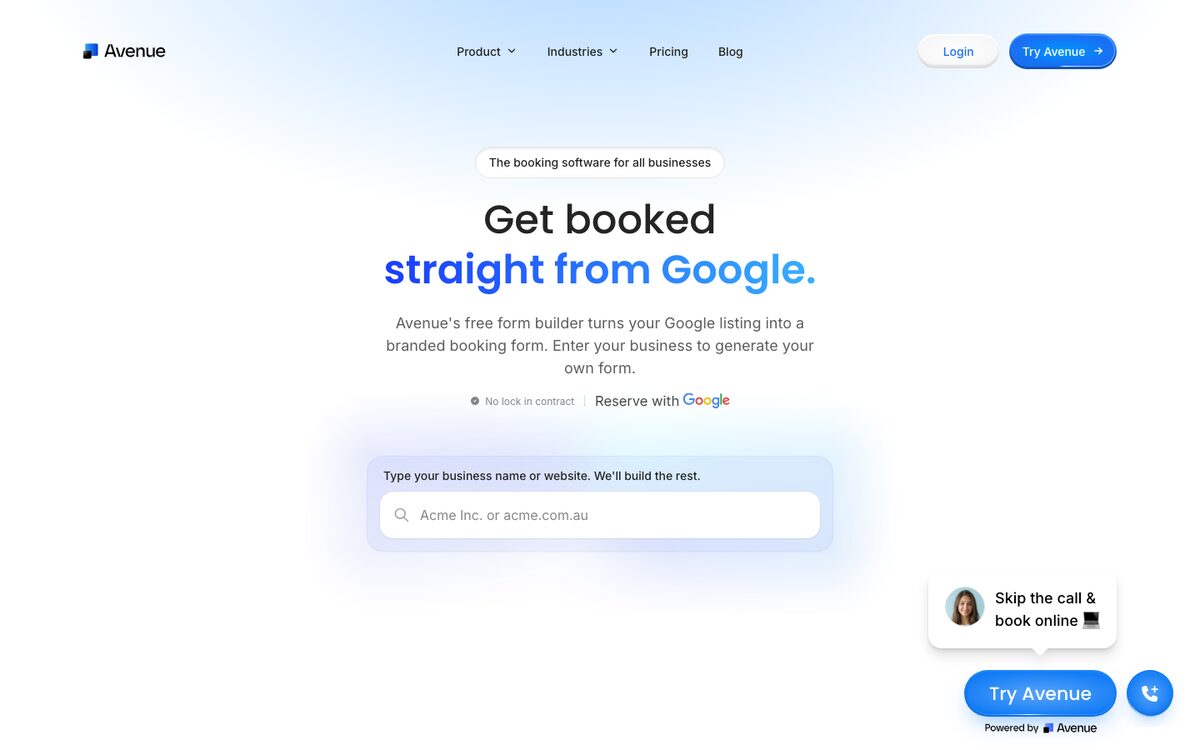
Have you ever tried to book a mechanic, an electrician or an equipment hire company by phone? Often nobody answers, or they're busy and you have to call back later.
Australian founder Tom Holliday noticed this problem. With his brother, he built a booking tool called Avenue: a "Book Online" button on a business's Google profile and a booking widget on its website, so customers can pick a service and a time in a few taps instead of calling.
According to a Starter Story interview published in September 2026:
- Avenue launched about a year earlier;
- It makes AU$85,000 a month (about US$55,000);
- It's 100% bootstrapped, with no outside investment.
Two things make this case worth studying: he can't code, yet he used income from an existing business to build a team first; and instead of buying traffic online, he went door to door with an iPad, demoing to one business at a time.
Phase 1 · Ten years of agency income as a war chest (before 2025)
Tom left school early. He went on to run a marketing agency for about 10 years, with 70+ clients paying monthly for website hosting.
That gave him two things:
- Steady cash flow: hosting fees are recurring revenue, which later funded Avenue;
- An understanding of local small businesses: he'd worked with them for years and knew how they took jobs and found customers.
Phase 2 · Spotting the problem: why is it so hard to reach these businesses? (2024–2025)
Tom noticed that many service businesses — especially trades like mechanics, electricians and joiners — made it hard for customers to inquire or book online. Usually the only option was to call, and these businesses were often too busy working to pick up.
He realized this customer group had a clear need, and they were "no bullshit kind of people" who just wanted tangible results: more bookings, fewer missed jobs.
Phase 3 · Can't code, so hire before earning (from February 2025)
Tom can't code. In February 2025, a developer friend helped him build the first MVP.
Then he made a bold call: he hired people before having any revenue — a lead designer, a head developer and a front-end developer — paying salaries entirely from agency income. His brother also helped build Avenue.
On tools and tech, Avenue runs on AWS (about $150/month), sends SMS through Twilio (about $4,000/month, the biggest cost), uses Vapi for AI voice (about $500/month), finds leads with Lusha, and uses Claude day to day.
Phase 4 · Selling door to door with an iPad (after launching in autumn 2025)
Avenue officially launched around autumn 2025.
Customer acquisition was very old-school: door-to-door sales. Tom walked into workshops and service businesses with an iPad and demoed, in person, how customers find the shop on Google, tap "Book Online," and pick a service and time. He also handed out printed brochures explaining what the product delivers.
He found in-person demos were the most effective approach. His principle:
"Sell before you build. Customers don't care how much went into something."
Phase 5 · The product: from a booking button to an AI phone agent (2026)
Today Avenue is much more than a booking widget:
- A "Book Online" button on Google Business profiles: customers who find the business on Google can book directly;
- A website booking widget: a visual form to tap a service and a time, no signup or login;
- SMS confirmations and reminders: instant confirmation, plus reminders 24 hours and 1 hour before;
- Automatic review requests: inviting happy customers to leave a Google review after the job;
- Two-way SMS: businesses and customers text each other directly;
- An AI phone agent (Sophie): answers calls 24/7 and books appointments by SMS;
- 100+ integrations: including Stripe and the workshop management software MechanicDesk.
Pricing (website): Standard $199/month, Premium (with two-way SMS) $395/month, AI agent $399/month, plus a free tier and custom enterprise plans. A workshop customer on the site says it got "210+ bookings in our first month."
By September 2026, Avenue was making AU$85,000 a month.
Thinking
1. Let an old business fund the new one
Many people assume bootstrapping means one person and zero cost. Tom did it differently: he used 10 years of steady agency income to hire a design and engineering team before earning anything. That's much faster than figuring it out alone — but it only works if you already have a profitable business.
2. The further an industry is from tech, the less competition
The market for tools aimed at developers and tech people is crowded. Mechanics, electricians and joiners rarely get software built well for them, and their needs are blunt: more bookings, fewer missed jobs. If the results are visible, they'll pay a few hundred dollars a month.
3. Door-to-door demos are the "dumbest" and most effective channel
These customers won't find you on Product Hunt and rarely respond to online ads. Showing an owner, in person on an iPad, exactly how customers book is more persuasive than any copy. It's slow, tiring and hard to scale, but ideal early on for validating demand and landing the first customers.
4. Plug into platforms customers already use
Avenue's smartest move is living on Google Business profiles. Businesses don't change any habits; customers already search for them on Google — there's just a new "Book Online" button. Riding a big platform's existing traffic is far easier than asking customers to learn something new.
5. Risks and limits
- Costs aren't trivial: every SMS costs money — Twilio runs about $4,000 a month and grows with customers — and AI calls have usage costs too;
- Dependence on Google: if Google changes how booking works on Business profiles or its partner rules, the core entry point could be hit;
- Numbers come from an interview: AU$85,000/month is self-reported, without third-party verification;
- Not a solo business: Avenue is two brothers plus a design and engineering team, so copying it takes startup capital or an existing income source.
Action
Step 1: Find an industry where booking still means calling (1 week) List service industries in your city that still mainly take jobs by phone: car repair, maintenance, cleaning, removals, pet grooming, installation... Make a few calls yourself and note how often nobody answers.
Step 2: Build a demo first, not the full product Use Figma or an off-the-shelf booking tool to make a clickable demo: the customer finds the shop on Google → taps Book Online → picks a service and time → gets an SMS confirmation.
Step 3: Take the demo door to door (2–4 weeks) Bring an iPad or phone, visit 20–30 businesses, and demo in person. Ask: how many calls do you miss a day? What's one extra booking worth? Leave a simple brochure behind.
Step 4: Build only after you have payment commitments Once a few businesses agree to pay or prepay, invest in development. If you can't code, partner with a developer friend or build the first version with AI coding tools.
Step 5: Integrate with Google Business profiles Research how to connect a booking entry point to Google Business profiles (Google's booking partner program) so businesses don't have to change any habits.
Step 6: Add features around "more jobs" SMS reminders (fewer no-shows), automatic review requests (better Google ranking), an AI phone agent (no missed jobs at night or at busy times). Every feature should clearly explain how much extra money it makes the business.
Step 7: Know your SMS and AI cost per customer SMS and AI calls are pay-as-you-go. Price so each customer's monthly fee covers these variable costs with enough margin left over.
Not for you if:
- You strongly dislike face-to-face selling and only want to acquire customers online;
- You have no startup capital or existing income but want to hire a team before revenue;
- You don't understand how the target industry works and can't persuade owners in person;
- You don't want to deal with usage-billed services like SMS and calls that need careful cost tracking.