Started with $150 in a Dorm Room Delivering Late-Night Cookies, Built 350+ Stores to a $350M Valuation: Seth Berkowitz's Zero-VC Playbook
In 2003, UPenn junior Seth Berkowitz craved warm sweets while gaming late at night but found only cold pizza delivery. With $150 in baking supplies, he baked cookies in his dorm oven and biked deliveries until 3 AM. A student newspaper front-page feature sent orders soaring to 80/night, netting $10,000 in his first semester. Using food trucks as low-risk retail MVPs before leasing stores, he bootstrapped Insomnia Cookies to 350+ locations, $200M+ revenue, and a $350M acquisition in 2024.
Process
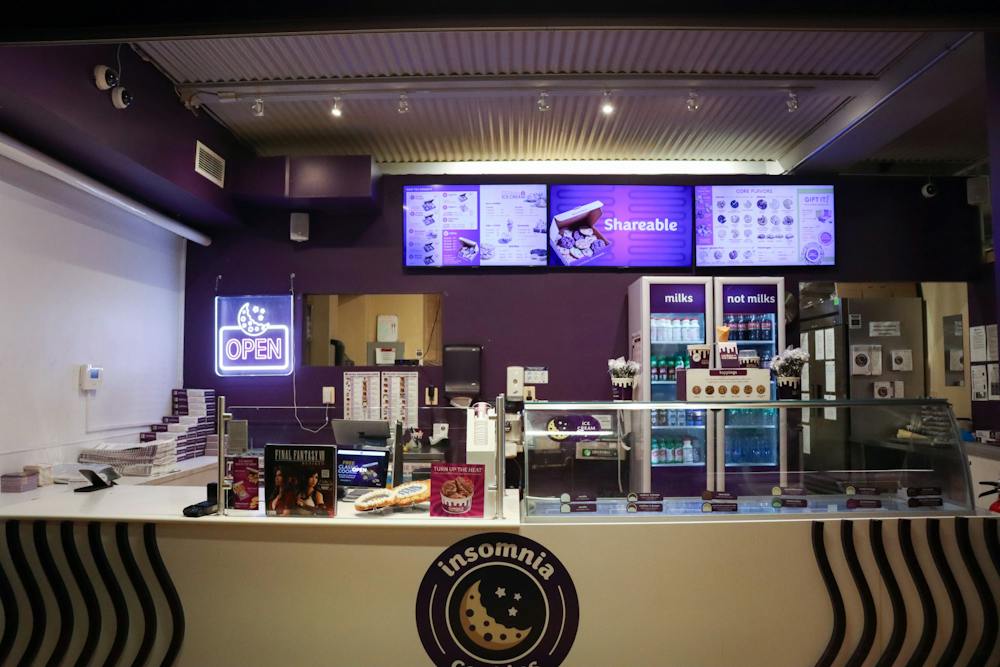
In the winter of 2003, University of Pennsylvania junior Seth Berkowitz was playing video games with his roommates late at night. Around midnight, the classic late-night craving hit hard. Long before smartphone food apps existed, the only food you could get delivered to a campus dorm at 1 AM was greasy, lukewarm pizza or cold Chinese takeout.
"Pizza and other go-to options were never as comforting as warm, fresh-baked cookies, and nobody wanted to brace the freezing Northeast winter to walk to a convenience store," Berkowitz later recalled. He spotted an enormous unaddressed void: between 10 PM and 3 AM, college students didn't want a heavy meal — they wanted a warm, dopamine-inducing comfort treat delivered straight to their hands.
Without a formal business plan or venture funding, he took $150 out of his pocket, bought flour, butter, and chocolate chips at the local grocery store, and launched Insomnia Cookies straight from his dorm room and off-campus kitchen.
Stage 1: The $150 Dorm Kitchen MVP — Solo Baker, Bike Courier
During the summer before his junior year, Seth experimented obsessively with classic cookie and brownie recipes. He needed a dough formulation that stayed crispy on the outside while remaining warm, gooey, and melt-in-your-mouth inside after a 20-minute delivery transit.
When the fall semester began, he set up a barebones operation. His tools: a standard apartment oven, a few baking sheets, and insulated delivery bags. He built a rudimentary website displaying his cookie menu and tacked paper flyers across campus bulletin boards with his dorm room phone number.
Whenever the phone rang after midnight, Seth pulled fresh trays from the oven, packed them warm into boxes, jumped onto his used bicycle, and pedaled through freezing Philadelphia streets to deliver cookies right to students' dorm doors until 3 AM. At first, it was just 2 or 3 orders a night, mainly supportive friends. But every single batch was delivered piping hot, accompanied by a handwritten note.
Stage 2: The Campus Newspaper Surge — From 3 to 80 Orders a Night
The breakthrough came when Penn's student newspaper, The Daily Pennsylvanian, published a front-page feature about the late-night dorm cookie delivery service.
On a tight-knit university campus, a student newspaper front page acted as a viral accelerant. The night the article came out, Seth's phone rang off the hook. Orders catapulted overnight from 3 to more than 80 orders per night.
The tiny dorm kitchen could no longer store the sacks of flour and sugar. Seth quickly enlisted friend Jared Barnett to manage phone lines and hired fellow students as part-time bike couriers. Across campus at 2 AM, the sight of students riding bikes with Insomnia Cookies delivery bags became an iconic nocturnal fixture. By the end of his first semester, this dorm room side hustle had generated $10,000 in pure net profit.
Stage 3: Food Trucks as Retail MVPs — Eliminating Real Estate Guesswork
Shortly before graduating in 2004, Seth used his dorm profits to open Insomnia Cookies' first brick-and-mortar storefront near Syracuse University. The harsh upstate New York winter and large student population proved that the concept could thrive beyond Penn.
However, signing commercial retail leases carried high fixed rents and renovation overhead. When the 2008 global financial crisis struck, cash flow tightened. Seth took no salary and slashed administrative costs to ensure survival.
To expand safely without risking bankruptcy, he devised a brilliant retail strategy: The Food Truck MVP Model:
- Low-CapEx Deployment: Instead of committing to 5-to-10-year retail leases, he bought and retrofitted mobile food trucks at a fraction of the cost;
- Targeting Peak Foot Traffic: He parked these trucks outside major dorm hubs and bar districts at Drexel, Temple, and other universities;
- Data-Driven Upgrades: Only after a food truck demonstrated consistent high-margin nocturnal sales over several months did the company sign a commercial lease within 500 meters of the truck's location, transitioning established customers into a permanent bakery.
Between 2008 and 2015, this strategy allowed Insomnia Cookies to expand nationwide across university towns with virtually zero failed store openings.
Stage 4: 350+ Stores and a $350 Million Exit
Unlike competitors who relied entirely on third-party gig apps, Seth built a proprietary in-house delivery fleet with custom thermal packaging. Because late-night cravings demand immediate satisfaction, avoiding the multi-order delays of third-party drivers ensured cookies arrived warm every time.
From a $150 dorm experiment, Insomnia Cookies grew into a formidable retail power:
- Footprint: Expanded to over 350 locations, capturing not only college towns but also downtown metropolitan districts in New York, Boston, and Chicago;
- Corporate Milestone: In 2018, Krispy Kreme (owned by JAB Holding Company) acquired a majority stake, with Seth remaining at the helm as CEO;
- $350M Enterprise Deal: In 2024, private equity firms Verlinvest and Mistral Equity Partners acquired the majority stake in a transaction valuing the business at $350 million, with annual system revenue exceeding $200 million.
"Gaming late into the night at Penn, we had intense cravings for warm sweets, but the only late-night option was cold pizza. Nobody wanted to brave the freezing cold to go outside. So I started baking. If you identify a genuine, urgent craving at a specific hour, even the simplest idea can snowball into an empire." — Seth Berkowitz
Sources: The Daily Pennsylvanian · Forbes · CBS News · Bloomberg Businessweek
Thinking
Insight 1: The Midnight Monopolist — Dodging Daytime Red Oceans
Most food entrepreneurs battle tooth and nail for lunch and dinner market share. Seth's genius was temporal arbitrage: between 10 PM and 3 AM, standard restaurants are closed, yet young adults are wide awake studying, socializing, or gaming. Late at night, blood sugar drops and willpower decreases, creating an intense neurological craving for warm, comforting sugar. By offering the single best hot dessert option when zero competitors were open, Insomnia Cookies established instant pricing power and fanatical brand loyalty.
Insight 2: Food Trucks as Cheap Proof-of-Concept for Brick-and-Mortar
The primary cause of retail failure is signing expensive long-term leases on untested foot traffic. Insomnia Cookies used mobile food trucks as real-world A/B testing units. If a campus produced strong sales, they opened a permanent store; if demand was soft, they simply drove the truck to another university. Testing demand before investing capital eliminated store failure risk.
Insight 3: The University Ecosystem as an Organic Customer Incubator
College campuses offer unmatched population density, rapid viral word-of-mouth, and synchronized sleep cycles. Winning college students' loyalty creates a powerful lifelong asset: when these students graduate and relocate to high-income careers in New York, Chicago, or San Francisco, they actively seek out Insomnia Cookies stores in their new downtown neighborhoods.
Action
How can an independent entrepreneur apply this playbook to launch a local food or service hustle?
Step 1: Identify an Unserved Temporal Void in a Dense Scene
- Best for: College students, night owls, local food artisans, indie operators.
- Action: Observe your local community (campuses, hospital night shifts, tech campuses, logistics hubs). Identify the exact hours (e.g., 11 PM to 3 AM or 5 AM to 7 AM) where people experience urgent, unmet cravings (fresh baked goods, hot restorative soups, specialty breakfast).
Step 2: Launch a Barebones MVP with Under $200
- Action: Do not sign a lease or buy industrial kitchen equipment. Perfect 1 or 2 signature items.
- Tactics: Use social media groups, campus Discord/Reddit, or flyers with a simple phone/order link. Deliver orders personally to observe packaging heat-retention and customer reactions firsthand.
Step 3: Test Demand with Pop-Ups and Shared Spaces Before Committing Capital
- Warning: Never sign a multi-year commercial lease until verified monthly net profit consistently covers overhead by 3x.
- Action: Partner with daytime-only cafes to sublease their dark kitchens at night, operate a weekend pop-up cart, or run a food trailer to validate foot traffic.
Not for you if:
- You cannot handle working demanding night shifts;
- You cut corners on food hygiene, temperature control, or regulatory compliance;
- You expect hands-off passive income — food businesses require relentless hands-on operational excellence during the early stages.