Turning Phone Photos into a Printed Family Gazette for Grandparents: How Two Founders from Saint-Malo Reached 260,000 Families and €14M in Revenue
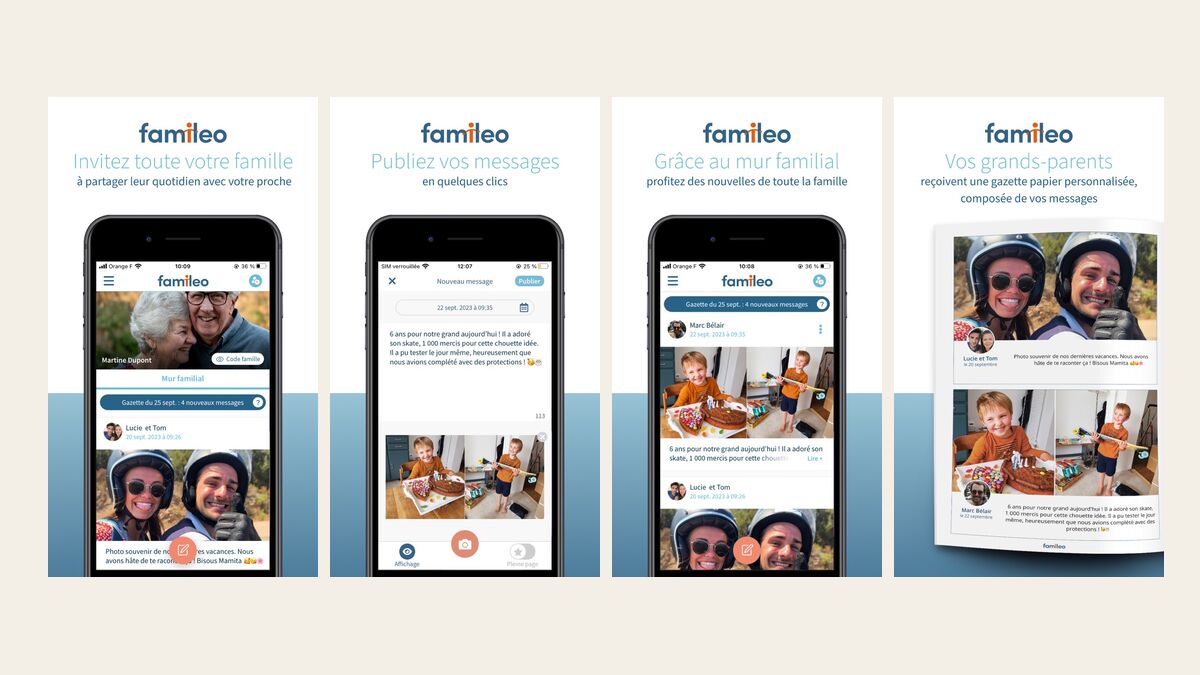
At Christmas 2013, Tanguy de Gélis of Saint-Malo, France, gave his grandmother Elisabeth, who lived in a care home, a tablet. Six months later he realized she couldn't really use it — and missed the postcards her grandchildren used to send. With his friend Armel de Lesquen he built Famileo: family members post photos and messages in an app, and the system automatically lays them out into a printed family newspaper mailed to the elderly relative. The first gazettes went out in August 2015, from €5.90 a month, paid for by the whole family. Subscriptions surged during COVID lockdowns; revenue was about €9M in 2021 and about €14M in 2024, with more than 260,000 subscribing families, 2,000+ partner care homes and expansion into Spain, the UK, the US and Canada. Early on it took only one investment, from the Aquarelle.com group, and it is still headquartered in Brittany.
Process
At Christmas 2013, Tanguy de Gélis, a young man from the French seaside town of Saint-Malo, bought his grandmother Elisabeth a tablet.
She lived in a care home. The rest of the family shared photos and news in a WhatsApp group; she was the only one left out. Tanguy thought: with a tablet, Grandma could finally see her grandchildren's photos.
Six months later, he realized the gift had failed completely. His grandmother couldn't use the tablet at all. She told him she deeply missed the postcards her grandchildren used to send — she had kept them carefully and loved rereading them often.
Many people in that situation would think: then let's teach Grandma to use the tablet. Tanguy thought something else: why must older people adapt to technology, instead of technology adapting to them?
That idea became a company called Famileo: family members casually post photos on their phones, the system automatically lays them out into a paper newspaper, and the mail carrier delivers it to the grandparent's letterbox. In 2024, Famileo's revenue was about €14 million, with more than 260,000 subscribing families.
Phase 1 · The tablet that failed (2013–2014)
Tanguy's discovery pointed to a widespread problem:
- Children and grandchildren rely more and more on phones and messaging apps, with photos, videos and news all living in group chats;
- Many older people can't use smartphones, or their eyesight and dexterity won't allow it, so they end up shut out of family life;
- A phone call allows a quick chat, but they can't see the grandkids' latest photos or know what the whole family has been up to.
Teaching seniors new technology is one path, but for many very old people living in care homes, it simply doesn't work. Paper is the medium they know best, with no barrier at all.
Tanguy teamed up with his friend Armel de Lesquen to build a product connecting these two worlds. The early team also included a third co-founder, Thomas Guillaume. The company was founded in October 2014 and that year joined "Pass French Tech," a French government program supporting startups.
Phase 2 · From postcards to a family newspaper (2015)
The team spent more than a year refining the product. The idea was simple:
- Nothing changes for the young: family members keep using their phones, uploading photos and a few lines in the app, just like posting on social media;
- The system does the conversion in the middle: it automatically lays the content out into an illustrated "family newspaper" (a gazette in French), with large type and clear layout that's easy for seniors to read;
- Nothing changes for the old either: the newspaper is printed and mailed to the grandparent's letterbox or delivered to the care home.
In August 2015, the first family gazettes went out. The service initially targeted seniors living in care homes.
Armel explained the reasoning at the time: "These people remain extremely constrained in their use of these new technologies and very often find themselves 'disconnected' from their own families."
Phase 3 · A subscription the whole family pays for (2015–2019)
Famileo runs on subscriptions. Early prices were:
- Monthly edition: €5.90/month;
- Fortnightly: €9.90/month;
- Weekly: €17.90/month.
(Prices have since moved to €5.99 for the monthly edition and €17.99 for the weekly.)
The key: one subscription can be used and shared by the whole family. Children, grandchildren and relatives far away can all post into the same newspaper. The more people contribute, the richer the newspaper, the happier the grandparent — and the more valuable the subscription feels to everyone.
The payer (younger family members) and the user (the grandparent) are different people. That makes price sensitivity very low: a few euros a month to make Grandma happy and let everyone feel they've done right by her — hardly anyone finds that expensive.
In 2016, Famileo expanded from care homes to seniors living at home. Around then it took an investment from the Aquarelle.com group, a French flowers-and-gifts e-commerce company (amount undisclosed). By 2019, the company had about 25 employees and about €2.5 million in revenue.
A social impact study that year found that after subscribing, 19% of families who rarely visited their elderly relative started visiting again, and 84% of seniors said they felt "better surrounded."
Phase 4 · COVID: isolated seniors, a newspaper in demand (2020–2021)
In 2020, COVID-19 hit. France locked down, care homes banned visits, and the physical connection between seniors and their families was cut off.
Famileo happened to solve that moment's most urgent problem. During the first lockdown, subscriptions jumped about 25%, adding about 28,000 in two and a half months; another 20,000 or so came in over the summer and the start of the second lockdown. Many care homes began handing out Famileo gazettes to residents on their own initiative.
By February 2021, Famileo had about 130,000 subscribing families, around 15,000 of them using the English version. In 2021, Entourage Solutions, the company that runs Famileo, had about €9 million in revenue and about 50 employees.
Phase 5 · Staying in Brittany, going global (2022–2024)
Famileo kept growing after the pandemic:
- Subscribing families grew to 160,000, with more than a million active users and over 4 million messages a month sent to seniors;
- Partner care homes and facilities passed 2,000, and it launched Famileo Pro for care institutions;
- The business expanded to Spain, Belgium, Germany and the UK, and crossed the Atlantic into the US and Canada.
On production, Famileo sticks to "Made in France": its printing partner Handirect is a company that provides jobs for people with disabilities, creating about 40 positions across partner sites in several cities, with printing plants in Le Mans and Lille.
In 2024, Famileo's revenue was about €14 million, with more than 260,000 subscribing families. The company is still headquartered in Saint-Malo; it never moved to Paris.
Thinking
1. Make technology adapt to seniors, not seniors to technology
Most "silver tech" products try to make smartphones simpler with bigger fonts, then teach seniors to use them. Famileo does the opposite: the young keep using phones, seniors keep reading paper, and technology just handles the conversion in between.
No one has to change their habits — that's the fundamental reason it could scale. This "reverse digitization" idea applies in many settings: turning digital content into something physical for people who can't or won't go online.
2. The payer isn't the user, so price sensitivity is low
Famileo's users are seniors, but the payers are their children and grandchildren. For younger relatives, a few euros a month to make Grandma happy and feel they're doing their part is a very good emotional investment.
And because the whole family shares one subscription, the more people contribute, the richer the newspaper — and the higher the psychological cost of canceling: no one wants to be the one who "canceled Grandma's newspaper."
3. A physical product is both moat and cost
Printing and mailing set Famileo apart from pure apps: seniors receive a newspaper they can touch and keep, which competitors can't easily copy with software alone.
But physical also means ongoing costs: paper, printing, postage. Rising postal rates and the complexity of cross-border logistics directly affect margins.
4. Care homes are a natural distribution channel
Partnering with 2,000+ care homes is one of Famileo's smartest growth moves. Care homes want residents to be happy and families satisfied, and Famileo helps with exactly that; when care homes recommend Famileo to families, it gains lots of high-trust new users.
Finding an institution whose goals align with yours and making it your channel is far more efficient than acquiring users one by one.
5. The power and limits of a slow business
Famileo took nearly 10 years to go from zero to €14 million in revenue, with almost no outside capital. COVID brought an unexpected wave of growth, but its foundation is long-term word of mouth and institutional partnerships.
Note that Famileo is now a company of dozens of people with printing, logistics and multi-country operations — not something a personal side project can copy directly. Its core customers (very elderly people) also keep turning over, so it must keep winning new families.
Action
Step 1: Find a group "left behind" by technology (1 week) Look around you: who is cut off from some information or service because they can't use smartphones or don't want to go online? Seniors, some blue-collar workers, people in remote areas... Write down what they most want but can't get.
Step 2: Design a solution where neither side changes habits Work out which tool is easiest for the sender (usually a phone) and which format the recipient knows best (paper, phone calls, TV, physical objects). Your product only handles the conversion in between.
Step 3: Build a minimal version by hand first No need to rush into building a system. Manually collect a family's photos and messages, lay them out with a template, print and mail them to a few seniors, and watch how they and their families react.
Step 4: Separate the payer from the user Design a subscription shared by the whole family, where younger relatives pay and the senior simply enjoys it. Keep the price around "a coffee a month" to lower the decision barrier.
Step 5: Look for institutional partners Approach care homes, community centers and senior learning programs with a partnership offer: free trials for residents that help the institution improve family satisfaction, in exchange for recommending your product to families.
Step 6: Automate layout and printing Once usage grows, invest in an automatic layout system and find reliable printing and mailing partners. Consider working with social enterprises — it can lower costs and become part of your brand story.
Step 7: Prove the value with data Regularly collect feedback, such as "did family visits increase after subscribing?" or "does the senior feel more accompanied?" That data helps you improve the product and persuades more families and institutions.
Not for you if:
- You only want to build pure online products and don't want to handle physical operations like printing and logistics;
- You expect explosive growth and can't accept building word of mouth slowly over several years;
- You lack patience and empathy for older people and won't dig into their real needs;
- Postal or logistics costs where you are are too high to support a low-priced subscription.