A Brighton Tester Started a Free Forum for Fellow Testers: Three Years Later a Conference Made It a Living, Reaching $1.2M a Year Without Ads While Homeschooling Five Kids
Rosie Sherry got into software testing around 2000, was laid off in the 2001 dot-com bust, and then worked as a freelance tester in Brighton, UK, while running local tech meetups. She envied the great content web designers had while testers had almost nothing, so in 2007 she started an online forum called the Software Testing Club, 'an excuse to build community.' Three years later the forum was taking up too much of her time, she had two kids, and she told herself: turn it into a business or stop. She chose to run a conference. She registered a company in 2010, launched the first TestBash testing conference in 2012, later added an online learning platform, and renamed the community Ministry of Testing. Its conferences have no exhibition booths or sales stands, and she has never paid for ads. In 2019, she told the Indie Hackers podcast the company made $1.2M a year; that year it ran nine conferences worldwide, while she and her husband Graham homeschooled their five kids. Today the couple each own 25% to 50% of the company, with no outside investors.
Process
In software companies, testers are often the least appreciated people in the room: developers write code, designers build interfaces, testers find problems, and when a bug slips through, testers are often the first to be blamed.
In the 2000s, web designers had plenty of blogs, tutorials and conferences to learn from; testers had almost nothing. Rosie Sherry, a tester in Brighton, UK, was envious. She went on to build a community for testers and turn it into a $1.2M-a-year business without spending a penny on ads or taking outside investment. Along the way, she and her husband homeschooled five kids.
Stage 1: From Bank Acceptance Testing to Laid-Off Freelancer
Around 2000, Rosie was working at a bank, not as a tester. The bank was building an app, and she got the chance to do user acceptance testing (UAT). She put that experience on her CV and, a few months later, landed her first proper testing job, at a local web media company.
Within a year, she moved to a much more technical testing job. She later admitted: "That was, to be honest, like way over my head. I didn't really understand the whole systems under test." In 2001, the dot-com bubble burst, and she was laid off.
For the next few years, she worked as a freelance tester on contracts for local companies. She also started hanging out in Brighton's local tech scene, going to meetups and eventually running some herself. She said those meetups exposed her to the concept of community, "and I just got hooked."
Stage 2: 2007, a Forum as "an Excuse to Build Community"
The more community work she did, the more Rosie wondered: how can I make community my thing?
She knew testing, and she saw that testers lacked good content and places to talk. "I felt a bit jealous of like what web designers had at the time. There was a lot of great content, a lot of people talking about things to advance the web industry, and I just felt like there was never anything really around for testers."
In 2007, she started an online forum called the Software Testing Club, which would later become Ministry of Testing. "I just did it because I wanted to, I wanted an excuse to build community basically. And I really didn't have any expectations that it would go anywhere and I didn't push it rapidly, I just like kept trying to have fun and have interesting conversations, basically trying to create a space that I felt was valuable and for myself and for the community."
Stage 3: Three Years In, Turn It into a Business or Stop
After about three years, the forum had become a lot to manage. By then, Rosie had two kids.
"After three years I kind of told myself that I had to turn it into a business so I would stop doing it because it was just like sucking up so much of my time."
Her answer was to run a conference, "as a way to kind of try to make a living from the community."
Companies House records show SOFTWARE TESTING CLUB LTD was registered on October 11, 2010, with Rosie as a director. In her own words, the community existed from 2007 and became a business formally in 2011.
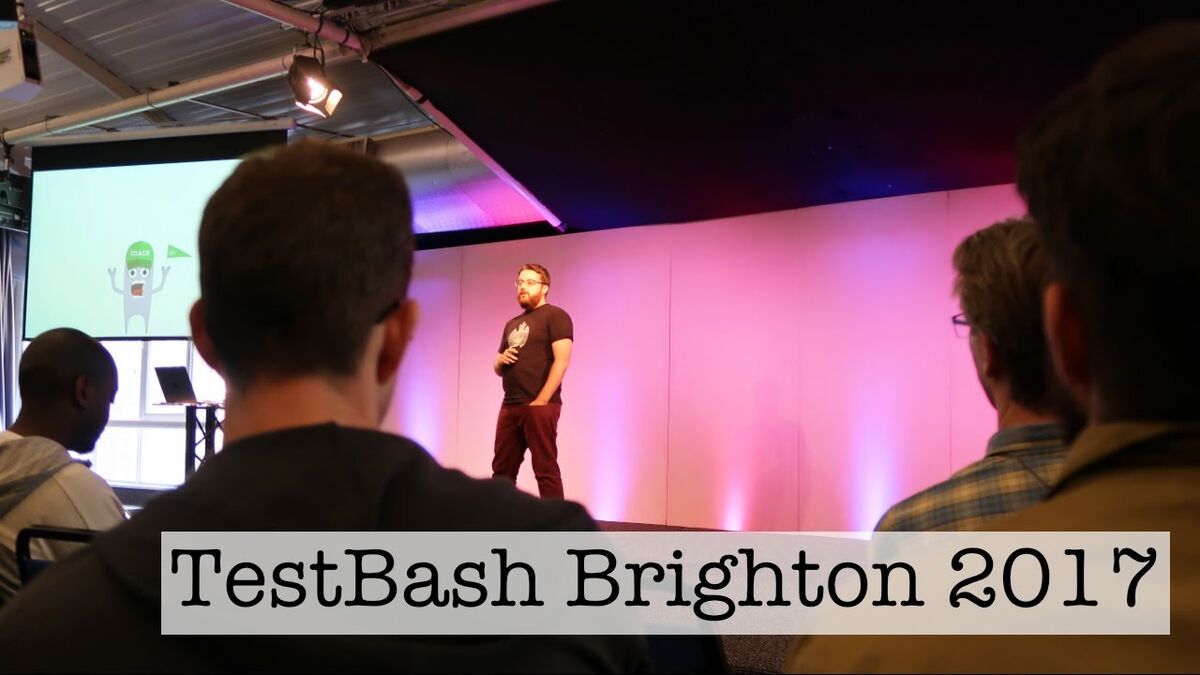
In 2012, the first TestBash testing conference was held in Cambridge, followed by several years in Brighton. The conference became Ministry of Testing's best-known brand. A 2014 profile described Rosie as living in Brighton with her husband and three kids, the founder of the Software Testing Club and Ministry of Testing, co-founder of the testing agency Testing Ninjas, and organizer of TestBash. That year she was also preparing to bring some testing courses online, which became the online learning platform The Dojo.
Stage 4: No Booths, No Ads
Most industry conferences make money by selling exhibition space and sponsorships, with vendors setting up stalls to pitch their tools. TestBash doesn't.
"I've never sold out on the community. And in our conferences, we don't have exhibition booths or sales stands, because we don't believe that adds value to the community," Rosie said. Some say that costs a lot of money. She disagrees: "But does it really cost us money when we don't have to spend money on advertising, and when we don't have to spend our time and effort on salespeople and things like that?"
She has also never done "growth hacking at all costs." In her view, community can't be faked: "the people who lead it have to care. They have to show that they care."
What this bought was an exceptionally tight community. Introducing her 2019 episode, the Indie Hackers podcast said Rosie built a community so tight-knit that people have its logo tattooed on their bodies.
Stage 5: From Brighton to the World, Then Handing Off Day-to-Day
At first, the conference ran only in the UK. But the online community was global, and more and more people said, "I want one in my hometown."
Rosie resisted for a long time, then started saying yes. The first conference outside the UK was in New York: "it was fine. We had like 160-170 people." Running events in unfamiliar cities, she said, meant lots of logistical unknowns that she found stressful.
The events multiplied. In 2019, Ministry of Testing ran nine conferences worldwide, which she later called "a bit nuts to be honest. I don't think we'd ever do that again."
The company changed too. In March 2017, it was renamed from SOFTWARE TESTING CLUB LTD to Ministry of Testing Ltd, and Rosie's husband, Graham Sherry, became a director. Today the Ministry of Testing website lists Rosie as co-founder and CEO and Graham as co-founder and CTO; company records show each owns 25% to 50%.
Rosie gradually stepped out of day-to-day running. She passed her conference know-how on to CEO Richard Bradshaw (known in the community as "BossBoss"), who became a company director in February 2019. Rosie went to lead community efforts at Indie Hackers for about two years, left in March 2021, and then focused on Rosieland, a resource for community builders.
Stage 6: $1.2 Million, and Five Kids
In June 2019, Rosie appeared on episode 97 of the Indie Hackers podcast. The episode description said she grew Ministry of Testing to $1.2 million in annual revenue without relying on ads, all while raising and homeschooling five kids.
On another podcast, she said her five kids ranged in age from two to 16, and that she and her husband Graham decided together to educate them at home. Her reason was blunt: "the school system kind of sucks is the general gist of it for me. It's like the more I looked into it, the more I couldn't justify sending my kids to school."
The pandemic changed the conference business. Rosie said that afterward they went back to one conference a year and changed their strategy. In October 2023, Bradshaw stepped down as a director, and Rosie returned as CEO.
By 2026, Ministry of Testing calls itself the MoTaverse, and its website says: "We are a small and independent company with no outside investors." About seven team members are listed, offering conferences, local chapter events, courses and certifications, and the focus has widened from software testing to quality engineering and the broader tech community.
Thinking
1. The best communities come from what you yourself were missing. Rosie spent years as a tester and knew what testers lacked: good content, places to talk, a sense of respect. The forum she built was the place she wanted for herself.
2. Community first, money later, but not never. For three years she didn't think about making money, which built a foundation of trust. But then it was taking too much time, and she had to choose: turn it into a business or give it up. Many communities die at exactly this point.
3. In-person conferences are a good way to monetize a community. Online communities are hard to charge for directly, but people will pay to meet, learn and connect. TestBash turned trust built online into ticket revenue, and let online members actually meet each other, making the community even tighter.
4. Not selling out the community is itself a competitive advantage. No booths and no sales stands means less money in the short term, but it kept the conference and community's reputation clean. Rosie argues it saves the cost of ads and a sales team, because members spread the word for you.
5. Expand within your means. Going from one conference in Brighton to nine worldwide in 2019 scaled up the business, and the logistical strain grew with it. Rosie herself called it "a bit nuts." After the pandemic, they went back to one a year, a sign that bigger isn't always better.
6. A small company can last a long time. From the 2007 forum to 2026, Ministry of Testing has run for nearly 20 years with no outside investors and a small team. It shows that a niche community can sustain a small company for the long haul.
Action
1. Look for opportunities in a profession you know. Is there a group in your industry that lacks good content, places to talk or career support? When you're one of them, it's easier to know what they need.
2. Gather people for free first. Start a forum, group, newsletter or local meetup and keep offering valuable content and conversation. Don't rush to charge; focus on making the place useful.
3. Set yourself a decision point. At some stage, ask: how much of my time is this taking? How will I keep it going? Rosie took three years to decide; you can set your own deadline.
4. Choose a way to monetize that fits the community. In-person events, paid courses, memberships and job listings can all work. The key is that members feel it's worth it, not that they're being sold to.
5. Protect the community's trust. Decide which money you won't take, such as hard ads and pushy sales. Once a community's trust is lost, it's hard to win back.
6. Count the cost before you expand. Every new city and event adds logistics and management cost. Get it right somewhere familiar first, then expand with reliable local partners.