9-Year-Old Founded Zolli Candy: $7,500 Start, $6M Retail Sales in 4 Years
Alina Morse got the idea at age 7 when her father stopped her from eating bank candy. At 9, she invested $7,500 in life savings, ran 100+ failed experiments, partnered with a food scientist, and launched sugar-free teeth-cleaning lollipops — hitting $6M retail sales by age 13, 25,000+ stores by 14, all bootstrapped.
Process
One rejected piece of candy
In 2012, Alina Morse was seven years old, standing at a bank counter in Michigan while her father finished some paperwork. A teller offered her a piece of candy. Her father stopped her: candy rots your teeth.
Every parent says this. Most kids accept it and move on. Alina instead asked: "Why does candy have to be bad for your teeth? Why can't we make one that's actually good for them?"
She asked her father to help her figure it out. He said no. She kept asking — for four or five months, over a hundred times — until he finally agreed to try.
Two years, a kitchen, a hundred failures
From 2012 to 2014, Alina turned her family kitchen into a laboratory. She researched xylitol, erythritol, and other sugar-free sweeteners online. She read dental studies. Then she started experimenting — using the oven, the stove, the microwave — and failing repeatedly. "It just made a mess," she later recalled.
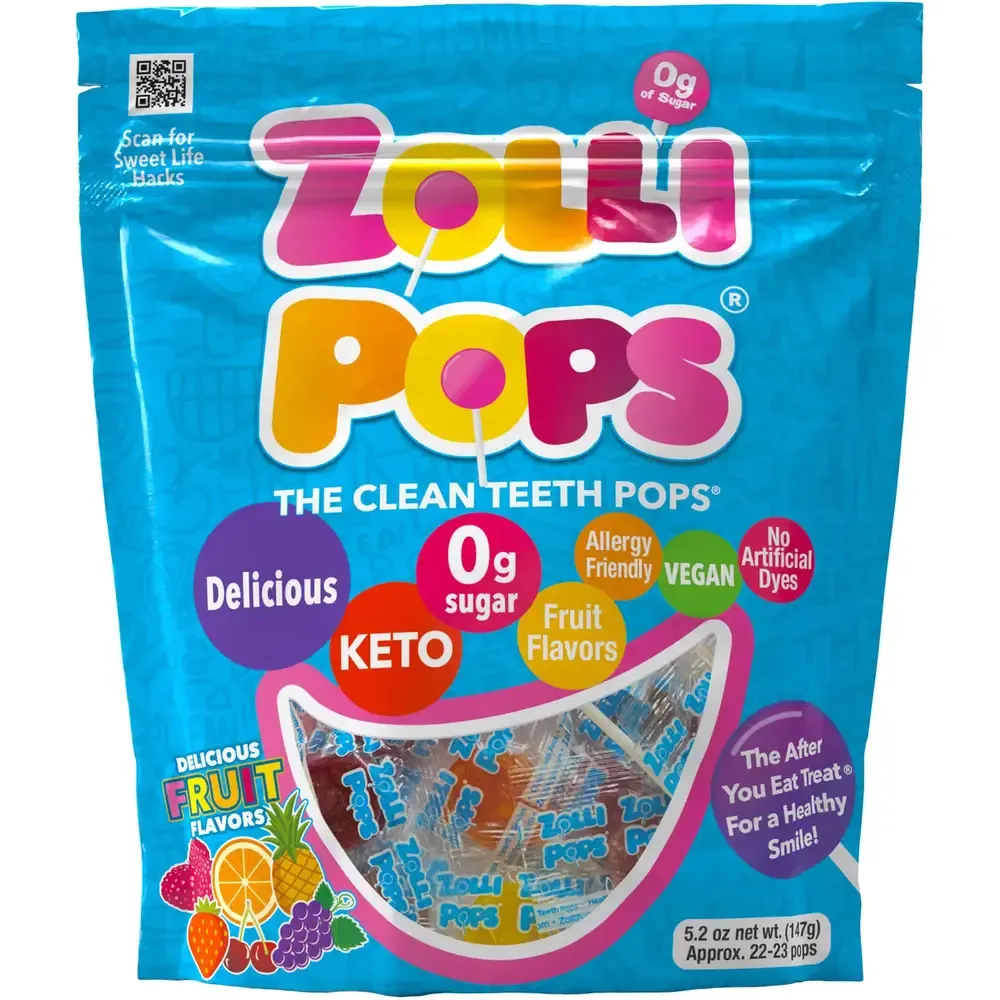
Eventually she brought in two collaborators: a food scientist and her own dentist. Together they refined a formula with a real scientific basis: the candy's ingredients raise the oral pH level after eating, neutralizing the acidic environment that normally attacks tooth enamel. It doesn't just avoid damage — it actively protects.
Her younger sister Lola, struggling to pronounce one of the key teeth-friendly ingredients, accidentally said "Zolli." The brand name was born: Zollipops.
$7,500 and a tour of Michigan factories
With the formula finalized, Alina counted up her savings: $3,750 — birthday money, holiday gifts, accumulated over years. Her father matched it. Total startup capital: $7,500.
She and her father drove to manufacturing plants across Michigan, looking for one with the right equipment. They found it. The first batch went into production.
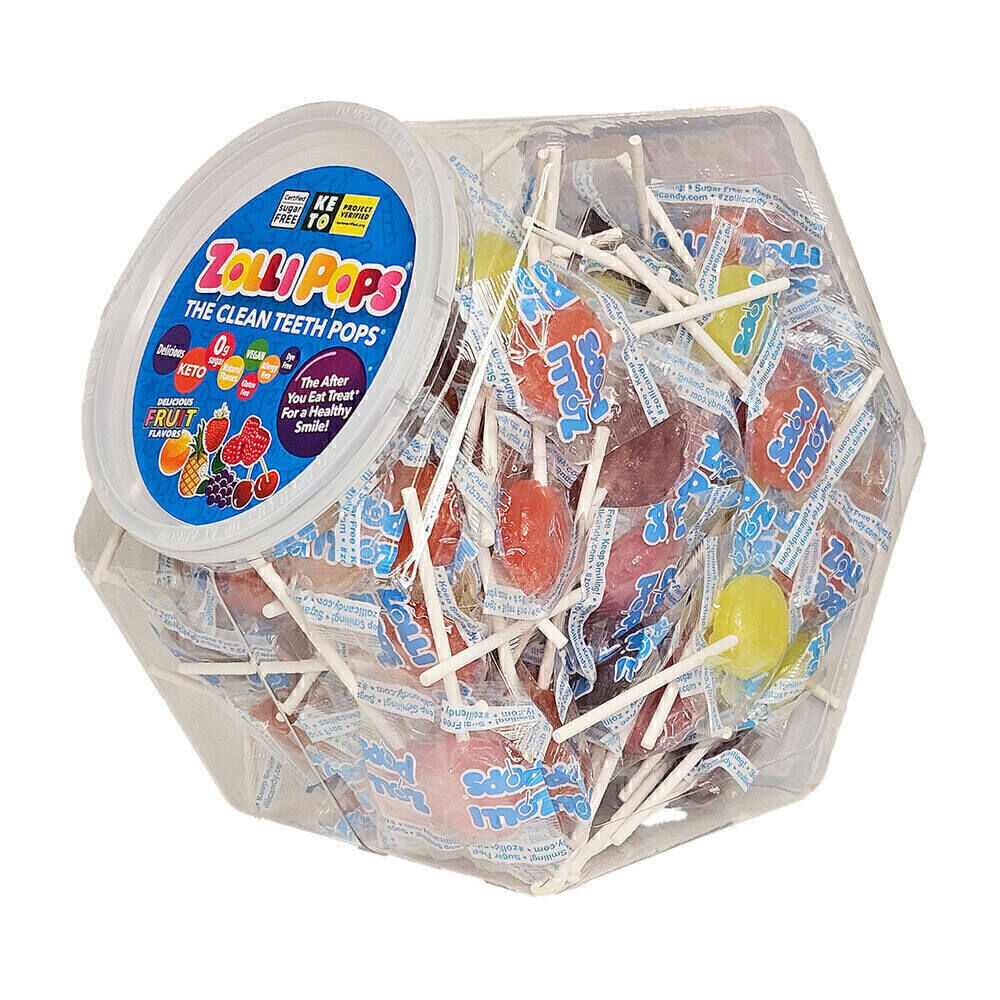
In 2014, at age nine, Alina put Zollipops on the shelves at Whole Foods. First year: 70,000 units sold.
Doubling every year
For four consecutive years, sales doubled:
- 2016 (age 11): Added to Kroger, the largest supermarket chain in America
- 2018 (age 13): $6M retail sales, $2.2M company revenue; entered Walmart; became the youngest person ever on the cover of Entrepreneur magazine; invited to the White House by First Lady Michelle Obama — twice
- 2019 (age 14): 25,000+ stores across the US, China, Korea, France, and the UK; #3 best-selling lollipop on Amazon; became a millionaire
Barbara Corcoran's verdict
On Shark Tank, billionaire investor Barbara Corcoran watched Alina's pitch and said what the entire room was thinking:
"This lady does not need any advice."
Zolli Candy was later named America's Fastest Growing Candy Company and has appeared on the Inc. 5000 list of fastest-growing private companies.
Beyond sugar-free
The product line now includes three categories: Zollipops (lollipops), Zolli Drops (hard candy), and Zaffi Taffy (taffy). All products are sugar-free, vegan, gluten-free, non-GMO, keto-friendly, and diabetic-friendly. Alina also launched the Million Smiles Initiative, donating Zollipops to schools to address childhood tooth decay — which she describes as "America's most chronic childhood disease."
Zolli Candy remains a family-owned company with no external investors. Alina and her sister Lola hold the majority stake.
Source: Wikipedia · TODAY Show · Zolli Candy
Thinking
Why this case is worth studying: three genuinely transferable insights
1. Find the "health defect" in a mainstream category — this is the standard formula for a blue ocean
Candy isn't a niche market — it's one of the most mature consumer product categories on earth. Precisely because it's so established, everyone accepts the status quo: candy is sweet, sweet causes decay, that's just how it is. Alina's insight was: the more widely accepted a flaw is, the bigger the opportunity. Consumers have already normalized the defect, but once someone solves it, loyalty is extraordinarily high.
Transferable thinking: In any category you know well, ask — "What is the most widely accepted dissatisfaction in this category? If a product solved it, would customers pay a premium for that solution?"
2. Lead with the highest-alignment channel, not Amazon
Zollipops launched in Whole Foods, not Amazon, not a convenience store. This was a brilliant move: Whole Foods customers already pay a premium for "health positioning," they naturally buy into a "sugar-free, teeth-cleaning" product story, and Whole Foods selection itself functions as brand validation. Having Whole Foods on the record made Kroger and Walmart conversations much easier.
Transferable thinking: Your first channel defines your brand positioning. Enter through the highest-value-alignment channel first, then descend toward mass market. The reverse order is far harder.
3. Age isn't the moat — the story is
Alina's "9-year-old founder" label generated enormous media amplification — that part isn't replicable. But what she did with it is: she made the founder's origin story the brand's most irreplaceable asset. "A 7-year-old was told no at a bank, spent two years in her kitchen, and made this candy" — that story is a competitive moat that no competitor can copy. Every media mention reinforces it for free.
Transferable thinking: What is your brand's origin story? Even if you're not 9, does your starting point have a real, memorable "moment of rejection" that drove you to build this?
What NOT to copy
- Don't replicate "teeth-cleaning candy" as a specific category — competition now exists
- Don't count on media amplification unless you have a similarly "inherently newsworthy" story
- Don't spend $7,500 on a category that requires deep novel R&D — Alina's formula worked because it recombined existing ingredients, not because she invented a new compound
Action
Step 1: Find the "health / ethical / convenience" defect in a category you know
Framework (pick one):
- Health defect: What known harm does this category cause that users accept only because there's no alternative?
- Ethical defect: What about the production process makes users feel guilty?
- Convenience defect: What is the most frustrating use-case friction in this category?
Validation test: If you solved the defect, could you charge more than existing products? Health food, pet food, children's products, and personal care are proven territory.
Step 2: Formulation — partner, don't invent from scratch
Alina's path: self-taught online research → identify key scientifically-backed ingredient (xylitol) → bring in food scientist to formalize → get dental professional to validate safety.
This model applies to most consumer products:
- Self-study the core science of your category (YouTube, PubMed, industry white papers)
- Identify 1-2 ingredients/processes with meaningful differentiation potential
- Find a small formulation lab or independent consultant (more flexible than large firms)
- Recruit 1-2 credentialed voices (doctor, nutritionist, engineer) for validation and storytelling
Step 3: First channel — highest value alignment, not widest reach
US/global path:
- Food: Whole Foods, Sprouts, iHerb (online)
- Pet: Chewy, PetSmart
- Children's: Buy Buy Baby, Target organic section
China path:
- Xiaohongshu health influencer seeding → Tmall health/organic flagship → offline health chains (Hema, Ole, Sam's Club)
Enter through the channel most aligned with your product claim. Use that endorsement as leverage in the next conversation.
Step 4: Make the founder story a brand asset
- Write a 200-word origin story (the moment of rejection + the obsessive question + the number of failures + the first success)
- This story appears on: product packaging, website About page, every media pitch, every interview opener
- Don't write "we are committed to…" — write "that day, at the bank counter…"
Step 5: Small batch launch, validate before scaling
- First production run: enough to get into 1-2 target channels for a real test (typically 500-2,000 units)
- Win one channel with brand-signal value before chasing distribution volume
- Double sales in that channel before negotiating the next one; don't scale production before the loop is validated