A Teacher Quit Her Job to 3D-Print Fidget Toys With Her Dad — ASMR Videos Went Viral, $428K in a Year
Victoria Baumann was a teacher who opened a tiny shop in 2018 selling her own art and jewelry. In 2025 her dad Charlie, a 3D-printing hobbyist, joined her, and the father-daughter pair stumbled into the niche of 3D-printed fidget clickers: instead of designing their own, they license artists' designs to print, then turn the printing, assembly and clicking into ASMR-style videos. After going viral they scaled from a few printers to 30, average ~1,500 orders a month, and did $428K in revenue with ~$94K net profit in 2025 — built by a father and daughter out of their homes in North Carolina.
Process
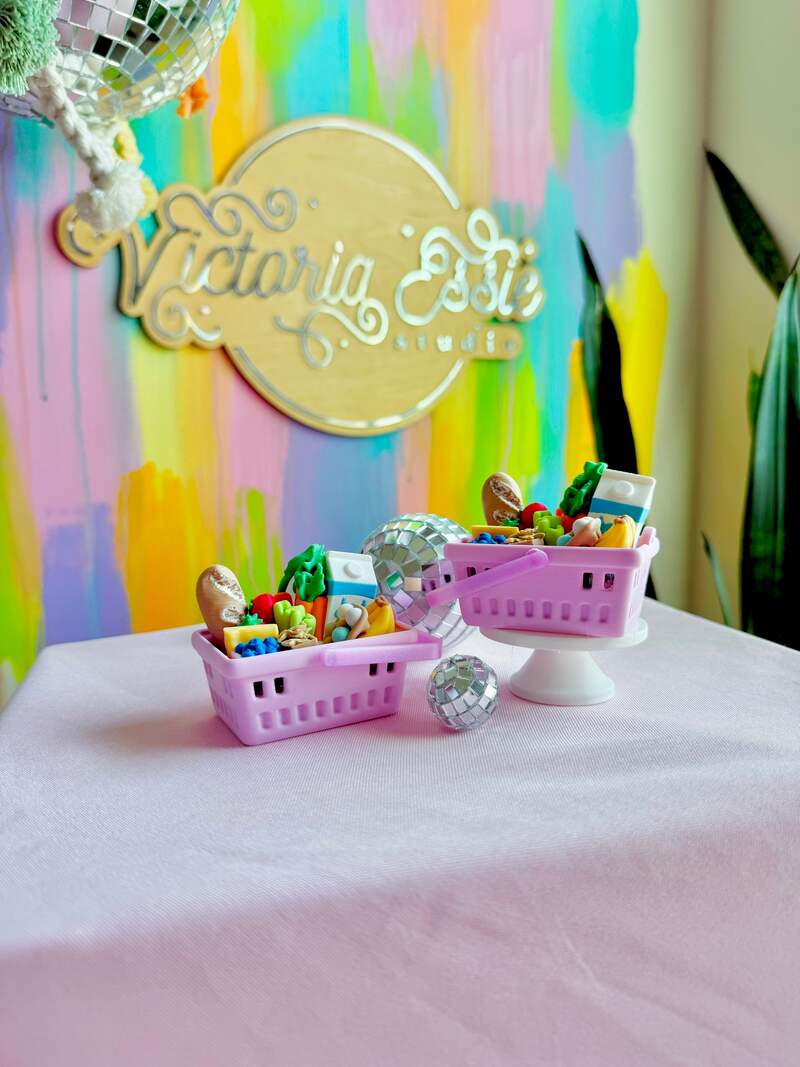
Victoria Baumann used to be a full-time teacher. Charlie Moreton is her dad, a hobbyist who loves 3D printing. Today this father-daughter pair in North Carolina makes $428,000 a year by 3D-printing little toys called fidget clickers out of their homes. But here's what most people don't realize: this thriving-looking business has really only been running for about a year — and its spark was hidden in an accident nobody saw coming.
Stage 1 — The start (2018 → 2025): a teacher's side shop meets her dad's 3D printer
The story opens with a long stretch of backstory. Back in 2018, Victoria opened a little shop called Victoria Essie Studio, selling her own art and handmade jewelry on the side while teaching at school. The shop ran for a full seven years, and for most of that time it was an utterly ordinary "creator side hustle" — modest income, nowhere near a real business.
But it quietly accomplished one thing that would matter enormously later: it established the brand name and the aesthetic. Cute, colorful, with a hint of Y2K nostalgia — that visual language grew over seven years and became the soul of the whole business to come. In other words, when opportunity finally knocked, Victoria already held a brand shell with a distinct vibe — she just needed a product to pour into it.
The real turning point came in 2025, when Victoria's 3D-printing-obsessed dad Charlie joined the shop to help. One day he came across a design online for a cake-shaped fidget clicker — a little stress-relief object you press, squeeze, and "click" — and instantly thought it was cute and colorful, a perfect match for his daughter's aesthetic. They printed a batch to test, and the very first cake fidgets sold out.
Only then did the pair realize they'd stumbled into a brand-new, red-hot niche — fidget clickers, the next iteration of the 2010s fidget-spinner craze that swept the world. A seven-year-old shop, thanks to a dad's printer and one cake shape, finally looked like a real business for the first time. Soon after, Victoria quit her stable teaching job and went all-in.
Stage 2 — Engine one: outsource the hardest job, "coming up with new designs"
Having tasted success, they made a counterintuitive but very smart decision: don't rely on designing everything themselves. To survive in a fast-fashion-like category such as fidgets, you have to keep churning out new shapes — and "consistently dreaming up hit designs" is exactly the hardest, most burnout-prone part.
Their solution: collaborate with a whole roster of artists. The artists draw the fidget shapes — cereal bowls, toadstools, cinnamon buns, banana ducks, ice cream trucks, sardine tins — and the pair pay a commercial license / subscription fee for the right to print and sell them.
This is the first engine of the whole operation: they outsourced the least-controllable task — generating ideas and new releases — to an ever-expanding network of artists, while holding tightly onto just three things: printing, brand, and traffic. New shapes now flow in like fresh water, letting them launch on trend with holidays, seasons, and different aesthetic audiences — none of it hostage to whether the two of them run out of inspiration.
Stage 3 — Engine two: let the product become its own advertising
The second engine is content. The pair spent almost nothing on ads. Instead they filmed the entire process — printing, peeling, assembly, and clicking — as ASMR-style behind-the-scenes videos: printers extruding shapes layer by layer, parts snapping into place with a click, fingers pressing the fidgets with that addictive satisfying sound — the visuals and audio both maxing out the soothing factor.
Here's an easily-missed prerequisite: not every product can be filmed like this. A fidget just happens to be, by definition, something that "looks soothing" — its production and its use are themselves content people rewatch and get hooked on. Posting clip after clip, they let the algorithm deliver customers nonstop: their socials gained millions of followers, and even popular content creator Brittany Broski publicly gushed about their little toys. The product itself is the best ad, pushing acquisition cost to almost zero.
At a deeper level, what they sell isn't toys but emotional value — anxiety, restlessness, the urge to keep your hands busy — an evergreen, enormous demand. They didn't invent it; they squarely caught the new wave of stress-relief toys that rose after the fidget spinner receded.
Stage 4 — The snowball: from a few printers to 30, $428K in a year
With both engines turning, orders poured in. They didn't raise money or take outside investment — they kept buying new printers with the profits, from a few at the start all the way to 30, turning their home into an almost around-the-clock micro-factory. Each extra machine is more capacity and more cash flow — extremely low risk, with the pace entirely in their own hands. The studio now ships about 1,500 orders a month, with products priced $10–$15 (life-size fidgets up to $100–$125).
In 2025, Victoria Essie Studio did $428,000 in revenue and roughly $94,000 in net profit. Their biggest costs are equipment (30 printers), materials (the filament fed into the printers), shipping supplies, and the design-license subscriptions paid to the artists.
And so a seven-year-old, lukewarm "teacher's side shop" became — thanks to a dad's 3D printer and one cake shape — a near-$430K-a-year business that a father and daughter run from home, in the span of a single year.
"We're just two regular people making cute little things with printers at home." — Victoria Baumann (paraphrased from public interviews)
Source: CNBC Make It · Victoria Essie Studio · Instagram @shopvictoriaessie
Thinking
Insight 1: A father-daughter team = a complementary "two-engine" setup, the strongest moat a small team can have
The root reason this business works is an extremely rare combination: the daughter runs aesthetic, brand and content; the dad runs 3D printing, engineering and production. Their skills barely overlap, yet they mesh perfectly — Victoria's taste decides "what looks good and what will go viral," Charlie's engineering decides "how to make it reliably and cheaply."
This isn't just "two people working together." It's one person covering the other's biggest blind spot. Many creators are stuck at "great taste but can't build it"; many engineers are stuck at "can build it but nobody buys." These two happen to form one complete machine — with zero headcount cost. A small team with complementary skills (even just family) is more formidable than a solo founder or a big, noisy team.
Insight 2: Don't design — pay to license and print others' designs — turn "creativity" into an outsourceable lever
The most counterintuitive and smartest move: they don't rely on their own new designs. The biggest risk in a fidget business is creative burnout — can you keep coming up with hit shapes forever? Their answer: don't — pay a group of artists to come up with them for me.
3D printing makes "production" nearly frictionless, so the scarce thing is no longer "being able to make it" but "what to make." Through commercial licensing, they outsourced the hardest, least controllable part — selection and creativity — to an entire network of artists, while holding onto "printing + brand + traffic." This turns other people's creativity into your own replicable production capacity. The same logic applies to any category where "manufacturing is already cheap and creativity is the scarce input."
Insight 3: The product is the content — pick a category whose "process is inherently watchable"
They spent almost nothing on ads, riding ASMR videos instead. But there's an easily missed prerequisite: not every product films like this. A fidget's printing, peeling, and pressing are naturally soothing material — the production and use of the product is itself content people rewatch.
This is the same hidden thread as Little Beast (dogs in clothes are inherently shareable) and freeze-dried candy (the crunch makes great ASMR): at the moment you choose the product, factor in "is it filmable, is it worth sharing." If your product's process is dull, silent, and invisible, all the content effort in the world yields little. "Product is content" is designed in at the source, not bolted on afterward.
Insight 4: Hit a niche of "emotional necessity" + a distinctive aesthetic
Fidgets don't sell toys — they sell emotional value. Anxiety, restlessness, the need to keep your hands busy — that's an evergreen, enormous demand. They didn't invent it; they caught the wave of stress-relief toys that followed the fidget spinner.
But catching demand isn't enough. There are countless fidgets out there; they used a distinctive cute + Y2K-retro aesthetic to make a generic category recognizable. Demand gives you a market; aesthetic makes you irreplaceable. In a low-barrier, easily-copied category, taste and brand are the wall others find hardest to replicate.
Insight 5: Start with one hobby-grade machine, reinvest profits into capacity — linear scaling without funding
They didn't raise money or make a big bet. The starting point was a dad's 3D-printing hobby — one consumer printer. Once it was validated, they bought a second, a third… all the way to 30.
This is the scaling method ordinary people should learn most: make capacity a "linearly replicable asset." Each additional printer is more output and more cash flow — extremely low risk, fully controllable pace. You don't need to go all-in upfront; you let the business earn the money for its next machine. From 1 to 30, it ran on cash flow, not a gamble.
Action
Step 1: Pick a category whose "process can itself be content"
Before you start, ask: is the making or using of this thing filmable — will people rewatch it? Favor things with a built-in visual/auditory payoff — 3D printing, crafts, restoration, cleaning, unboxing, satisfying sounds — so your "production process" is itself free advertising. A dull, silent, invisible category starts at a disadvantage in today's attention game.
Step 2: Validate with one low-cost machine, then buy capacity with profits
Don't buy 30 machines on day one. Validate one hit product with a single consumer-grade tool (a few-hundred-dollar 3D printer / a Cricut / a mold set) — prove "people buy it and it's profitable." Then keep plowing profits into a second machine, a third — make capacity a linearly replicable asset and let the business earn its own expansion.
Step 3: Don't create everything yourself — outsource creativity via licensing/collaboration
If your strength is "printing/manufacturing/traffic" rather than "designing," don't force the creativity. Partner with designers, artists, illustrators; pay a commercial license; turn their creativity into your product line while you focus on your strongest link. Turning others' creativity into your replicable capacity beats forcing yourself to brainstorm hits every day.
Step 4: Turn the behind-the-scenes into ASMR/soothing short videos — post relentlessly, bet on the hits
Film the printing, assembly, peeling, packing, and clicking as short videos, and post daily. Don't aim for every clip to blow up — post consistently and use volume to land the few that do. Soothing/satisfying content is inherently shareable. Let the algorithm find your customers — that's the main path to zero-cost acquisition today.
Step 5: Build a small team with complementary skills (family counts)
One person can rarely be the aesthetic lead, the engineering lead, and the operations lead at once. Find a partner who covers your biggest blind spot — you handle content and brand, they handle production and shipping, or vice versa. Even if it's just family, two complementary people beat fighting alone. Complementary skills > more headcount is what lets a small team win.
Not for you if: you want "zero-cost, pure passive money" — the early days mean buying equipment, learning to print, and filming every day, which is real work; or you can't produce content that consistently attracts people; or you insist on doing all the creativity yourself and refuse to share license fees with anyone — then this "outsource creativity + content acquisition" playbook won't work for you.