3 Teens Built TuffToy Scented Dog Toy From a Sewing Machine — Sold 2,000 Units, Won $20K National Prize
Three 17-year-old Harker School students — Arin Jain, Rohan Gorti, Zubin Khera — turned a class assignment into TuffToy: scented rubber dog balls with interchangeable plush skins. 45 sold in 2 days, 2,000+ units total, $24K revenue, $20K national prize.
Process
In fall 2021, students at Harker School in San Jose, California were given a deceptively simple assignment: identify a real problem and invent a solution.
For Arin Jain, Rohan Gorti, and Zubin Khera — three lifelong friends — the answer was obvious. Jain's goldendoodle Cosmo, Khera's goldendoodle Axl, and Gorti's recently passed Labrador Dash had one thing in common: they destroyed every toy within days, costing their families real money.
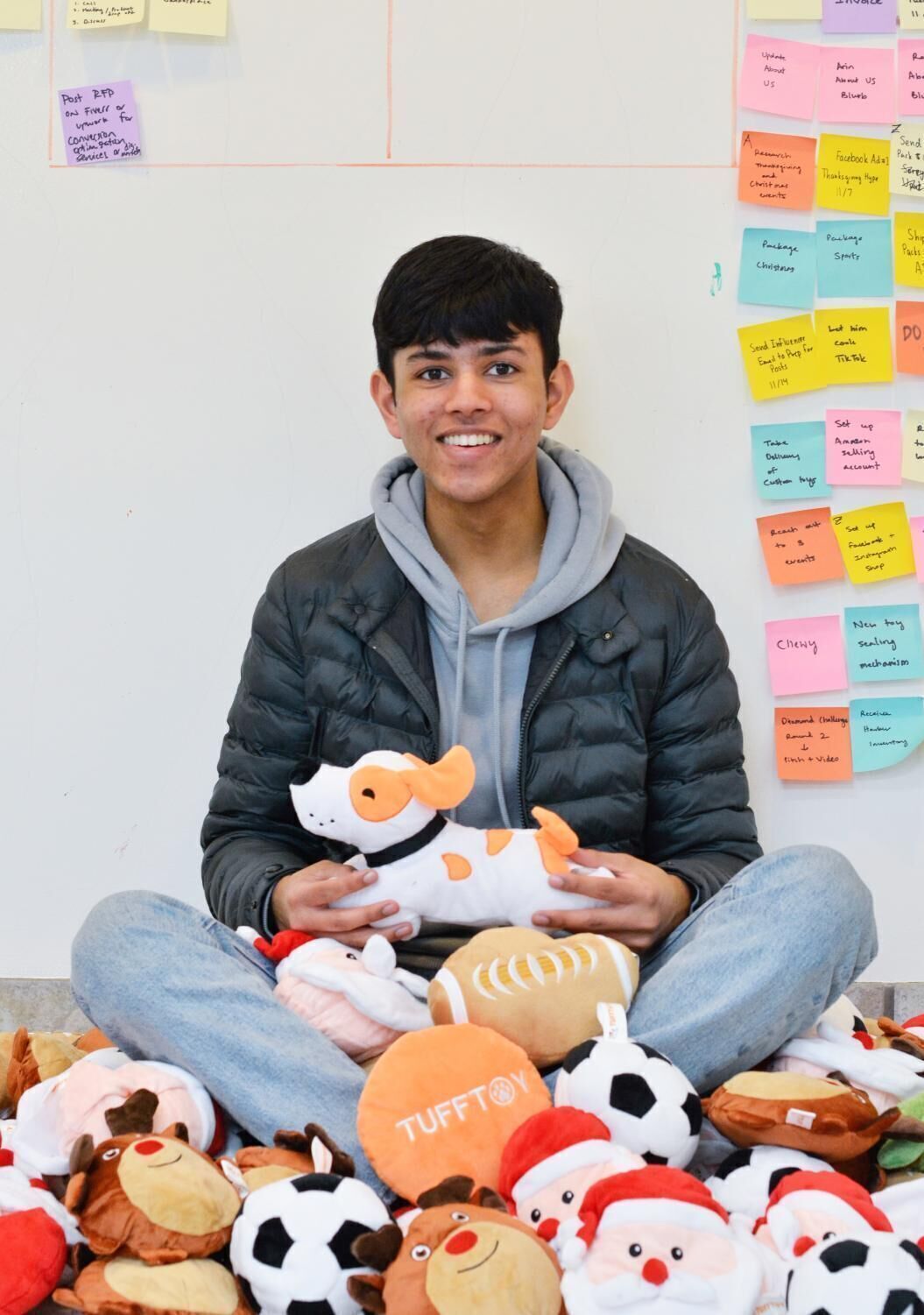
Prototype Phase: Starting from a Sewing Machine
Gorti made an unusual decision: he taught himself to sew. The trio bought rubber balls and fabric puppets online, assembled their first minimum viable products, and brought them to real dog owners for testing.
The Critical Pivot: Ditch the Noise, Bet on Scent
Testing surfaced their most important design decision. Nearly every dog toy on the market uses sound — squeakers, crinkles — to keep dogs engaged. The team considered it too. But real owner feedback was unambiguous: in the work-from-home era, squeakers were maddening.
They dropped the noisemaker entirely and pivoted to scent — the most direct channel into a dog's brain. The final rubber ball is infused with peanut butter, beef, or vanilla scent. The plush outer "skin" (characters like Guffy the blue monster, Buffy) is interchangeable — swap it when worn, keep the scented ball.
TuffToy was the first durable dog toy combining interchangeable plush skins with a scented rubber core.
From Prototype to Production
They found a manufacturer in China and placed a first order of 300 units, received in May 2022. Pricing: Tuff Ball $4.99 · Tuff Skin $6.99 · Monster Mash bundle (1 ball + 2 skins) $16.99.
Launch
June 2022: tufftoy.shop goes live. 45 toys sold in the first two days. Months later: 2,000+ units sold, $24,000+ in total revenue across three channels:
- DTC e-commerce: ~1,000 units via the official website
- Bay Area pet boutiques: local specialty retail distribution
- B2B corporate: a Silicon Valley software company ordered 1,500 units at $17,000, each with custom-embroidered company logo skins for employee gifts
July 2022, Chicago: the team delivered a 10-minute pitch video at the INCubatoredu National Student Pitch Competition and beat four other finalists — winning $20,000. They reinvested ~$7,000 back into growing TuffToy.
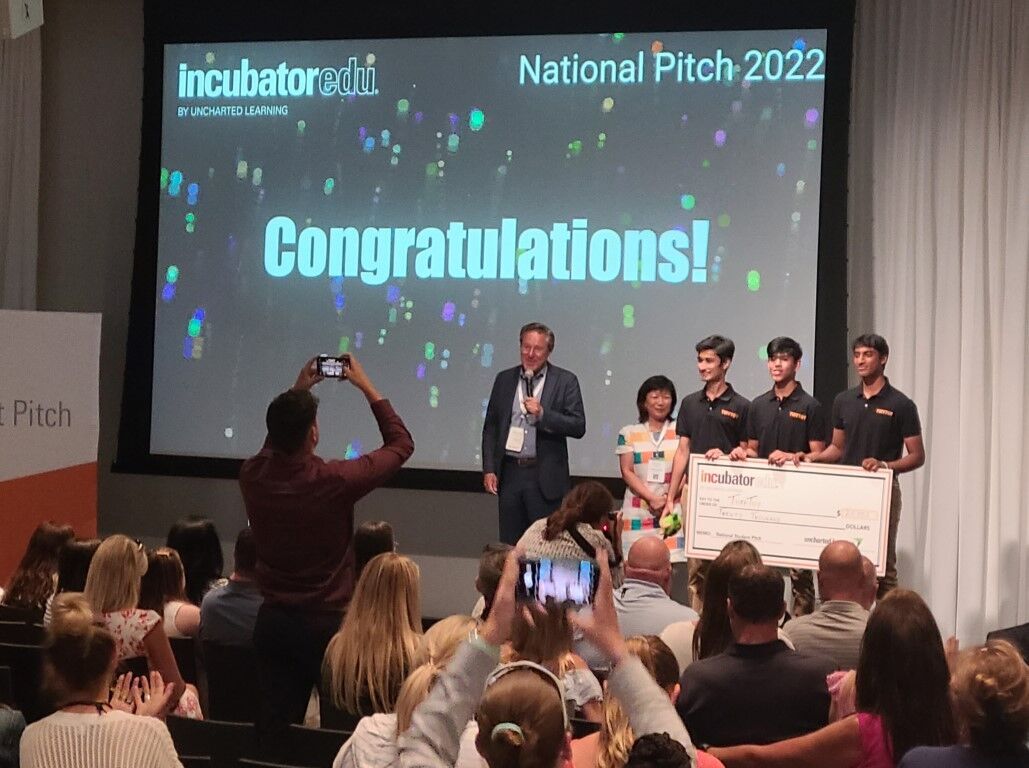
Source: Harker News / The Seattle Times / INCubatoredu
Thinking
Four Moats: Why Three High Schoolers Outcompeted the Market
1. Founder = User. Zero-cost insight.
Jain, Gorti, and Khera weren't "doing user research" — they were the users. Watching your dog tear a $15 toy in five minutes gives you a pain signal sharper than any survey. When founder identity and user identity completely overlap, product intuition becomes dramatically more accurate at zero cost.
This is something most entrepreneurship classes can't teach: pick a category you deeply use yourself, not one that looks big on a spreadsheet.
2. Anti-consensus Pivot: Ditch noise, bet on scent
The industry default is sound stimulation — squeakers, crinkle material. The team considered it. But they did something most people skip: they took their prototype to real users, listened to the feedback, and trusted it over their assumptions.
Dog owners said clearly: squeakers during WFH are infuriating. The team listened, rejected the industry consensus, and moved to scent. That decision placed them in a near-empty competitive pocket — interchangeable skin + scented rubber ball — that barely existed in 2022.
Anti-consensus decisions don't come from wanting to be different. They come from trusting your testing data over conventional wisdom.
3. B2B beats DTC for early cash: one order = $17K
Most early-stage founders focus entirely on getting individual consumers to buy. But TuffToy found a faster path: corporate gifts.
In Silicon Valley tech culture, "pet-friendly perks" and "thoughtful employee gifts" are real line items in real budgets. A software company ordered 1,500 TuffToy sets with custom-embroidered logos at $17,000 total — equivalent to hundreds of DTC orders — with a decision cycle that was probably a single conversation.
The corporate gift channel logic: the buyer is an HR manager with an allocated budget, not a price-sensitive consumer comparison-shopping on Amazon.
4. Pitch competitions = forced investor narrative training
The $20,000 prize from INCubatoredu matters, but the more durable output is the skill of distilling a vague product idea into a clear 10-minute investor story. That skill normally takes founders years to develop. Structured competitions compress it into months.
Action
How to Replicate This Path (Without a $60K/Year Private School)
Step 1: Find a product category where you are a frustrated daily user
Don't pick categories because they look big. Pick one where you are the authentic end user — pet supplies, kitchen tools, fitness accessories, parenting gear. Your frustration is your product insight, cost-free.
Step 2: Build a "substitute materials MVP" and test it within one week
Don't wait for the product to look perfect. Gorti used rubber balls + cloth puppets + a sewing machine. The goal is testing the core functional assumption, not showcasing a finished design. Put it in front of 5-10 real users and observe behavior — don't just ask "do you like it?"
Step 3: Ask "what's most annoying?" not "what do you want?"
Users give socially desirable answers to "what do you want?" Ask "what about the current solution makes you want to throw it away?" — that gets honest answers. TuffToy's scent pivot came from the negative signal "squeakers are maddening," not the positive suggestion "we'd love scent."
Step 4: Chase one large B2B order before slowly accumulating individual sales
Identify 5-10 local companies (tech firms, real estate agencies, law firms) and contact the HR or operations lead. Propose customized employee gifts or client appreciation gifts with logo options. A single B2B order can generate the cash equivalent of hundreds of DTC sales, at far lower price sensitivity from the buyer.
Step 5: Enter structured pitch competitions (student and adult versions exist)
INCubatoredu is school-focused, but adult equivalents exist everywhere: chamber of commerce competitions, accelerator Demo Days, SBA business plan contests, local startup weekends. Even if you don't win, each pitch prep cycle forces you to convert "a feeling that this is a good idea" into "specific falsifiable numeric hypotheses" — the single skill most first-time founders lack most.