Father & Son Hated Bulky Wallets, Made One From Aluminum Plates, Kickstarted at 22x — $200M/Year With Zero VC
In 2013, father Daniel and son Paul Kane were fed up with bulky wallets. They put a $12K Kickstarter goal up — and raised $266K (22x). From aluminum plates and screws to $500M+ in lifetime sales, 2M+ wallets in pockets worldwide, zero external funding ever.
Process
The story starts with a rubber band.
Paul Kane was a college student who'd gotten into the habit of folding his credit card and student ID together with a rubber band and dropping them in his front pocket. No wallet, no bulk, no problem — as far as he was concerned.
Then he went home to visit his parents. His father Daniel took one look at the rubber band and gave him grief.
They went searching for better alternatives. Slim wallets, card holders, money clips — nothing on the market solved the problem in a way that felt right. Too bulky, too cheap-looking, too flimsy. So they decided to build one themselves.
April 2013: Kickstarter, $12,000 Goal
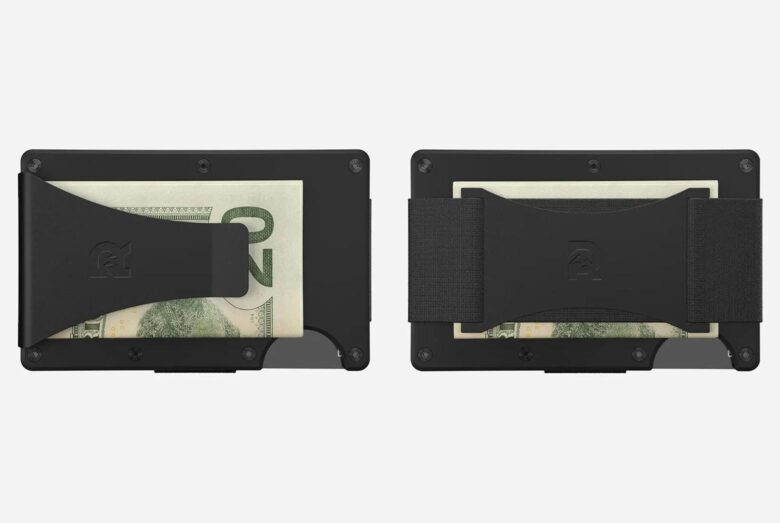
The prototype was elegant in its simplicity: four aluminum plates held together by small screws, cards sliding in from the side, a cash strap on the outside. Dramatically slimmer than any traditional wallet. RFID-blocking by default.
They put it on Kickstarter with a $12,000 goal.
They raised $266,622. That's 22x their target.
The market had spoken.

Second Kickstarter, August 2013: Another $126,873
Two campaigns. Combined: nearly $400,000 in pre-orders. Enough to fund real manufacturing, establish supply chains, and launch a proper business.
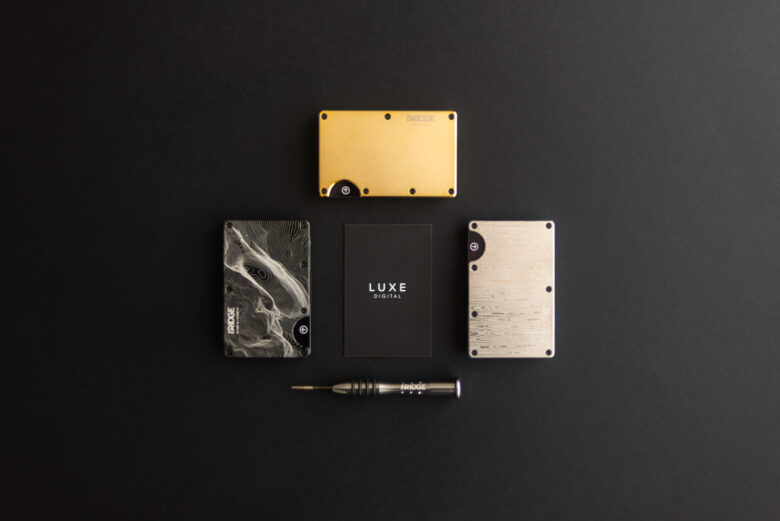
The design language stayed consistent: ultra-thin, front pocket, RFID-blocking, up to 12 cards. Materials evolved — aluminum first, then carbon fiber, then titanium — creating a product lineup from entry-level to premium.
2018: Sean Frank Joins, Systematic Scaling Begins
Sean Frank had been running an ad agency when he joined The Ridge as COO. He brought a precision digital marketing framework that changed the brand's trajectory:
- YouTube pre-roll dominance — Ridge became one of the first DTC brands to aggressively own the YouTube mid-roll ad format targeting men, running ads before and during content that male audiences actually watched
- 2,000+ creator partnerships — In Q1 2025 alone, the team reached out to 18,700 creators, seeded product to 2,600 of them, and generated 3.3M impressions at $11.37 CPM
- 500+ AI-generated ad creatives per day — Rapid testing to identify viral winners, then amplify with $200K/day Meta ad spend
Revenue hit $50M in 2020. The wallet business crossed $100M/year on its own.
Category Expansion: Building an Accessory Ecosystem
Ridge didn't stop at wallets. Using the same male-consumer base, they systematically expanded:
- Phone cases — same metal-minimal design language
- Men's rings (launched 2022) — grew to 8 figures in 2023
- Carry-on luggage — 8 figures
- Key organizers — expanded the "everyday carry" ecosystem
- Power banks — magnetic, premium-positioned
CEO Sean Frank also hosts the "Operators" podcast — which itself generates $5M+/year in revenue and functions as the brand's most powerful founder-voice content channel.
2024: $200M+ total revenue. $500M+ in lifetime sales. $1 billion exit target.

Source: The Ridge Story · Shopify deep-dive · Big Players analysis
Thinking
Moat 1: Solving Your Own Pain Point = Instant Product-Market Fit Signal
The Ridge didn't start from market research. It started from a genuinely specific personal frustration — a bulky wallet. Paul Kane was the target customer. Every product decision he made was validated against his own use case without guesswork. This is the ideal startup origin: when you're both founder and user, product iteration direction is instinctual rather than speculative. Most founder mistakes come from building products they think others need instead of products they personally need.
Moat 2: Kickstarter 22x Overfunding = Zero-Risk First Manufacturing Run
Kickstarter's value isn't just the money — it's the model of "selling before manufacturing." A 22x overfunding communicated three things simultaneously: ① demand is real; ② the price point is acceptable; ③ pre-order revenue can safely fund production without taking on inventory risk. This inverted the traditional "manufacture first, sell later" risk model. They used other people's money to validate their idea before spending a dollar of their own on production.
Moat 3: YouTube Pre-Roll + Male Consumer Precision Targeting
Ridge discovered early that their core user was male and that male consumers spend disproportionate time on YouTube — and crucially, that a single piece of content is more likely to move a male purchase decision than the multi-touchpoint journey typical of female consumers on Instagram. YouTube pre-roll ad pricing was significantly cheaper than Meta early on, and Ridge's creative approach (emphasizing simplicity, durability, masculine utility) performed exceptionally in that format. They owned the channel before competitors understood what was happening.
Moat 4: Category Expansion Along the "Same User, Same Moment" Axis
Ridge's expansion logic is unusually disciplined: every new category must serve the same customer at the same moment. Rings, phone cases, luggage, key organizers — these are all things a man carries or wears simultaneously. This means zero new customer acquisition for cross-sells; lifetime value (LTV) increases with each new category while customer acquisition cost (CAC) stays flat — the most efficient DTC scaling path possible.
Action
Step 1: Use Kickstarter to Validate, Not to Fund Production
If you have a physical product idea, don't place a production order first. Build a quality Kickstarter page. A strong Kickstarter requires: ① a 30-60 second video explaining the problem you're solving; ② your own authentic story embodying that pain; ③ photos of a real (not necessarily perfect) physical prototype; ④ early-bird pricing 25-30% below planned retail to incentivize pre-commitment. If you don't hit 60% of your goal, something is wrong with the product, the price, or the story — any of these is worth fixing before touching manufacturing.
Step 2: Find Your "Male YouTube" — Where Your Audience Actually Spends Time
Ridge's key early insight was that male consumers are highly convertible on YouTube. The parallel question for your brand: where does your specific audience spend the most time? Not where you're most comfortable — where they actually are. For men 30-45: YouTube, podcasts. For women 25-35: TikTok, Instagram Reels. For B2B decision-makers: LinkedIn. Find that platform, then systematically become the loudest voice in your category on it before your competitors do.
Step 3: Make Your Product Design a Brand Language
Ridge has a completely consistent visual system: black + metal texture + minimal lines + topographic map themes. Anyone who sees a Ridge product in the wild immediately knows the brand. Does your product line have this consistency? Put all your products on a table — if you can't immediately read them as belonging to the same brand, you need to rebuild the design system. Coherent product visual language is what makes paid advertising compound: each ad reinforces what the previous ad built.
Step 4: Expand Categories Along the "Same User × Same Moment" Axis
When you're ready to add your second or third product, the only correct test question is: "What else does my existing user need at the same moment they use my current product?" Not "what opportunities exist in the market" — but "what else is in their pocket, on their wrist, or in their bag that I could build better?" That's the correct expansion vector.
Step 5: A Founder Podcast Is the Highest-ROI Brand, Recruiting, and Sales Channel
Sean Frank's "Operators" podcast generates $5M+/year in direct revenue — but the compounding benefits are larger: ① public relationships with the smartest people in the industry; ② top candidates who listen self-select to apply, because they already understand Ridge's decision-making culture; ③ continuous trust-deepening with existing customers who follow the founder's thinking. If you're a B2C brand, consider launching a podcast about your category (not about your brand) that makes you the authoritative voice in that space before you make any product-focused content.