22-Year-Old Security Guard Flipped Thrifted Clothes on eBay to $28M Revenue
At 22, working as a campus security guard, Sophia Amoruso started reselling thrifted vintage clothes on eBay with zero outside capital. Self-taught photography and copywriting took her to $1.1M in two years and $28M in six — fully bootstrapped.
Process
In 2006, 22-year-old Sophia Amoruso worked as a campus security guard at the Academy of Art University in San Francisco — night shifts, dozing through the day. No design degree, no fashion industry connections, barely any money.
She'd noticed people flipping thrift-store finds on eBay for multiples of what they paid. So she opened a store: Nasty Gal Vintage, named after a Betty Davis album.
Her first inventory came from thrift stores and dumpsters. Once, she found two vintage Chanel jackets at a Salvation Army for $8 each and sold them on eBay for over $1,000 apiece.
No photographer, no copywriter, no models — she did it all herself: sourcing, photographing, modeling the clothes on her own body, writing the descriptions, shipping the orders, all from her bedroom. Within months, she was doing $12,000/month on eBay.
"I know where to find this stuff for $8."
In two years, revenue went from zero to $1.1 million. In 2008, her standalone website launched and sold out within hours — the same year eBay suspended her store for marketing off-platform. By then, she didn't need eBay anymore.
The real growth engine wasn't advertising — it was word of mouth. Stylists for Anne Hathaway and Kelly Ripa started calling her directly to order. No paid promotion, just organic buzz built on taste and product quality.
She hired only when operations became unsustainable, and paid her first employee more than she paid herself. A warehouse in Berkeley followed in 2009, then a 7,500-square-foot facility; headquarters moved to Los Angeles in 2010.
By 2011, annual revenue hit $28 million, growth exceeded 11,000% over three years, and the team had grown past 100 — all built by bootstrapping, without a dollar of outside investment.
In 2012, she took venture funding from Index Ventures and others. The company kept scaling, but drifted away from the solo, zero-capital playbook that got it there. Revenue eventually topped $100M+, but the company filed for Chapter 11 bankruptcy in 2016 and was acquired by Boohoo for $40M in 2017. The part worth studying is the climb from zero to $28M.
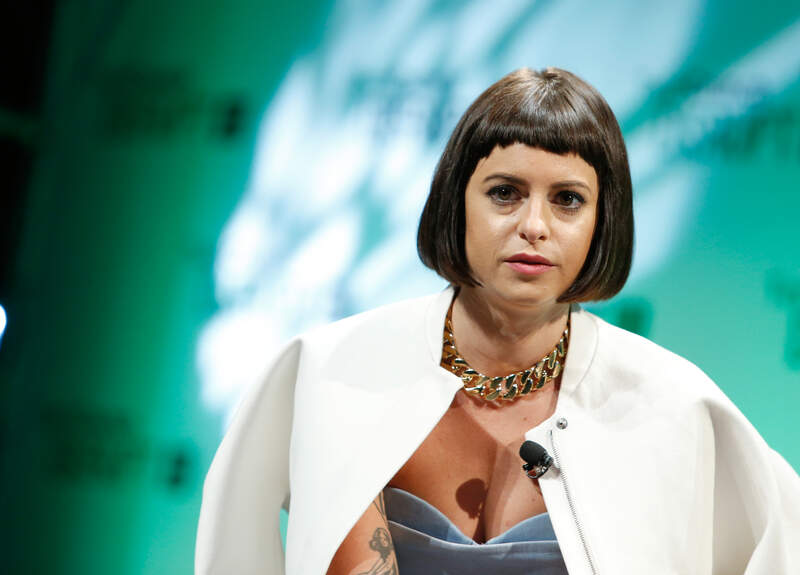
Source: Wikipedia — Nasty Gal · The Wantrepreneur Show · Photo: Brian Ach / TechCrunch (CC BY 2.0)
Thinking
Insight 1: Use an existing platform for your first validation instead of building a website.
Sophia didn't build a website, stock inventory, or hire a team first — she opened an eBay store directly. A platform's built-in traffic and trust is the fastest, cheapest way to validate whether anyone will actually buy. Making your first sale matters far more than having a polished e-commerce system.
Insight 2: Wearing every hat yourself is completely acceptable in the early stage.
Sourcing, photographing, modeling, writing copy, shipping — Sophia did it all alone. "Unprofessional" isn't a reason not to start — early roughness is exactly what creates authenticity and differentiation. A professional team is a problem to solve after you've proven the model, not before.
Insight 3: Price arbitrage is the fastest way to validate your taste and pricing judgment.
Flipping an $8 thrift-store Chanel jacket for $1,000+ wasn't luck — it was judgment about what's worth a premium. Before committing to a big business, validate whether you actually have that judgment with small transactions first. That skill matters more than any business plan.
Insight 4: The real growth engine is usually the product's own word of mouth, not the ad budget.
Celebrity stylists reached out directly to order — zero paid promotion. Spending money and energy making the product/taste exceptional is cheaper and more durable than buying ads. When the product is good enough that people want to recommend it themselves, growth happens on its own.
Action
Step 1: Pick an existing platform as your first validation channel.
Don't build a website or app first. Choose a platform that already has traffic and trust (eBay, Etsy, a marketplace app) and list your first product there. Validate demand at zero development cost before deciding whether to go independent.
Step 2: Personally handle the full process from sourcing to shipping until you have steady revenue.
Take your own photos, write your own copy, pack your own boxes. Don't rush to outsource or hire before you have consistent income — you need to fully understand the process first to know which step is actually worth paying to optimize.
Step 3: Pick a category with a clear price gap to practice on.
Vintage clothing, limited editions, niche crafts — categories where the margin comes mainly from taste and information asymmetry, not large inventory. Test your judgment about "what's worth a premium" with small orders before committing more capital.
Step 4: Turn your marketing budget into a product budget.
Instead of buying ads from day one, spend on improving the product's quality and presentation (photography, packaging, curation). A good enough product generates its own free word-of-mouth — cheaper and more durable than any paid traffic.
Step 5: Only hire when you're truly overwhelmed, and pay properly when you do.
Don't hire ahead of need. Wait until order volume genuinely exceeds what one person can handle, then pay your first employee well — aligned incentives are what attract people who can actually carry the load.
This isn't for you if: you have no sensitivity for "what's worth a premium" and can't judge taste or pricing; the category you want to pursue has no clear price gap or scarcity to arbitrage; or you can't accept the high-intensity early phase of doing everything yourself and need a team in place from day one.