Dog Died, LA Couple Started Sandcarving Pet Memorials — 7 Years, 1,200+ Reviews, Bilingual Niche DTC Brand
Los Angeles couple Vidal and Adda Franco lost their dog Noah and couldn't find a meaningful memorial. So they started sandcarving stone plaques themselves. 7+ years later: 797 website reviews, 441 Etsy reviews (4.5 stars), bilingual English-Spanish products, one of the few US pet memorial brands still offering true sandcarving.
Process
Vidal and Adda Franco are a Los Angeles couple — married 17 years, three kids, two dogs. Adda is a graphic designer. Vidal works with his hands. They weren't planning to start a company. Then their dog Noah died.
After Noah's death, they wanted to leave something permanent. They went looking — and found cheap plastic markers, sublimation-printed "stone" plaques that fade in a few years, and nothing that felt worthy of a life that mattered. So Vidal picked up a sandcarving machine and made one himself.
What Is Sandcarving?
Sandcarving is the process of blasting high-pressure abrasive grit against stone — not laser-etching, not printing, not applied vinyl. It physically carves the design into granite, marble, or slate. The result is tactile: you can feel the engraving with your fingers. It withstands decades of outdoor exposure without fading.
This craft is dying in America. Most "pet memorial stone" sellers have switched to cheaper laser engraving or sublimation printing — lower cost, faster turnaround, but significantly shorter lifespan. My Furever Memories is one of the very few US pet memorial brands still practicing true sandcarving.
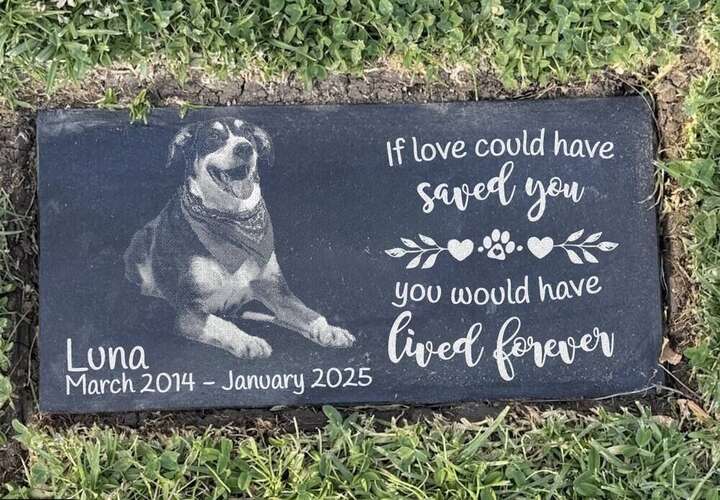
From Home Workshop to Dual-Channel Brand
They started on Etsy. Both Vidal and Adda still had day jobs; they carved stones evenings and weekends. Orders trickled in, then grew through word of mouth — grieving pet owners who found the quality striking, who shared it with others who had also lost pets.
They then built their own independent store at myfurevermemories.com while keeping the Etsy shop running in parallel. The two channels complement each other: Etsy supplies organic discovery and built-in trust signals; the website serves SEO-driven long-term traffic and direct customer relationships.
The workflow they developed: Adda handles graphic design — laying out each memorial's typography, photo placement, and inscription — while Vidal does the physical carving. The division of labor combines professional design sensibility with genuine handcraft.
The Spanish-Language Play: An Ignored Market
Los Angeles has a massive Latino pet-owner population. Almost no competitor in the pet memorial space serves them in Spanish. Vidal and Adda built Spanish-language product pages, Spanish epitaph poems ("Poema para perdida de perro español"), and Spanish-language customer service — a differentiator that nearly no other pet memorial brand thought to create.
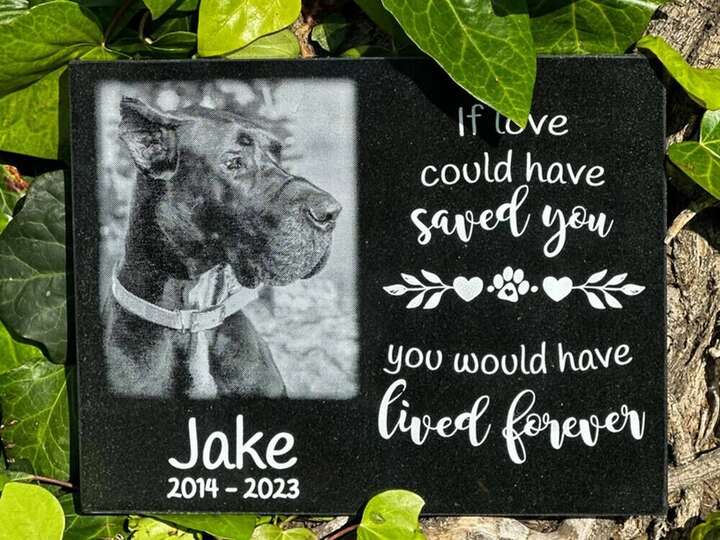
7 Years Later
myfurevermemories.com has 797 reviews. Their Etsy store has 441 reviews (4.5 stars). Combined: over 1,200 real customer reviews across platforms. Their phone number is 501-FUREVER (501-387-3837) — a small branding detail that reveals exactly the level of care they bring to everything.
They also run a secondary gifting site, PixNGifts.com, and volunteer with NuestroPuebloValle.org, a local LA nonprofit helping families.
The origin story video — How It All Started:
This business started from a single loss. Noah isn't forgotten — Noah became the reason thousands of other families got a memorial that actually lasts.
Source: My Furever Memories · Etsy Store · YouTube
Thinking
Moat 1: Craft Scarcity — Sandcarving Is Dying
Sandcarving requires equipment investment ($3,000–$8,000 for a sandcarving machine), a learning curve, and cannot be outsourced to a factory assembly line. That's precisely why most competitors have abandoned it for cheaper laser engraving or sublimation printing. Vidal and Adda's choice to persist with sandcarving isn't stubbornness — it's a strategic alignment between what their customer actually needs (a memorial that outlasts the grief) and what they're uniquely positioned to deliver. The craft barrier keeps most new entrants out, creating structural protection in a category with reasonable margins.
Moat 2: Authentic Emotional Origin
Noah's death is the real origin of this business. This is not a "I spotted a market opportunity" story — it's a "we lost a family member and couldn't find anything worthy" story. Buyers who read this before ordering are not just purchasing a stone; they're entrusting their grief to someone who has experienced the same grief. Emotional trust at this depth is extremely difficult for a competitor to replicate in any short timeframe.
Moat 3: The Spanish-Language Gap Competitors Systematically Ignore
Approximately 48% of Los Angeles residents have Latino heritage; nationwide, Latinos account for about 18% of the US population with pet ownership rates exceeding 60% in Latino households. Almost no pet memorial brand creates Spanish-language epitaph poems, Spanish product pages, or Spanish customer service. Vidal and Adda cover this market naturally through language and cultural background — a differentiation advantage that requires no additional marketing spend.
Moat 4: Dual-Channel Compounding
Etsy provides organic discovery (search traffic, platform algorithm) while the independent store provides higher margin and customer data ownership. Combined: Etsy's five-star reviews continuously build brand trust; the website's SEO captures high-intent users searching directly on Google for "pet memorial stone Los Angeles." This structure compounds without paid advertising.
Action
Step 1: Find a Craft That's Being "Economized Away"
In any manufacturing category, when the market migrates toward lower-cost techniques, a population of underserved buyers gets left behind — willing to pay a premium but unable to find the product. Sandcarving is one example. Hand-thrown ceramics. Cold-press olive oil. Hand-sewn leather goods. The question to ask in your category: what craft or material has been "efficiency-replaced" by inferior alternatives, but where consumer desire for the original never actually disappeared?
Step 2: Start With a Real Loss Story
Vidal and Adda didn't do a market positioning analysis. They made what they needed for themselves. This "founder as first customer" brand origin is extremely efficient in emotionally dense consumer categories. If you're entering pet, wedding, parenting, or grief-adjacent markets, find a genuine personal pain point you've actually experienced, and tell it honestly. Sincerity outperforms polished copywriting in high-emotion purchases.
Step 3: Find Language Gaps in Competitor-Saturated Markets
Offering products in languages other than English remains an underexploited differentiation in many categories. Spanish pet memorials is one example; Mandarin, Japanese, and other languages have similar white space. Entering these gaps costs relatively little — translate product descriptions, design a few category-specific items — but the competitive intensity for customer acquisition is dramatically lower than in English-language markets.
Step 4: Start on Etsy, Then Build the Independent Store
Etsy is a discovery engine, particularly suited to handcrafted custom goods. After building 100+ reviews (4.5+ stars) on Etsy, you have enough social proof to push an independent site. The site captures high-intent search traffic (Google SEO), while you continue Etsy for discovery. The two channels have different traffic sources and different buyer mindsets — they don't cannibalize each other; they compound.
Step 5: Phone Numbers and Brand Details Are the Cheapest Trust-Building Tools
How much does the phone number 501-FUREVER cost? Probably $10–20/month for a virtual number. But the message it sends is: this company is serious enough that even their phone number is a brand asset. Similarly: handwritten thank-you cards, custom packaging, a small note included with delivery. For low-volume custom goods, these details have a disproportionately large effect on repeat purchase rates and word-of-mouth.