One Jar of Hot Honey: From a Pizza Bar Counter to $40M a Year
Mike Kurtz discovered hot honey in Brazil, spent 6 years experimenting in his kitchen, and launched from a single Brooklyn pizza restaurant. From selling bottles off the bar to $40M/year in 30,000 retail locations. He didn't invent honey — he invented a category.
Process
In the summer of 2003, Mike Kurtz was a junior studying abroad in Salvador, Brazil, when a plate of pizza arrived at his table — along with a small jar filled with honey infused with chili peppers.
He drizzled it on. One bite. Sweet and heat exploding together.
He thought: this might be the best thing I've ever tasted.
Six Years of Kitchen Experiments
Back in the US, Kurtz couldn't shake the flavor. At UMass Amherst, he began experimenting in his dorm kitchen — testing different chili peppers, infusion times, honey varieties. He gave jars to friends. Friends asked for more.
After graduation, he moved to Brooklyn and landed in the music industry — but the honey experiments never stopped. Every Christmas, he bottled batches to give as gifts. He never planned to build a business. He just believed in what he was making.
Six years passed.
The Pizzeria That Changed Everything
In March 2010, Paulie Gee's opened in Greenpoint, Brooklyn — a wood-burning Neapolitan pizza spot. Kurtz got an apprenticeship there. Before long, he brought his hot honey in for the owner, Paulie Giannone, to try.
Giannone didn't hesitate. They built a signature pizza together: soppressata, fresh mozzarella, San Marzano tomatoes, Parmigiano Reggiano — all drizzled with Mike's Hot Honey. They named it "The Hellboy."
Customers tasted it and immediately asked: can I buy that honey?
Selling Off the Bar
Kurtz started bottling his hot honey in 12oz glass jars and placed them on the bar at Paulie Gee's. No brand design. No label. Just a handwritten note on a plain glass jar.
He later said the line that defined the entire early chapter: "People loved it before there was even packaging on the bottle."
Word spread through Brooklyn's food scene. Diners bought bottles and shared them with friends. Friends came back looking for more. In 2011, Kurtz launched a formal distribution operation.
The Production Wall
Scaling up, Kurtz hit an unexpected wall. Almost every honey producer refused him.
Chili peppers and honey in the same facility meant cross-contamination risk. Every apiary he approached said no. He finally found Stiles Honey — a family apiary in New Jersey — whose owner was willing to improvise in the garage behind his house.
That garage eventually became the operation that supplied 4,000 Walmart stores.
Whole Foods Opens Retail
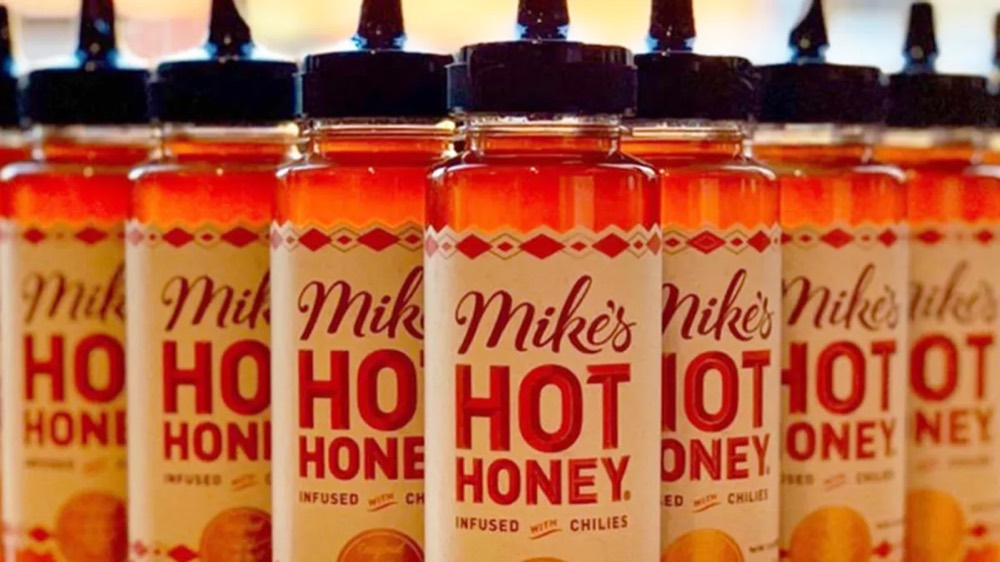
In 2014, Mike's Hot Honey entered Whole Foods — its first major grocery chain. That same year they completed a significant rebrand with professional packaging.
In 2015, Kurtz brought on Matt Beaton as CEO and raised three rounds of funding totaling $12 million. CBS This Morning ran a feature, reaching 4 million viewers nationwide. The local Brooklyn cult product became a national conversation.
The Sweet-Heat Category
In 2020, the National Restaurant Association named "sweet heat" the #1 flavor trend of the year. Mike's Hot Honey wasn't chasing a trend — it was the trend.
Major brands lined up: Dunkin', Lou Malnati's, Cold Stone Creamery. Hot honey had moved from a Brooklyn pizza bar into America's mainstream food culture.
By 2023-2024: $40M revenue, 3,000+ restaurants, 30,000+ retail locations. 2025 projected: $60M (60% retail, 40% food service). About 2.5% of the entire $1 billion US honey market.
He didn't invent honey. He invented a category.
Thinking
Why "a category" rather than just "a condiment"? Kurtz never positioned Mike's Hot Honey as better honey or spicier hot sauce. He defined a lane that didn't exist. In consumer products, carving out a new category means your competition is essentially zero at the start — and once you're the category name, newcomers are always playing catch-up.
The single-restaurant MVP logic: Paulie Gee's wasn't a random test venue — it was a beloved Brooklyn food institution with a highly discerning, highly connected customer base. Getting validated there was worth more than a year of retail data.
"Loved before there was packaging": This is the highest-quality product signal. If customers seek out your product without any branding, your product is genuinely good. Kurtz spent six years getting the formula to that level before thinking about business.
On the $12M in funding: The money came in 2015 — five years after Kurtz had already built the brand organically. The funding scaled a proven product, it didn't fund the proof. That's the right sequencing.
Action
- Find the combination with no category name yet: Sweet + heat, smoky + sour, salty + sweet — flavor combinations are endless, but most lack a brand defining them. Your opportunity lives in what "everyone does but nobody has named."
- Use one venue as your MVP: Don't start with a supermarket. Find a respected local restaurant and ask if they'll put your product on their menu. Restaurants give the fastest, most honest consumer signal.
- Let the product be loved before the branding exists: Don't invest in packaging until you have real reorder signals. Customers buying ugly jars is your strongest product validation.
- Your production partner is your moat: Stiles Honey's willingness to experiment in a garage was Kurtz's real competitive advantage. Find a supplier willing to grow with you, not just the cheapest option.
- Category ownership is winner-take-most: Define the category first, occupy the consumer's mind first, and every competitor that follows is just validation that you were right.