AI Engineer Designs Plush Plant Brand: ¥15k Start, ¥300k/Month in 5 Months
Walter, a 90s-born AI engineer, designed tulip plush plant pots using Sora and Gemini, tested market demand via Xiaohongshu votes, sourced factories on 1688, and reached ¥300k/month (~$40k USD) within 5 months — starting with just ¥15,000.
Process
Origin: a bouquet that doesn't wilt
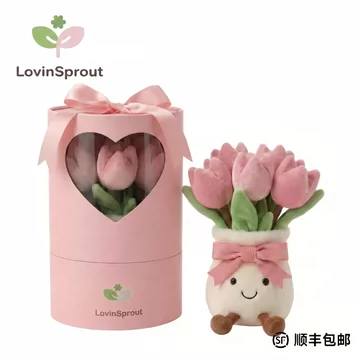
In 2024, a 90s-born AI engineer named Walter decided to make his wife — who loved tulips — a plush version of a bridal bouquet as a wedding gift. "It really was a gift for my wife." He ran over 20 design variations through AI tools, picked the best result, and had it custom-manufactured.
Nobody expected that romantic starting point to become a side business generating ¥300,000 (~$40,000) per month within five months.
Step 1: AI design — near-zero-cost product development
Walter's workflow is deceptively simple. He photographed a coin-leaf plant from home and fed the image to a large model. First design came out immediately. He kept iterating: adding detail, refining the shape, then adding a smile expression and tiny feet until the plant had a distinct personality. He also feeds real-time trend signals and material references into a design agent, letting the AI generate ideas autonomously. "Sora, Gemini, nano banana — they're all incredible. Nano banana especially." Per design: 20–30 image runs, select the best, iterate further. Design cost: nearly zero.
Step 2: Xiaohongshu vote-testing — zero-inventory market validation
After generating four candidate designs, Walter posted them on Xiaohongshu (China's Instagram/Pinterest) and asked followers to vote. Ten to twenty participants. Highest vote wins, gets produced. Validate demand before spending on production — this eliminates inventory risk entirely. The vote post itself functions as free content distribution, and voters develop emotional investment in the brand before any purchase, driving far higher conversion than cold traffic.
Step 3: 1688 factory sourcing — hard lessons
He used 1688's factory-matching tool to connect with a manufacturer, placing his first order: 100 units, ¥15,000 (~$2,100). Manufacturing turned out to be far more exacting than software engineering. "I had no idea what 'that pink' meant. You have to specify outer diameter, inner diameter, height — exactly." Each color needs a Pantone number; every dimension needs precise specification.
He learned what bad delivery looks like: a user wanted a giant alocasia leaf's natural vein pattern reproduced on a plush. The factory reworked it multiple times. It never came out right. Refund, cancel order. "Delivering the product matters more than getting the traffic." Real money, real lesson.
He eventually developed a system: write specs with engineering precision, and use consistent courtesy — "please, I'm counting on you" — to build genuine relationships with factory contacts. Respect the industry; really learn the materials and process. That's what makes operations sustainable.
Explosion: the order notification just kept going
By month five: ¥300k/month in revenue, peak 200 orders in a single day. "I'd wake up and the order notification just kept going."
The most memorable moment was a user-initiated co-creation. A design student studying in the UK messaged him out of nowhere: "Can you do a purple version? It will definitely blow up." She sent a color reference. He designed it from her swatch. The post went viral. Then his user community became a factory floor-monitoring squad: "When does it ship?" "How far along are you? LMAO." A group of buyers spontaneously became an unpaid production-tracking team — the highest form of customer loyalty.
Companion, not decoration
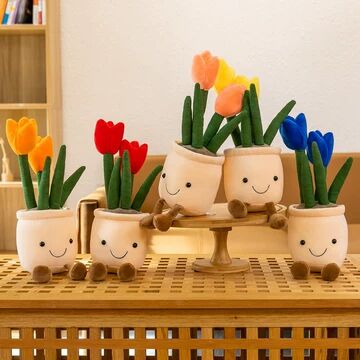
Walter's philosophy has never wavered: the pot and flowers are a separate design — users can "revive" the blooms, swap arrangements, set them in the sun. Like caring for a real plant. "I want it to be something you live with, not something you put on a shelf. It grows with you every day. That feeling of companionship."
People compare his products to Jellycat constantly. He doesn't mind — smile expressions are universal design. What he cares about is whether the product actually becomes part of someone's daily life.
Five months into a side hustle, this 35-year-old software engineer found something he hadn't found in 34 years of "normal" life:
"After doing this, I discovered there are a thousand paths in this world. Life as a vast open field — made real."
Source: Walter video interview (WeChat, 2025)
Thinking
Why this model works: three structural advantages
1. AI design = zero marginal cost validation
The traditional risk of launching a plush brand is "commit to molds first, then hope it sells." You pay production costs upfront, bet on a design, and wait for market response. A wrong bet means unrecoverable loss. Walter eliminated this entirely by using AI tools to prototype at near-zero cost. He wasn't gambling on which design would sell — he was letting the market decide before committing any money to production. This is a genuine paradigm inversion: from "make then sell" to "validate then make."
2. Social vote-testing = cheapest market research, with built-in distribution
Xiaohongshu voting isn't a gimmick — it's a structural advantage. Users who vote have already expressed clear preferences; they convert at far higher rates than cold traffic. The vote post itself is free distribution: participants share things they engaged with. And voting creates a sense of co-ownership — "my opinion was included" — which seeds future loyalty and repurchases. Walter replaced ¥100k+ in market research with a 10-person poll.
3. User co-creation = sustained heat engine
The viral purple tulip wasn't luck. The UK student who reached out had already internalized the brand so deeply she became an extension of it. Walter built a genuine feedback channel that made users feel like participants in the product's evolution. The "cloud factory monitor" phenomenon — users spontaneously tracking production progress — is the highest form of customer stickiness and the cheapest form of word-of-mouth marketing.
What's replicable vs. what isn't
| Replicable | Notes |
|---|---|
| AI design workflow (generate → iterate → select) | Requires learning prompt engineering |
| Xiaohongshu vote-test loop | Works with 50–200 base followers |
| 1688 factory sourcing + supply chain | Learning curve; start with 50–100 units |
| User co-creation operations | Requires genuine engagement |
The specific tulip/coin-plant niche now has competitors, but the core methodology — using AI to validate emotionally resonant, overlooked plant categories — is fully transferable. The meta-skill: find the next underserved "emotionally resonant plant" before competitors do.
Actual entry costs
| Item | Estimated Cost |
|---|---|
| AI design tools | Free ~ ¥300/month |
| Xiaohongshu vote-test | ¥0 |
| Factory samples (3–5 units) | ¥1,000–3,000 |
| First production run (50–100 units) | ¥8,000–20,000 |
| Total | ¥10,000–23,000 (~$1,400–$3,200) |
Action
Step 1: Niche selection — find emotionally resonant, overlooked plants
Core rule: the plant must make users say "this is SO cute," not "this is practical."
Avoid current red oceans: tulip and succulents are now crowded.
Candidate niches: lavender (French-romantic emotional register), monstera (arts-culture identity), banana leaf (tropical aesthetic), trailing vines (rare, cascading texture), moss balls (Japanese wabi-sabi).
Research method: search "毛绒植物" on Xiaohongshu. Read the comments — wherever users ask "does this come in [X]?", that's an unmet demand signal.
Step 2: AI design workflow
Tools (use one or combine): Sora / Gemini / nano banana / Midjourney.
Prompt template:
[plant name] plush stuffed toy in a small ceramic pot, cute smiling face and tiny feet,
kawaii aesthetic, soft fabric texture, product photography, white background,
pastel [color] tones, professional lighting
Workflow: run 10–20 images per design → select 3–4 for deeper iteration → add expression, feet, emotional state → finalize 2–3 for vote-testing.
Step 3: Xiaohongshu vote-test
Account positioning: authentic creator voice ("I'm testing something new") outperforms hard-sell.
Post format: "Help me choose! Which is cuter?" + 2–4 comparison images.
Engagement: reply to every comment — participation signal matters more than raw traffic.
Decision threshold: 20–50 engaged votes is enough. Strongest signal: "Is this for sale?" in the comments means purchase intent.
Step 4: 1688 sampling and production
Required specs: ①Pantone color numbers ②Precise 3D dimensions (OD/ID/height) ③Multi-angle reference images ④Fabric preference (short-pile/long-pile).
Sample quantity: 3–5 pieces (~¥200–600 each), 7–14 days. Always inspect before committing to production run.
Production: first run 50–100 units to manage risk. Pay production deposit only after sample approval.
Relationship tip: consistent courtesy with factory contacts gets rush orders processed faster.
Step 5: Listing and the repeat loop
Listing strategy: Taobao pre-sale mode — collect payment before shipping, zero inventory risk.
Content flywheel: post new design vote → produce winner → post production progress update → invite buyers to post unboxing → use buyer content for next round → return to step 1.
Co-creation: actively ask in comments "what plant should I do next?" Walter's rule: the best co-creation ideas come to you unprompted — take every specific request seriously.