A Pune Homemaker Self-Taught Embroidery, Posted a Reel of a Wedding-Gift Hoop That Went Viral — ₹10K to ₹50 Lakh, Then a DIY Craft-Kit Brand
Akshata Jain is a Pune homemaker who taught herself furoshiki (Japanese fabric gift-wrapping), hand-lettering, and embroidery via Google and YouTube. During lockdown she made a personalized embroidery hoop as a gift for a friend's wedding and posted an Instagram reel — it gained 75,000 followers in two weeks and crossed 19 million views. She started a personalized-gifting business with ₹10,000, scaled from a dozen to 200 orders a month, and ₹50 lakh in revenue. She then productized the bespoke craft into a beginner-friendly DIY embroidery/plushie kit brand (₹999–3,999) with video tutorials.
Process
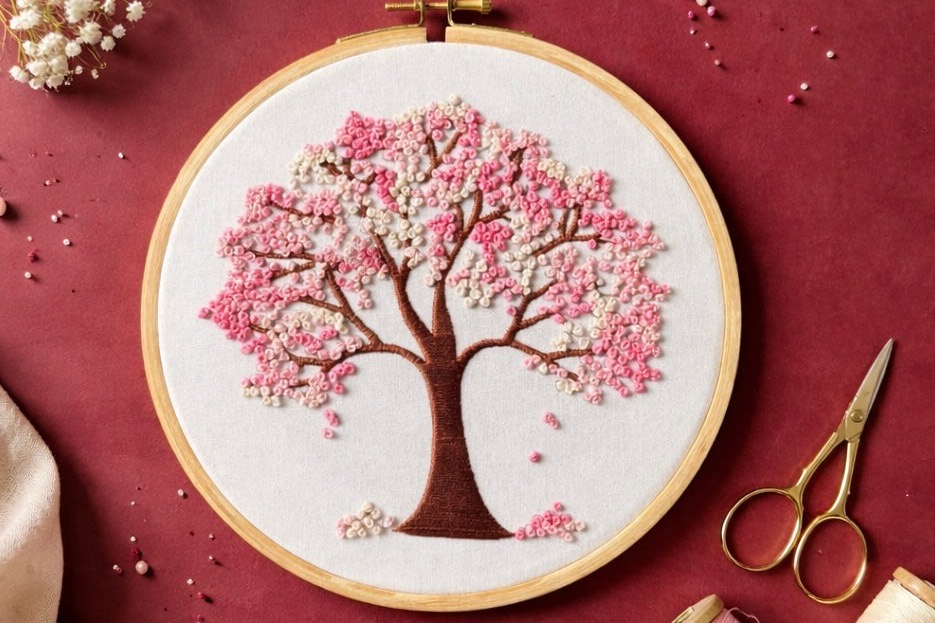
Akshata Jain is a homemaker in Pune, India. She had no design background and knew nothing about e-commerce — furoshiki (Japanese fabric gift-wrapping), hand-lettering, and embroidery were all things she taught herself through Google and YouTube. Today the craft brand she founded, Knot Your Type, does ₹50 lakh (~$60K) in revenue. But it all began with one heartfelt gift for a friend and an offhand short video.
Stage 1 — The start (lockdown): a wedding-gift reel accidentally goes viral
During lockdown, a friend of Akshata's was getting married. Wanting to give something special, she hand-designed and stitched a personalized embroidery hoop, then casually filmed the process as an Instagram reel and posted it.
What she didn't expect: the reel blew up — in two weeks the account gained about 75,000 followers, and that single reel crossed 19 million views. By May 2021, all her reels combined had passed 2 crore (20 million) views. A homemaker's hobby suddenly had a huge audience.
Stage 2 — A ₹10,000 personalized-gifting business: from a dozen orders to 200
With the traffic flowing, Akshata turned it into a business. With ₹10,000 in startup capital she launched Knot Your Type, doing personalized gifts: embroidery hoops, furoshiki fabric wrapping, hand-lettered cards, custom hampers.
The crucial thing: her product was inherently content — personalized handmade gifts are pretty, filmable, and emotionally resonant, so every piece she made became a shareable video. Order volume climbed from the "10–15 a month" she'd first imagined to around 200 a month, with revenue reaching ₹50 lakh.
Stage 3 — The key pivot: productize the bespoke craft into DIY kits
But making each gift by hand has a ceiling: it's capped by Akshata's own hours. She could only ever take as many orders as her two hands could finish.
So she made a smart pivot: standardize the craft into beginner-friendly DIY kits. Embroidery kits, plushie kits, paper- and clothing-embroidery kits, priced ₹999–3,999, each including all the materials plus video tutorials, marketed as "100% beginner-friendly, Made in India." This step freed both capacity and variety from her personal time.
Stage 4 — From custom work to a brand: a scalable, high-repeat craft-kit business
After the pivot, Knot Your Type went from "taking orders for gifts" to "a brand selling products": dozens of SKUs, buy-2-get-1 promotions, nationwide shipping.
What she sells is no longer a single gift, but the entry experience of picking up a therapeutic hobby. Embroidery and crafts are an addictive, calming, lifelong, high-repeat hobby — a beginner kit gets customers in the door, and once they're hooked they buy advanced kits and new patterns. A homemaker in Pune, starting from one reel, turned a craft she'd Googled her way into learning into a craft brand for beginners across India.
"Four years ago, Knot Your Type was nothing." — Akshata Jain (paraphrased from her public posts)
Source: YourStory · Knot Your Type · Instagram @knotyourtype
Thinking
Insight 1: The product is the content — a reel of a heartfelt piece gained 75,000 followers in two weeks
Akshata's breakout wasn't a marketing stunt; it was a product that is inherently pretty, filmable, and emotionally resonant (a personalized embroidery hoop) simply being filmed. The making of a craft is naturally suited to short video — soothing, photogenic, full of little "wow" moments.
This is a path countless people under-rate: at the very moment you choose a product or make content, ask — is it filmable? Is it worth sharing? Does it have an emotional hook? If your product is inherently photogenic and shareable, the algorithm delivers customers for you and acquisition cost trends to zero. One right piece of content can hand you 75,000 followers in two weeks — a starting boost no paid ad can buy.
Insight 2: Productizing a bespoke craft is a battle against your own ceiling
Custom work sounds lovely, but it has a brutal cap: making each piece by hand, your ceiling is one person's working hours. No matter how hard you work, you have two hands and 24 hours. Akshata's key leap was standardizing the craft into DIY kits — so capacity and variety were no longer locked to her personal time.
This is the same hidden thread as Penny Linn (from hand-painting to a roster of designers) and Victoria (from designing her own to licensing prints): any business built on a craft or the founder's own hands must cross the line of "decoupling output from personal time" to scale. The sooner you turn "only I can make this" into "a product that copies and ships," the higher your ceiling.
Insight 3: Turn an "intimidating craft" into a "beginner-ready product"
Embroidery looks hard, and that scares off a large crowd who'd love to try but don't dare. Akshata's kits use "all the materials + step-by-step video tutorials + 100% beginner-friendly" to flatten that barrier, catching the huge beginner audience the traditional craft world ignores.
This is exactly the same logic as Penny Linn turning "expensive, stuffy needlepoint" into a young person's trendy toy: the demand was always there; your job isn't to create it but to lower the on-ramp — reduce the barrier, the fear, the cost of the first attempt. Whoever makes the beginner's "first step" easiest captures the biggest slice.
Insight 4: Pick a "high-repeat, therapeutic" hobby category
Embroidery and crafts are addictive, lifelong, and inherently calming hobbies. Selling a "beginner kit" means: once customers are in, they'll buy advanced kits, new patterns, new materials — acquire once, monetize repeatedly.
Factor repeat purchase in at the moment you choose the product. Selling a one-off item versus a repeat hobby/consumable are radically different economic models. Akshata chose the latter: she doesn't end the relationship after one sale — she brings customers into a hobby they'll keep playing for years.
Insight 5: The best businesses often start from a real moment, not a business plan
Akshata didn't start with "I want to launch a business" and then hunt for a product. She started with a genuine gift and a casual share, accidentally hit demand, and then rode it into a business.
This is the most under-rated truth about "how to start": rather than locking yourself away to craft a perfect business plan, take the small thing you're already doing earnestly — that others also find interesting — make it sincerely and share it publicly. Demand surfaces on its own. Looking back, many great businesses started as nothing more than "a thing you were already doing well."
Action
Step 1: Make something inherently filmable with an emotional hook, and post the process
Pick a product or piece that's visually appealing and emotionally resonant, and film the making and the finished result as short videos — consistently. Let the product be its own ad; don't count on paid ads, count on "it's genuinely worth watching and sharing." One right piece of content can hand you 75,000 followers in two weeks — a launch boost money can't buy.
Step 2: Once demand is validated, productize your custom work immediately
If you're currently making each piece by hand, use it to validate "will anyone buy" — but don't get trapped in the hours. Standardize the craft into something that copies and ships as fast as you can — kits, templates, finished SKUs, tutorials. Stop letting capacity equal your two hands. That's the watershed between "a craft side hustle" and "a brand."
Step 3: Turn an "intimidating skill" into a "beginner-ready entry product"
Find a skill that scares off beginners (embroidery, baking, painting, an instrument, gardening) and flatten the barrier with "all materials + step-by-step tutorials + beginner-friendly." The huge beginner crowd the traditional scene ignores is often the biggest blue ocean. Remember: what you're lowering isn't the price — it's the fear of the first attempt.
Step 4: Prefer addictive, repeat-purchase hobby categories
Sell things people "keep buying once they start" — beginner kits, consumables, addictive projects. Acquire once, monetize repeatedly — far easier than endlessly chasing new customers. Make repeat rate one of your core product-selection criteria: for the same effort, a repeat category makes every dollar of acquisition pay back several times over.
Step 5: Find the business inside what you're already doing earnestly — don't force a business plan
Notice the small things you do with real devotion that others also show interest in — that might be your Knot Your Type. Make it sincerely, share it publicly, and let the market tell you where the demand is, instead of designing a perfect, untested plan behind closed doors. The best starting point is rarely "I want to start a business"; it's "I was already doing this well."
Not for you if: you can't produce content or work that consistently draws people; or you only want to make each piece by hand and won't productize the craft (then your ceiling is your own hours); or you want to sell a one-off product and won't commit to a repeat-purchase hobby category.