She Doodled in Class, Started an Etsy Shop on a Dare, Sold Only Greeting Cards — and Built a Six-Figure Stationery Brand
UC Berkeley student Kirstie Wang was always doodling in Adobe Illustrator in class; her roommates dared her to open an Etsy shop. From 2012 she sold only greeting cards (lowest barrier), held no inventory, and printed each week's orders at the office-supply store on Friday nights — later investing just ~$200 in bulk supplies. She ran it alongside Bay Area tech jobs, converted her garage into a studio in 2020, grew 1088% year-over-year, crossed six figures, and eventually went full-time with a small team of AAPI women.
Process
At UC Berkeley, Kirstie Wang was the kind of student who's always doodling in class — except her tool of choice was Adobe Illustrator. She taught herself Illustrator and Photoshop and made birthday cards for her friends. Watching her, her roommates dared her: "You should just open an Etsy shop."

Stage 1: Doodling in Class, Dared Into Opening a Shop (2012) — A Start That Felt Like a Joke
In 2012, still a student at Berkeley, Kirstie opened a little Etsy shop called A Jar of Pickles. She didn't treat it as a startup — just a "side hobby." No one could have guessed this shop would walk with her through the next decade.
She had no business plan, no startup capital, not even the thought "I'm building a brand." All she had was: a self-taught hand at design, a little spare time, and a roommate's "just try it."
Stage 2: Cards Only, Zero Inventory, Friday-Night Printing (2012—2015) — Lowest Barrier Possible
Kirstie started by selling just one thing: greeting cards. The reason was practical — cards are the lowest-barrier product of all: cheap to design, low price point, no complex production.
More importantly, she held no inventory. Every Friday night, she'd take that week's handful of orders to the office-supply store, print them one by one, then fold, envelope, and ship them by hand.
It wasn't until about a year in — once she'd confirmed people kept buying — that she spent money for the first time: about $200 on bulk cardstock, envelopes, a folding tool, and packaging, to make her margins healthier. It was the first real money she put into the business.
Stage 3: Growing Up Alongside a Day Job (2015—2019) — Main Job Funds the Side Hustle
After graduating, Kirstie joined Bay Area tech companies, working in graphic design, UX design, and brand marketing. But A Jar of Pickles never stopped — it just grew alongside her, while she worked.
She funded the side hustle with the stability of her day job, in no rush. From 2015 she expanded beyond Etsy into wholesale, craft fairs, and her own e-commerce site. For years it stayed a slowly-growing small business — until one moment when it suddenly accelerated.
Stage 4: The Breakout (2020) — Garage Studio + 1088% Growth
In 2020, the pandemic hit. Kirstie asked her employer for a 3-month break, converted her garage into a studio, and for the first time threw herself fully into A Jar of Pickles.
Two things happened at once:
First, product expansion. She finally added the categories customers had been asking for — enamel pins, keychains, washi tape. She'd deliberately waited until now, because she only adds what customers actually want. The result: revenue nearly tripled.
Second, Instagram Stories. She started posting Stories almost daily — unplanned, unpolished, just real glimpses of her days and products. The result: engagement more than tripled, and in 2020, 96% of her website traffic came from Instagram. Her line: "Instagram Stories is one of the most underutilized business tools on social media."
That year, A Jar of Pickles grew 1088% year-over-year and crossed six figures in annual revenue.
Stage 5: Full-Time and a Team (2021—Now) — From One Person to a Small Team of AAPI Women
Once growth held, Kirstie made her first hire in 2021, then added more. In 2022, she finally left tech to run A Jar of Pickles full-time. Today it's a small team of AAPI women.
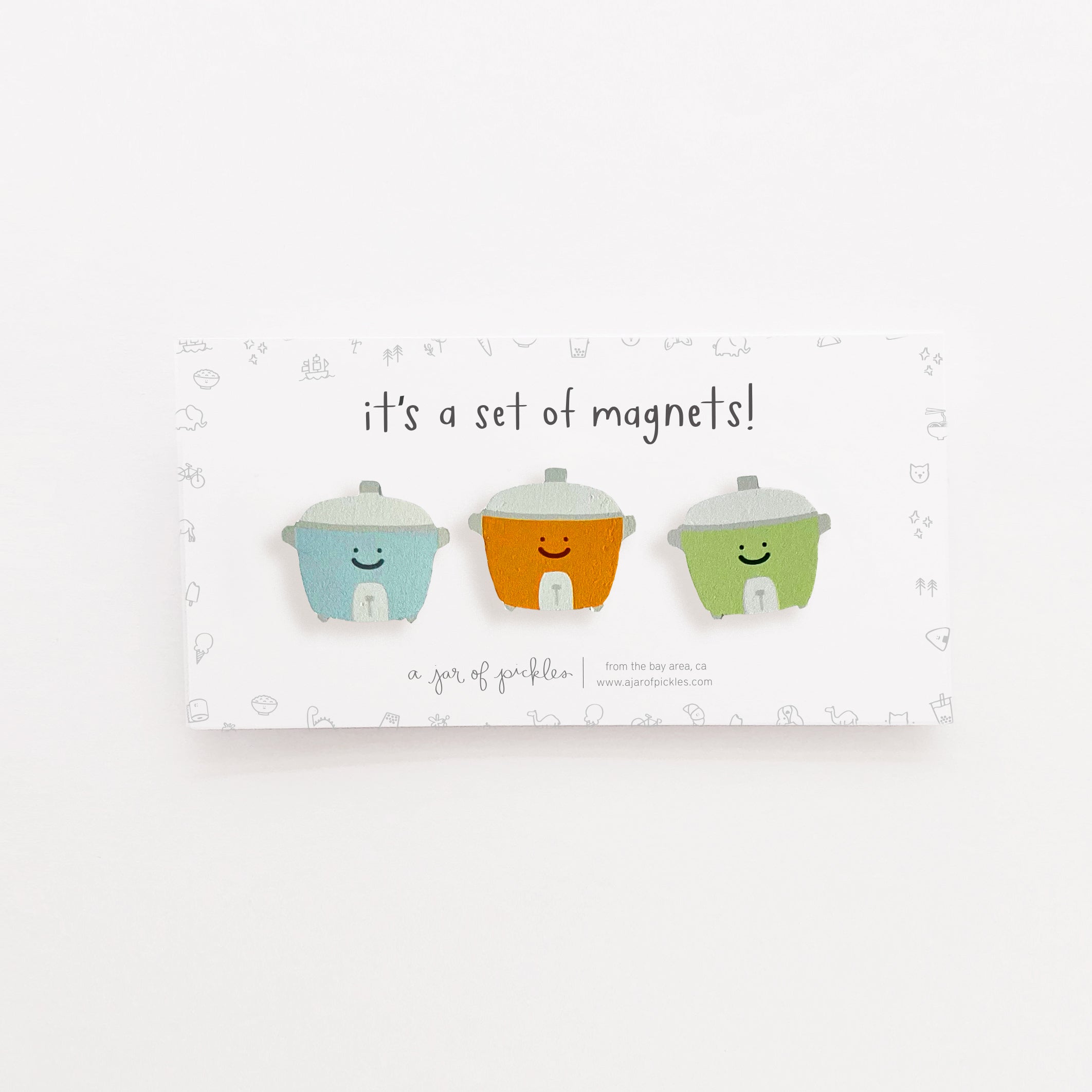
The brand's soul grew clearer: design for Asian culture and life's "little joys" — dim sum plushies, boba hats, rice-cooker magnets. She isn't just selling stationery; she's selling "we get your culture, and the cute things that hit." That cultural identity gives her products an emotional value capital and copycats can't replicate.
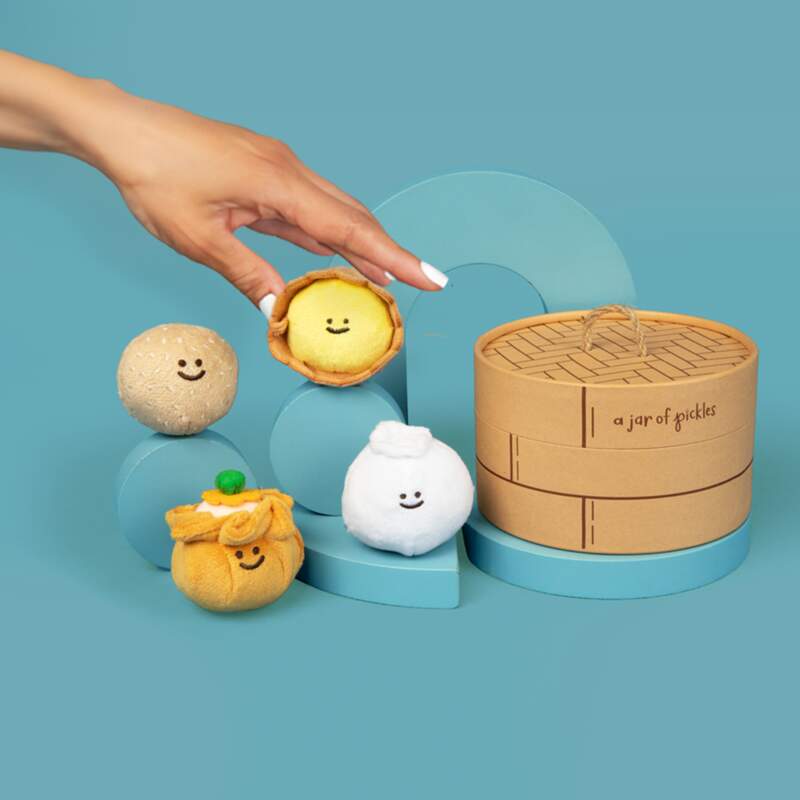
Her reorder rate is about 52% — half her customers come back. Her products even landed in the SF MOMA museum store.
From a student doodling in class, dared into opening a shop, to a six-figure brand that's been alive — and growing — for a decade, Kirstie's secret is almost boringly simple: start at the lowest barrier, grow slowly funded by a day job, expand only when you can afford it, never borrow. As she puts it: "Building a company is a marathon, not a sprint."
"Building a company is a marathon, not a sprint. Setting realistic, long-game goals has been key." — Kirstie Wang
Source: Entrepreneur · Buffer interview · A Jar of Pickles
Thinking
Insight 1: Start with the lowest-barrier product — survive first, optimize later
Kirstie didn't open with plushies or hats (capital-heavy). She sold only greeting cards — the simplest to design, lowest price point, least production and inventory of any category. Even harder core: she held no stock, hand-printing that week's handful of orders.
Behind this is an underrated principle: your first product's job isn't to make money — it's to validate "will anyone buy" at the lowest possible cost. Only after confirming steady demand did she spend her first $200. Most people get stuck on "I need everything ready before I start"; she did the opposite — open for nearly zero, and let the market tell her what to do next.
Insight 2: Slow is fast — fund cash flow with a day job, turn time into compounding
From 2012 to 2022 — a full decade — she was mostly "employee + side-hustle owner" at once. She didn't quit, didn't borrow, didn't raise money. She funded the business with the stability of her day job and let it grow slowly.
It looks unsexy, but that's exactly why it survived: with no cash-flow pressure, she never had to compromise for short-term returns and could wait for the right moment (2020) to floor it. "A marathon, not a sprint" isn't a platitude — it's her actual risk-management strategy: trade time for certainty. For most people with no capital who can't afford to lose, this is the replicable path — not "quit and go all-in on a bet."
Insight 3: Only add what customers ask for — let demand precede supply
She didn't add pins, keychains, and washi tape until 2020 — not because she couldn't think of them, but because she deliberately waited until customers kept asking. When she finally added them, revenue tripled.
This is a fundamental dodge of the inventory death spiral: most makers keep launching based on their own taste and end up with dead stock. Kirstie reversed it — the customer's request list became her product roadmap. Pair that with "only expand when profit allows, never borrow," and every expansion lands on already-validated demand.
Insight 4: Instagram Stories is an underrated free traffic lever
The second thing she nailed in 2020 was making Instagram Stories her main channel — unplanned, unpolished, posted almost daily. Result: engagement more than tripled, and 96% of her website traffic came from Instagram.
The point isn't "use Instagram" — it's using the right format: Stories are low-effort, feel authentic, and the algorithm rewards frequency. She used free, low-cost content to unlock traffic others have to buy with ads. For a small business with no ad budget, this is the single most important acquisition lever.
Insight 5: Cultural identity is a moat money can't buy
A Jar of Pickles doesn't just sell "cute stationery" — it sells "cute that gets Asian culture": dim sum plushies, boba hats, rice-cooker magnets. It precisely hits a group with strong identity that the mainstream long ignored (AAPI and pan-Asian culture lovers).
That cultural identity is the deepest moat: a big company can copy your designs, but it can't copy the authenticity of "an AAPI woman designing for her own community." In an era of extreme product sameness, "who you are and who you make for" is far harder to replicate than "what you make."
Action
Step 1: Open with the lowest-barrier product, validate with zero inventory
Don't start with products that need molds or stock. Pick a category that's simple to design, low price, no inventory: greeting cards, stickers, prints, digital downloads (instant delivery, zero cost). List on Etsy, use print-on-demand or dropship, keep startup to a few dozen dollars. The goal isn't profit — it's getting the "someone will buy" signal at the lowest cost.
Step 2: Keep your day job, fund cash flow with it, don't quit and go all-in
Like Kirstie, start it as a side hustle. Let a stable paycheck cover your life so the business has no "must earn now" pressure. Hold two iron rules: only expand when profit can afford it; never borrow. Treat "slow" as your edge — you can wait for the right moment, while the all-in crowd can't.
Step 3: Let customer demand decide your next product
Don't keep launching from your own inspiration. Watch what customers repeatedly ask in reviews, DMs, emails — "do you make X?" When the same request comes enough times, make it. That way every new product lands on validated demand and almost never becomes dead stock. The request list is the product roadmap.
Step 4: Make Instagram Stories (or your platform's equivalent) the main channel
Pick the platform where your audience gathers, and use the low-barrier, high-frequency, authentic format — Stories/short video — posted almost daily: process, daily life, new products, behind-the-scenes. Don't chase polish; chase authenticity and frequency. Use free content to unlock traffic, then let the data guide longer content (Reels, video).
Step 5: Find your cultural/identity niche, make for one specific community
Ask: which community — overlooked by the mainstream but with strong identity — do I belong to? What can I make for "people like me"? Anchor your products in a specific cultural identity and emotional moment (as Kirstie anchored on AAPI and Asian food). This gives your small business an authenticity and loyal base big companies can't replicate — her 52% reorder rate is the proof.
Not for you if: you want to get rich in a few months (this is a decade-long marathon); or you have no appetite to consistently produce authentic content; or you only want to make "designs you love" without listening to the market.