A Mom Found Print-on-Demand on Her Couch — Built a $220K/Year Etsy Gift Shop With Zero Inventory
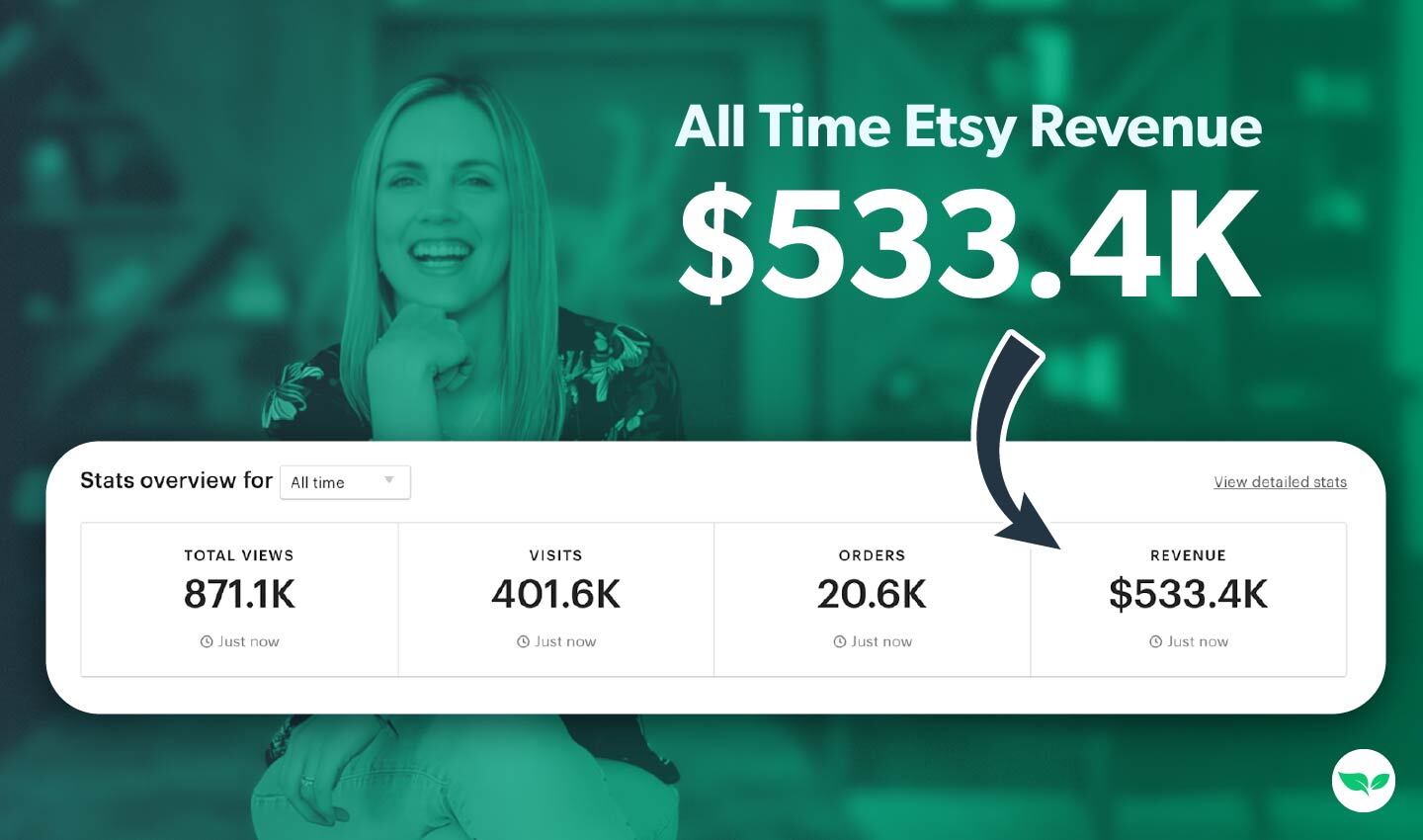
Florida mom Emily Odio-Sutton found print-on-demand on her couch in late 2022 while watching reality TV, looking for flexibility to pick up her daughters. Using Canva to design and Printify to fulfill — zero inventory, near-zero startup — she niched into gifts for specific jobs and hobbies. $220,300 in year one, ~$560K over two years, paid off $20K in student loans, down to 10 hours a week.
Process
Emily Odio-Sutton is 36, lives in Melbourne, Florida, and is a mom of two. She had no e-commerce background and couldn't design — she was an operations manager at an education publisher, a standard 9-to-5.
Stage 1: A Mom Trapped by 9-to-5 (2022) — She Needed Flexibility, Not Riches
In 2022, Emily's oldest daughter was about to start kindergarten the next year. She did the math: school pickups, gymnastics, swim practice — all in the middle of weekday afternoons, and her 9-to-5 operations job simply wouldn't let her leave to get her kids.
What she wanted wasn't to get rich overnight — it was income she could schedule around her life. So she started researching side hustles, not because she hated her job, but because she wanted the freedom to be there for her daughters.
Stage 2: A Discovery on the Couch (Late 2022) — "Zero Inventory" Found While Watching TV
The turning point was utterly ordinary. One evening, curled up on the couch watching Real Housewives and scrolling her phone, Emily stumbled onto a string of YouTube videos about print-on-demand (POD).
The model lit her up: you just design — no buying stock, no warehousing, no shipping. When a customer orders on Etsy, a third-party factory (like Printify) prints your design onto a mug, tee, or tote bag and ships it directly. If nothing sells, you're out zero inventory.
For a mom with no spare cash who couldn't afford to lose, this meant one thing: the risk of starting was nearly zero. She studied it for months.
Stage 3: Launch and First Sale (Early 2023) — $22 in a Gym Lobby
In early 2023, Emily opened her first Etsy shop. The toolkit was almost absurdly simple: design in free Canva, fulfill and ship via Printify. Startup cost: under $40.
She still remembers the first sale vividly: she was in the lobby of a gymnasium at a kid's birthday party near her home when her phone pinged — someone had paid $22 for a T-shirt she'd designed with a speech-pathology theme.
In that moment she realized: people really will pay for a little thing that "gets" their profession.
Stage 4: The Pivot — From Selling Products to Selling Gifts (2023)
It didn't click right away. Her earliest products were plain tees and sweatshirts, with almost no traction.
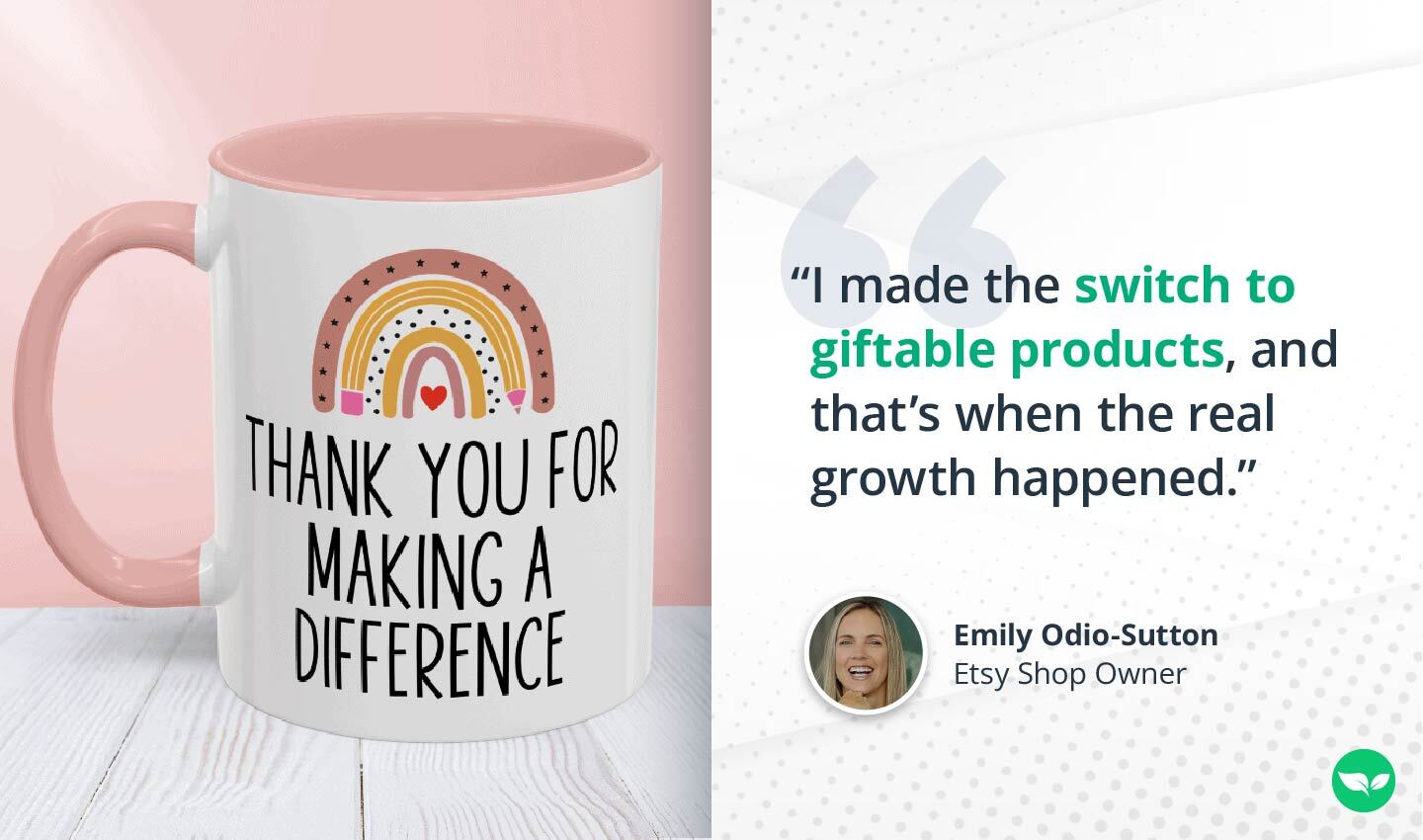
The real turn came from one action: she read her buyers' reviews. They kept saying the same thing — "I bought this as a gift."
That one sentence reframed everything. She stopped thinking of herself as "someone selling clothes" and started thinking of herself as "someone solving people's gifting problem." She poured her energy into gifts designed for specific jobs and specific hobbies: for nurses, for teachers, for "dog moms," even for "people who love spreadsheets."
Her mantra: "Clear beats clever." No puns nobody gets — just designs that make one type of person instantly think "this is so me / so them."
The wildest example: a candle she designed in 15 minutes for spreadsheet lovers (aimed at the office Secret Santa moment) went on to sell $27,000+.
Stage 5: Scale and Freedom (2023—2024) — $560K, 10 Hours a Week
Once the selection method worked, growth followed.
- Year one, her Etsy shop hit $220,300 (verified by CNBC), with about 30% being profit.
- Over two years, ~$560K in revenue across 20,600+ orders — 95% from organic Etsy search. She barely runs ads; instead she masters platform keywords (using research tools like EverBee).
- She opened a second digital-downloads shop (sign-up sheets, schedule templates) that added $17,200 in 2024 — pure digital, zero cost, zero shipping.
The income changed her life: she paid off $20,000 in student loans, started investing, opened college savings for both daughters, and took a cruise with her husband. She first cut her publisher job to part-time ($40/hr, 20 hrs/week), then went full-time on her own business.
Today, thanks to systemization and reusing winners, she runs the shops in about 10 hours a week — and now teaches her method (through Gold City Ventures and her course "The Gift Lab").
A mom with no e-commerce background, trapped by a 9-to-5, used one method she found on her couch to turn "zero-inventory custom gifts" into a business that's both profitable and free.
"Research what sells first — then design for a specific person and a specific occasion." — Emily Odio-Sutton
Source: CNBC Make It · DollarSprout interview · Instagram @ecommemily
Thinking
Insight 1: The real value of POD isn't "printing stuff" — it's dropping startup risk to near zero
What let Emily start wasn't talent — it was a model with almost no cost of failure. Traditional products: buy inventory, tie up cash, eat dead stock if it doesn't sell — a barrier that stops 99% of ordinary people. Print-on-demand flips the order: the order comes first, then the factory produces. She started for under $40 and lost nothing when things didn't sell.
What does that buy you? Unlimited tries. Her early plain tees failed — but failure was free, so she kept testing until she found "gifts." For people with no capital who can't afford to lose, "zero inventory" isn't a feature — it's the ticket that lets you sit at the table at all.
Insight 2: Her moat isn't design — it's a selection method: data first, design second
Most people fail at POD because they "design what they like, then pray someone buys." Emily reversed it: use a tool (EverBee) to research what's selling and what people search on Etsy, then design for that. Her line — "research what sells first, then design for a specific person" — is the whole business.
It's a transferable meta-skill: don't start from "what do I want to make," start from "what is the market already buying." In the AI era, design itself is getting cheap (Canva, AI generate art in minutes); the scarce skill is knowing what to design.
Insight 3: From selling products to selling gift moments — the same mug, double the value
This is the most elegant leap. The same mug positioned as "a mug" competes on price with millions of mugs; positioned as "a birthday gift for your best friend who's a nurse," it gains emotional value and irreplaceability.
How did she find it? She read the reviews. Buyers said it themselves — "I bought this as a gift." She simply listened and re-tuned the whole business to that channel. Gift moments carry two bonuses: ① price insensitivity (people spend more for others) ② clear calendar triggers (birthdays, holidays, Secret Santa) — predictable, plannable demand.
Insight 4: 95% organic traffic = mastering the platform beats buying ads
Emily barely advertises; 95% of sales come from Etsy's own search. The lesson: on a platform with built-in traffic, "being found" is more sustainable than "being promoted." She mastered keywords, titles, and category research so Etsy's algorithm pushes her to buyers who are already searching.
This is instructive for our own site too — rather than grinding on a zero-traffic standalone site, it can be smarter to first parasitize platforms that already have traffic (Etsy/Amazon/TikTok) and let them do distribution.
Action
Step 1: Build the minimal toolkit, open for near-zero
All you need: ① an Etsy account (~$0.20 per listing) ② free Canva (design) ③ a POD fulfiller (Printify/Printful — free to join, you pay only when an order comes) ④ a research tool (EverBee/eRank, free tiers exist). Total startup can stay under $40. Don't buy a course, don't stock inventory, don't form a company yet — just get your first listing live.
Step 2: Research first, design second — never start from inspiration
Open EverBee/eRank, search your direction, and look at: which listings sell well, what keywords they use, which product types (mug/candle/tee) move. Treat "already selling" as proof of demand, then ask: can I make a more precise version for a more specific group? Remember Emily's rule — "clear beats clever," skip the jokes nobody gets.
Step 3: Enter a specific group through the "gift" angle
Don't make "a nice mug" — make "a gift for X." The more specific X, the better: not "teacher" but "kindergarten teacher"; not "nurse" but "ER nurse." Think around jobs, hobbies, identities where "someone would buy this as a gift + there's no good option yet." Prioritize moments with calendar triggers (graduation, Nurses Day, Secret Santa) — predictable demand.
Step 4: List in volume, find winners with data, then replicate
POD is a probability game. Don't make 3 designs and wait for a hit — list 20-50, see which get organic impressions and sales. Once you find one winner, replicate its pattern into adjacent groups ("spreadsheet candle" works → make "accountant candle," "data analyst candle"). Emily's 15-minute design did $27K because she cast wide first, then focused and replicated.
Step 5: Systemize — turn one-time work into passive income
Once a winner is set, it keeps selling without you making new things — that's how POD becomes "10 hours a week." Templatize the process (design templates, keyword lists, customer-service scripts) to minimize repeat labor. Run it on side-hustle time first; only after it's reliably profitable should you consider going part-time, then full-time, like Emily.
Not for you if: you want "start today, get rich tomorrow" (POD is usually slow for the first few months — you must survive the cold start); or you insist on only making "designs you love" while refusing to look at market data (that's a hobby, not a business).