Teen Built £200k Cooling Towel Biz From Bedroom: £150 Start, 50 Failed TikToks, Then Viral
Harrison Nott, 13, from Essex negotiated 50 cooling towel units at £3 each, posted 50 TikTok videos with zero traction, then went viral. Result: £200k/year revenue, 30k+ units sold, $200k Alibaba prize.
Process
The eleventh attempt
Summer 2022. Essex, England. Harrison Nott was playing squash, sweating through his shirt in the heat. He wanted a cooling towel that actually worked. He looked around — the options were either useless or overpriced. So he decided to make one.
He was 13. This was his eleventh business.
Since age 8, he'd been reselling on eBay and had tried ten different ventures before this, each one losing money. His father was an entrepreneur and had told him early: failure is part of the process. Those ten failures weren't wasted — they taught him how to negotiate with suppliers, what a margin actually is, and why product selection matters more than hustle.
£150 bought the first batch
He found a supplier on Alibaba. Standard minimum order: 500–1,000 units. Harrison told them straight — he was a student, budget was tight, he wanted to try 50 first.
They agreed: £3 per unit, 50 units, £150 total.
That was the entire startup budget for CoolTowel. He'd made a first prototype with his grandmother's sewing machine — it failed — but he'd figured out the product logic: three-layer polyester fabric retains moisture; wet it, wring it, snap it — stays cool for two hours.
He priced it at £8–10, double what generic alternatives cost. The premium was justified by custom packaging, a polar bear mascot, and a real founder story.
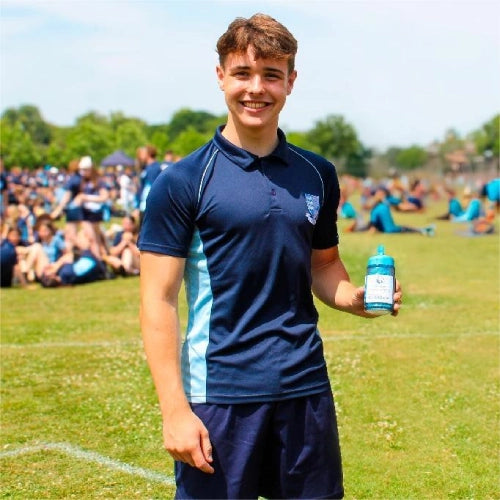
50 videos. Zero traction.
He opened a TikTok account and started posting. Video 1: nothing. Video 10: nothing. Video 30: still nothing. He kept going.
Around video 50, one clip crossed a million views. Orders started coming in.
When he looked back at what changed, the pattern was obvious: product demo videos flatlined. But the moment he put himself on camera — a teenager packing orders in his bedroom, collecting deliveries outside school, answering customer messages between lessons — the content spread on its own.
The "teen entrepreneur" story was the product.
The creator network: a zero-budget ad machine
No money for ads. So he built a different system: sent free samples to 800–1,000 TikTok creators, offering 20% commission on sales.
The model's logic: use inventory as ad spend. Risk shifts from "I pay upfront and hope it works" to "I only pay when something sells." One creator's single video drove over £15,000 in revenue.
The biggest single day: 2,000 orders, £25,000 in revenue. His family and friends packed through the night in his dad's warehouse.
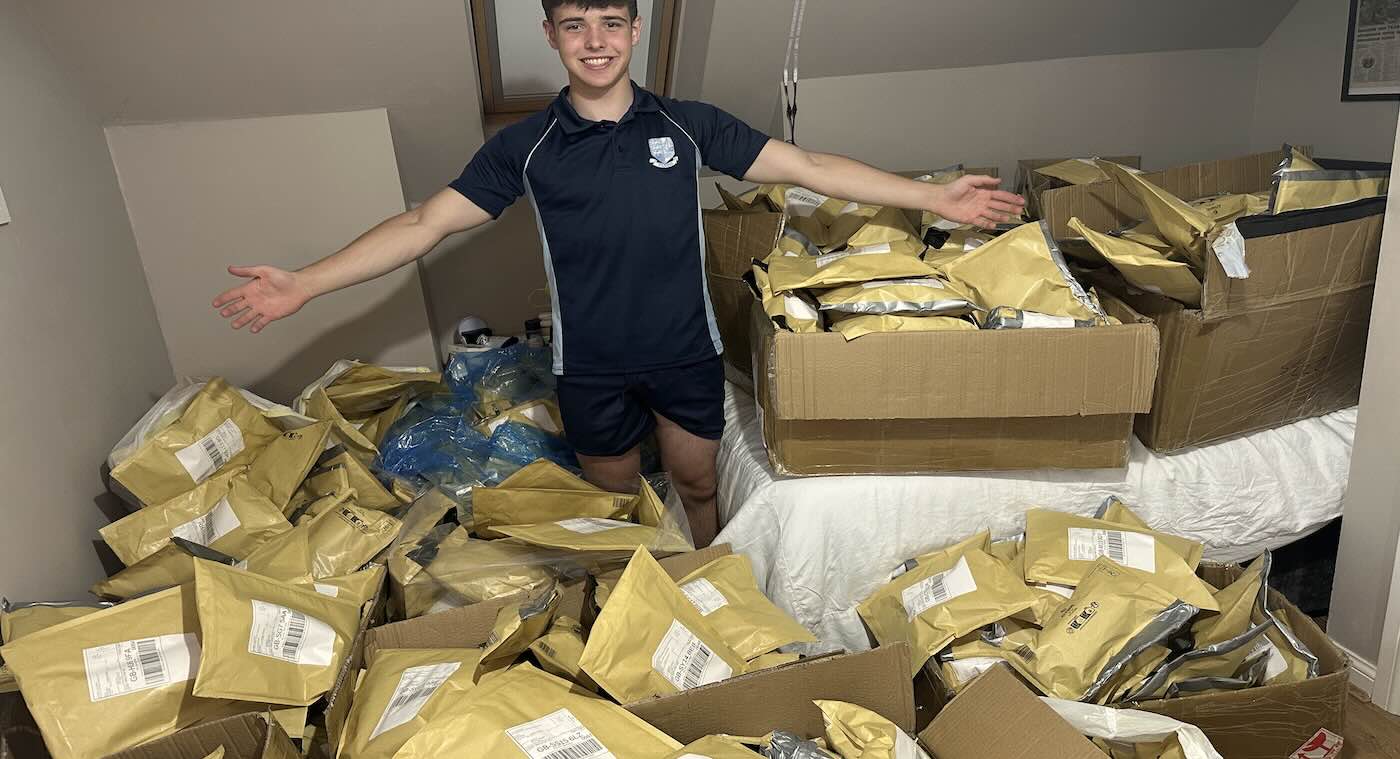
From bedroom to global stage
November 2025. Alibaba CoCreate Pitch, London. 15,000 young entrepreneurs applied globally. 30 were chosen. 90 seconds each.
Harrison walked on stage and told the story of £150 and 50 failed videos.
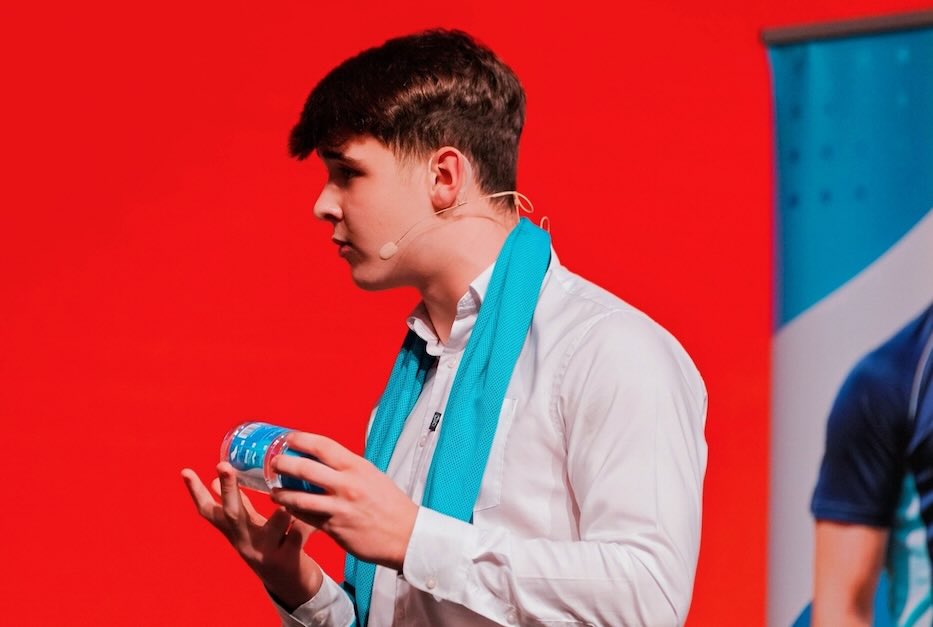
He was the only person to take home the $200,000 grand prize. Former England footballer Rio Ferdinand exchanged numbers with him afterwards.
That year: CoolTowel hit £200,000 in annual revenue and had shipped 30,000+ units. Harrison was still in school, on a flexible schedule. The warehouse was his dad's garage.
Source: Side Hustle Nation · Good News Network · Business Magazine UK
Thinking
CoolTowel succeeds because of three compounding moves: minimum validation cost + content as advertising + risk transfer.
1. MOQ negotiation is the first survival test Harrison refused the 500-unit minimum and negotiated down to 50. That's not a small thing — at standard MOQ, startup cost is £1,500–3,000. Unsold inventory becomes a crisis. At £150, failure is just tuition. Every ecommerce start has the same first question: how do I get the first batch as small as possible?
2. Founder narrative > product demo Fifty product videos barely moved. The moment he put his own story on camera, the numbers changed completely. "A teenager packing orders in his bedroom" is more viral than "here's how this cooling towel works." This pattern holds everywhere: the founder story is the moat that competitors can't copy, because it's uniquely and irreversibly true.
3. Creator network = zero-budget ad network Free samples + 20% commission converts advertising spend from fixed cost to sales commission. No sales, no cost. Meanwhile, 800 creators are 800 test variables. Find the ones that convert, double down. It's performance marketing without the upfront risk.
Action
Step 1: Find a product you've personally been let down by
- Think of a daily-use item that frustrated you recently (sports, kitchen, outdoor, office)
- Search Amazon reviews — 1-star and 2-star reviews are an unfiltered list of solvable problems
- Record 3 competitors: their prices, review counts, and top complaint keywords
Step 2: Validate with minimum capital
- Search Alibaba for your product; message 5–10 suppliers
- Say directly: "I'd like to start with 50–100 units." Small factories often agree, especially if you're polite about it
- Get samples, use them for a week yourself — confirm the product actually solves the problem
Step 3: TikTok content (the 50-video rule)
- Open an account, target 50 consecutive videos, 30–60 seconds each
- First 20: product demos and use cases
- Next 30: put your own process on camera — sourcing story, packing orders, supplier calls, returns handling
- Use specific numbers in every video ("just shipped order #37" beats "business is growing" every time)
Step 4: Build the creator network
- Find TikTok creators in your niche (target 1k–10k followers; small accounts often convert better than large ones)
- DM them: explain the product, offer free sample + 20% commission on sales
- Track in a spreadsheet: send date, video date, sales data per creator
- Double down on creators who actually convert; deprioritize the rest