Ex-Talent Manager Co-Founded Youtooz, Makes Limited-Edition Collectibles for Creators — $6M Year 1, $40M Year 2
After selling his talent-management company, Austin Long co-founded Youtooz with Mark Prokoudine in 2019 — making limited, numbered, never-restocked collectibles for creators like MrBeast and the Sidemen. $6M year one, $40M year two, 1.3M+ units sold in 2023, 90% DTC. Later expanded to licensed IP like Disney; raised a seed round.
Process
An honest note: This case departs from "replicable by an ordinary person from zero." The founder relied on un-replicable industry connections, and the company raised a VC seed round. We include it honestly because its business-model insights — creator economy, scarcity pricing, sustainable growth — are valuable to anyone building content, community, or collectibles. What you can and can't copy is broken down in the paid section below.
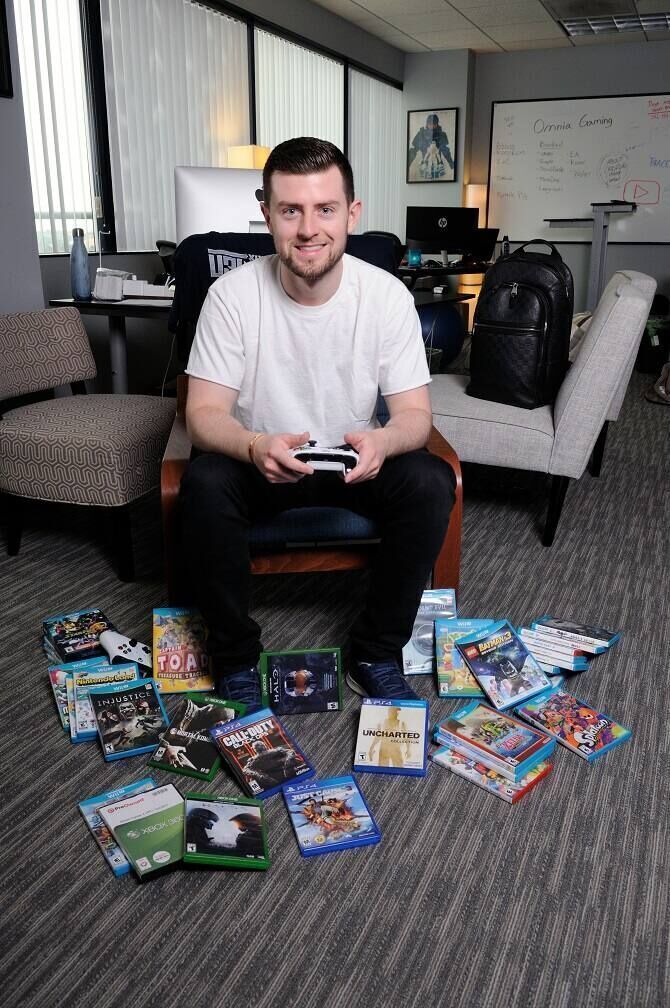
Austin Long didn't come from the toy industry. In 2012 he founded a talent-management firm called Omnia Media, representing gaming creators on YouTube. In 2016, the company was acquired by Canada's Blue Ant Media, and he exited.
After the exit, he had two things: money and relationships. The latter was worth more — he knew a roster of top YouTubers.
2019: An Underrated Insight — Fans Want to Take the Creator "Home"
In 2019, Austin and co-founder Mark Prokoudine noticed a cultural shift: people were increasingly open about their "nerdy" passions, and spending money on a favorite creator was no longer something to hide.
Their read: a YouTuber has millions of fans, but those fans have nothing physical to own beyond likes and subscriptions. Turn the creator into a beautifully designed collectible figure, and fans will pay.
That's how Youtooz began — 5-inch designer vinyl figures. Thanks to Austin's agency relationships, they launched with MrBeast, the Sidemen, and Jacksepticeye. This was the crucial — and least replicable — step.
The Scarcity Model: Limited + Numbered + Never-Restocked
Youtooz's real cleverness is its sales mechanism, not just the product.
Every figure is:
- Limited release (typically time-boxed — pulled after a window)
- Individually numbered (a unique serial on each figure)
- Never restocked (sold out means gone for good)
This turns a "merch toy" into an asset with collectible value and a secondary market. Fans know: if you don't buy now, you'll later pay a premium on the resale market. That manufactures urgency and repeat demand — the same logic as sneaker and designer-toy drops.
The Explosion: $6M Year One, $40M Year Two
In its first year (2019), Youtooz hit $6M in revenue. Year two (riding the pandemic's stay-at-home boom) jumped to $40M — nearly 7x in a year.
By 2023, Youtooz had sold 1.3M+ units, with 90% direct-to-consumer (selling straight to fans from its own site, owning the customer relationship and the margin), while also stocking 4,000+ retail doors including FYE, GameStop, and Spencer's.
From Creators to Licensed IP
From year two, Youtooz began taking licensed IP — partnering with Disney, Paramount, NBCUniversal, HBO, Crunchyroll, and Sony Pictures. Licensed products now make up about half the business. From gaming creators to anime, film, and game IP, Youtooz replicated its core insight — "fans want a physical collectible" — across one fandom after another.
Sustainable Growth vs. Killing the Hype
Austin has a line that cuts to the heart of this business:
"There are a lot of companies, especially in our space, that are kind of fads. They find something that works, they spam it to oblivion, and they kill the hype." — Austin Long
Youtooz deliberately restrains its drop cadence — not over-extracting from fans, not breaking scarcity — pursuing sustainable growth. That's exactly why it went from $6M to durable scale.
Funding & Status
Honestly: Youtooz isn't pure bootstrap. It raised a seed round (investors include Great Oaks Venture Capital and Streamlined Ventures); in 2023 it took revenue-based financing from Decathlon Capital (no equity given up, repaid from future revenue). In November 2025, Youtooz also completed a merger/acquisition with Microdesigns.
Source: Tubefilter · CXPlained founder interview · Youtooz
Thinking
First, be clear: what's un-replicable, and what you can learn
This case must be dissected honestly or it will mislead. Two parts of Youtooz's success are un-replicable for an ordinary person:
- The founder's talent-agency relationships. Austin Long could land MrBeast and the Sidemen on day one because he'd spent four years (2012–2016) building a talent agency, selling it, and accumulating top-creator relationships. Without those relationships, the same product still won't get you in the door.
- Seed capital. Youtooz had VC money backing the start, letting it tool high-quality molds and build capacity immediately.
But what's genuinely valuable here is the business-model insight — and that, anyone can learn:
Replicable Insight 1: Fan/Community Economics = Giving Emotion a Physical Form
Anyone with fans or a community (even just a few thousand) has fans who lack "something to own." Likes and follows are free and fleeting; a physical object (a figure, a pin, a signed card, limited merch) gives fans a physical token of "I supported them." Youtooz's core isn't "making figures" — it's "turning a virtual emotional connection into an ownable object." This insight holds for any creator, brand, or community.
Replicable Insight 2: Scarcity Is the Source of Pricing Power
Youtooz's "limited + numbered + never-restocked" isn't a gimmick — it's the core mechanism of pricing power. The same figure, supplied infinitely, is just generic merch sold at cost-plus. Make it limited, numbered, and never restocked, and it becomes an asset with collectible value and a secondary market — commanding a premium and creating "buy now or it's gone" urgency. Scarcity isn't a limitation; it's value you deliberately manufacture. This applies to any product — limited editions, numbered runs, collabs, seasonal drops.
Replicable Insight 3: Sustainable Cadence vs. One-Hit Spam
What Austin opposes most is "find something that works and spam it to oblivion." That's how most small businesses die — a hit emerges, gets frantically replicated, over-supplied, fan trust over-extracted, then the hype collapses. Youtooz deliberately restrains drop frequency to protect scarcity and brand heat. For anyone making content or products, this is a counterintuitive but crucial discipline: short-term restraint buys long-term compounding.
Replicable Insight 4: DTC Owns the Lifeline
Youtooz is 90% direct-to-consumer (selling to fans from its own site), with only 10% via retail distribution. That means it owns the customer data, the margin, and the direct relationship with fans. Many creators outsource monetization to third-party platforms/distributors, and the result is someone else takes the lion's share while they never even get the customer data. DTC is harder (you build the site, support, logistics yourself), but it's the prerequisite to truly owning your business.
Action
Step 1: Confirm You Have a "Community" Before You Talk Product
Youtooz's premise is that the creator already has fans. If you don't have a community yet, don't rush into merch/collectibles — first use content, service, or work to accumulate people who genuinely care about you. Even 1,000 die-hard fans are worth more than 100,000 casual ones. Community is the foundation; product is just the tool that monetizes the community's emotion.
Step 2: Make Your Community "Something to Own"
It doesn't have to be a figure (high cost, high barrier). It can be: a numbered limited signed print, custom pins/stickers, a physical membership card, limited merch, a handmade object. The core criteria: ① strongly tied to your/your community's identity; ② limited in quantity, ideally numbered; ③ owning it gives fans a sense of "I'm part of this circle."
Step 3: Price With Scarcity — Don't Supply Infinitely
Set a clear limited number (e.g., 100, 500), announce it, and stop when sold out. Number each one. Tell buyers explicitly "never restocked." This shifts your product from "generic good" to "collectible," lets pricing step up, and manufactures urgency. The key: follow through — the moment you restock/re-release to make more money, the trust behind scarcity collapses permanently.
Step 4: Restrain Drop Cadence to Protect Long-Term Heat
Don't frantically replicate a hit, release monthly, and push every drop hard. Leave gaps between drops so fans "miss" and "anticipate" you. Youtooz's sustainable-growth philosophy treats fan purchasing power as a well to be maintained, not a pond to be drained once. Every restrained drop builds stronger demand for the next.
Step 5: Stick to DTC, Own the Customer Relationship
Even if it's a hassle at first, sell to fans directly yourself (your own site, your own store) rather than outsourcing entirely to platforms or distributors. DTC lets you own: the customer list, repeat-purchase data, the bulk of the margin, and a direct channel to fans. These are your business's real assets. Retail/distribution can be a supplement (expanding reach), but keep the core lifeline in your own hands.