Art Grad Turned Her Family's Beadwork Into a Jewelry Brand — Solo, Handmade, 14 Years, 10 Hours Per Piece
Minnesota artist Madison Holler learned beadwork from her family elders as a child. In 2012 she founded Rubinski Works, fusing her Anishinaabe, Scandinavian, and Dutch beadwork heritage with metalsmithing into one-of-a-kind wearable art. 10+ hours per handmade piece, all solo, zero funding, direct sales and word-of-mouth, 14 years running, with brand collabs like Faribault Mill.
Process
Madison Rae Holler is based in Central Minnesota. Her father had a nickname for her — "Rubinski" — and that's where the brand name came from. Three cultures run through her blood: Dutch, Scandinavian, and Anishinaabe (Ojibwe). All three eventually came to live in a single needle and bead in her hands.
Stage 1: An Inherited Thread (Childhood—2007) — Three Bloodlines, One Craft
Growing up, Madison lived inside a world of making. Her family was full of craftspeople: stained glass artists, antique furniture restorers, basket weavers, moccasin makers, beaders. "I just assumed everyone had a craft," she has said. "Every adult had a studio and a practice."
She learned beadwork from Anishinaabe elders on her father's side — not as a hobby, but as an act of cultural transmission, generation to generation, a thin thread running through time. From her mother's Dutch and Scandinavian side came folk patterns, geometric motifs, and a deep respect for handcraft. Both traditions settled in her body and waited.
Stage 2: The Long Way Around (2007—2012) — An Art Student Finds Her Direction
After high school, Madison felt the pull toward stability — a job with healthcare, a safe path. She earned an associate arts degree first, a concession to practicality. But the thread didn't break.
She enrolled in art school, earning a BFA in printmaking, sculpture, painting, and art history — and she started selling her work while still a student. After graduating, she ran a photography and videography business with her partner, Mike Thienes. It paid the bills and gave her time to quietly develop what was really forming underneath.
Stage 3: Building the Brand, Alone (2012—2019) — Named After Her Father's Nickname
In 2012, Madison founded Rubinski Works — no investors, no loans. Just skill and time. The name itself tells you everything about the brand: this isn't a business built on capital. It's a person's story, distilled into objects.

For every piece, she does all the metalwork herself: cutting, filing, soldering, polishing — every metal component fabricated from scratch. Then she builds the beadwork on top, using traditional stitches (peyote, ladder, brick stitch) alongside a technique she invented herself. Each piece takes 10+ hours to complete.
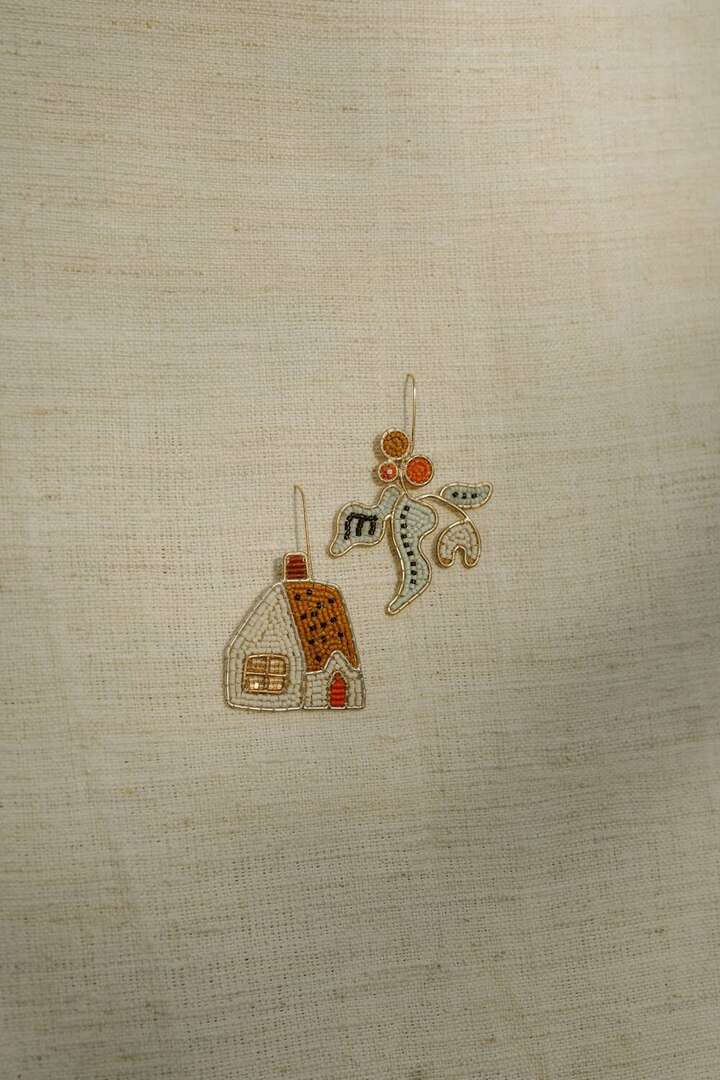
That's just the making. Product sourcing, packaging, accounting, photography, social media, packing, and shipping — all of it, her alone. "Accounting days and shipping days" are the hardest. But after nearly a decade, she built a rhythm that works. Through those seven years she ran the photography business on the side, letting Rubinski Works grow slowly into a name passed quietly between buyers who'd found something they couldn't find anywhere else.
Stage 4: Going Full-Time, Building the Moat (2020) — Eight Years In, All In
In 2020, Madison shut down the photography business and committed entirely to Rubinski Works. Eight years after founding it, she was finally all-in.
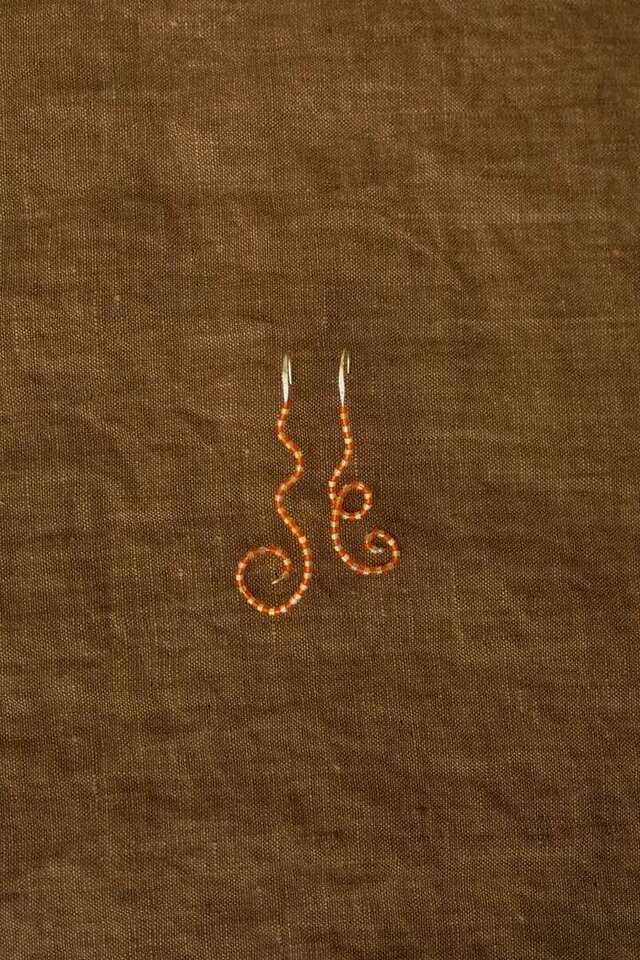
She lives with Type 1 Diabetes and intracranial hypertension — conditions that make her relationship with time sharper than most. Her philosophy is rooted in memento mori: not fear of death, but a daily urgency to chase what actually matters. The business runs without outside money — direct-to-consumer through her website, Instagram, and word-of-mouth. Her work isn't "jewelry." It's wearable art: each piece a meditation on her mixed identity, Anishinaabe beadwork traditions layered over Scandinavian and Dutch motifs, made exactly once, never to exist again. Going full-time brought the work into sharper focus — the Star Tribune ran a feature on her, her pieces entered galleries and historical societies, and in 2018 she'd already been invited to speak at the Walker Art Center.
Stage 5: Collabs and Cultural Recognition (2022—2026) — From Personal Brand to Cultural Steward
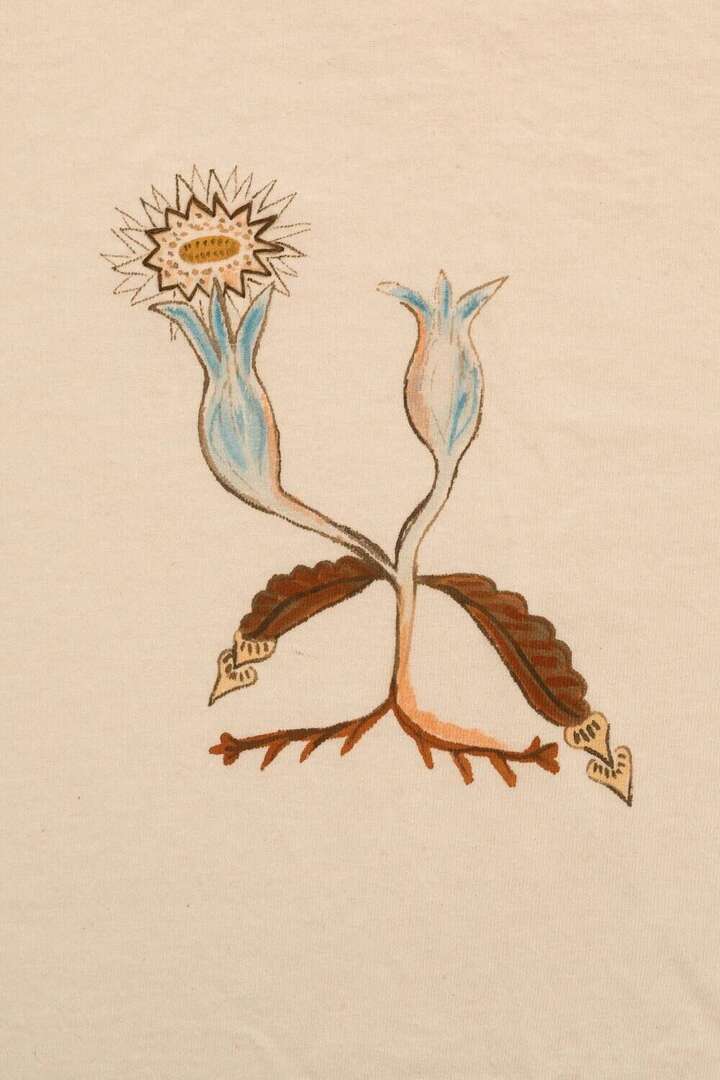
Heritage Minnesota textile company Faribault Mill — founded in 1865, one of the last vertically integrated woolen mills in America — reached out to collaborate. The result: the Gidinawendimin Throw ($245), named for the Ojibwe word meaning "we are all related." The throw's design pulls from traditional Ojibwe appliqué quilts and beadwork motifs, embedding Madison's cultural framework into a product sold nationwide.
In 2024, she was invited to speak at the ICON Conference — North America's premier gathering for illustrators and designers. That same year, Japanese handcraft magazine Amirisu featured her as a full profile in Issue 27. In 2025, the Ramsey County Historical Society invited her to a "History Revealed" public conversation about her art and cultural inheritance.
A craft learned at a grandmother's knee, honored three decades later by cultural institutions as something worth preserving. The business model of Rubinski Works is almost impossibly simple — and almost impossible to replicate: make your identity the product. Your identity is the one thing no capital can copy.
"Having a passion for what you're doing is the ultimate decider of a successful outcome." — Madison Holler
Source: Rubinski Works · Star Tribune feature · Instagram @rubinskiworks
Thinking
Moat 1: Cultural Identity = The Ultimate Barrier Capital Cannot Replicate
Rubinski Works' deepest moat isn't technique or design — it's Madison's own bloodline. She is of Anishinaabe + Scandinavian + Dutch heritage, who learned beadwork from Indigenous elders as a child. This gives her product an authenticity that cannot be faked: every piece is a sincere expression of her own cultural identity. A large company can hire the best designers, buy the best equipment, spend the most on ads — but it can never manufacture "a mixed-heritage artist who learned beadwork from Indigenous elders as a child." In an era when AI can instantly generate endless patterns and factories can mass-produce in seconds, "an un-replicable authentic identity" becomes the scarcest, most valuable thing of all.
Moat 2: Deliberate "Anti-Scaling" Is Itself the Source of Pricing Power
10+ hours per piece, fully handmade, one-of-a-kind — from an efficiency standpoint, this is "anti-business." But it's precisely this deliberate slowness and scarcity that supports fine-art-level pricing. If Madison cut molds, found a contract manufacturer, and mass-produced, her unit price would collapse and the brand would become just another generic jewelry stall. By choosing not to scale, she turns "limited capacity" into "rare and therefore precious." This is the most counterintuitive — and most crucial — insight for handmade creators: your bottleneck (only a few pieces a day) is simultaneously your moat (no one can buy a second identical piece).
Moat 3: BFA + Photography/Design Skills = A "Dimensional Advantage" for a Handmade Brand
Where do most handmade artisans lose? Not in craft — in presentation. Their products are great, but their product photos are bad, their brand visuals are amateurish, their online shop looks unprofessional. Madison has BFA training and years of professional photography. This makes Rubinski Works "look and feel like a sophisticated, established company" — while behind it is one person. In an e-commerce world where visuals are the first impression, this "professional-grade presentation" is a dimensional advantage that lets her work sell at a price matching its artistic value.
Moat 4: The Compounding "Institutional Endorsement" From Media and Brand Collabs
The Star Tribune feature, gallery and historical-society shows, the Faribault Mill collaboration — Madison didn't buy these. They were naturally attracted by the authenticity she's sustained for 14 years. Each institutional endorsement paves the way for the next: a newspaper feature gets a gallery's attention, a gallery show makes a brand willing to collaborate, a brand collab brings new media coverage. It's a slow but compounding trust curve. For independent creators, this "compounding institutional endorsement" is more durable and more valuable than any paid advertising.
Action
Step 1: Find the "Un-replicable" Thread in Yourself
Madison's moat is her cultural lineage. What's yours? Maybe it's your upbringing, your hometown craft, a specific life experience, your unique perspective. In an era when AI can replicate any "skill," the only thing that can't be copied is "who you are, where you come from, what you've lived through." Before rushing to ask "what product can I make," ask "what about me can't be stolen" — that's the deepest foundation of your brand.
Step 2: If You Make Handmade/Creative Work, Don't Rush to Scale
Many handmade founders, the moment orders increase, reflexively think "find a manufacturer, cut molds, mass-produce." But this is often suicide — once your product can be batch-replicated, you lose pricing power and fall into a red ocean of competing on price with factories. Consider the reverse: maintain scarcity, raise unit price, make "limited," "one-of-a-kind," and "waitlist" your selling points. Prove people will pay a premium for your scarcity first, then decide whether — and how — to expand capacity.
Step 3: Spend Money and Time on "Presentation" — Don't Lose at the Last Mile
No matter how good your product, if the photos are bad and the brand visuals amateurish, buyers won't feel its value. If you don't have Madison's art training, then: learn basic product photography, find a good visual template, hire one professional shoot. For handmade and creative brands, "presentation polish" often decides the sale more than "the product itself." It's the highest-ROI investment you can make.
Step 4: Attract Institutional Endorsement With Authenticity, Not Paid Traffic
Madison didn't buy ads, but she has the Star Tribune, galleries, and brand collabs. Why did these institutions seek her out? Because her story is authentic, scarce, and culturally valuable — exactly what media want to cover and institutions want to partner with. Actively map the "worth-covering" angles in your story (cultural heritage, overcoming hardship, unique craft), then proactively reach out to local media, relevant institutions, and potential collaboration brands. One weighty institutional endorsement beats ten thousand paid impressions.
Step 5: Embrace "Slow" — Make Time Your Ally
Rubinski Works has run for 14 years. It wasn't an overnight viral hit, but a slow, steady, ever-widening path. For creator brands that depend on authenticity and craft, time isn't the enemy — it's the strongest ally. The longer you persist, the more your un-replicability, your body of work, your word-of-mouth network, and your institutional endorsements all compound. While others chase trends and rise and fall quickly, your "slowness" itself becomes a moat others can't cross.