सिर्फ हाई स्कूल पास, बनाया करोड़ों का स्लाइम साम्राज्य — कार्दाशियन की बेटी भी फैन
अमेरिकी हाई स्कूल ग्रेजुएट Andrea ने घर से 7-फिगर स्लाइम एम्पायर खड़ा किया। उसका ब्रांड Peachybbies Business Insider में फीचर हुआ, हर बार मिनटों में सोल्ड आउट।
Process
The Beginning: A High School Grad's "Unserious" Pursuit
Andrea is about as ordinary as they come. After high school, she didn't follow the standard script — no college, no entry-level corporate job. Instead, she sat at a workbench in her home every single day, mixing colored glue, glitter, and miniature decorations to make something called "slime."
To outsiders, it looked ridiculous. A grown adult playing with goo? Even her family didn't understand what she was doing at first. Andrea didn't explain much. She just kept filming, kept uploading, kept doing the thing that seemed to yield absolutely nothing.
Phase 1: Three Years in the Dark — Obsessive Iteration When Nobody Was Watching
Andrea's journey isn't an "overnight success" story. It's a three-year silence.
In the beginning, her social media accounts had only a few thousand followers. Her videos got single-digit engagement. Most uploads vanished into the void without a trace. Most people would have quit after six months of zero income, zero recognition, zero evidence anyone cared. Andrea didn't. Instead, she used those three years to do exactly one thing: experiment relentlessly, at zero cost of failure.
She tested dozens of slime textures: clear, cloud, butter, crunchy. She tried every camera angle: overhead, macro close-up, slow-motion stretch. She cycled through video formats: fast cuts, long takes, ASMR soundscapes, voice-over narration. Every piece of feedback — even a single comment — was stored as a data point. She was like a miner in total darkness, not knowing where the gold was, but determined to dig every inch of ground anyway.
After three years, she had accumulated: hundreds of failed recipes, thousands of unwatched videos, and a deep, intuitive understanding of what makes slime work on camera. These became her most important competitive moat — because nobody else would invest that much time in a "childish" niche.
Phase 2: Breakthrough — When the Hobby Became a Viral Formula
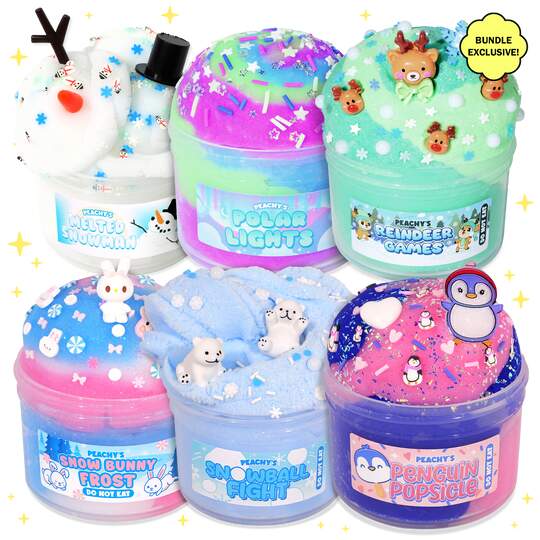
The turning point came during a routine product drop. Andrea paired her transparent slime base with a mushroom-themed decoration kit — tiny pink mushrooms, moss-green foam beads, cream-colored cloud pieces. This particular video started behaving differently: likes came in at ten times the usual rate, comments flooded with "where can I buy this?", shares exceeded anything she'd ever posted.
She immediately amplified the signal. That weekend, the mushroom theme became the featured drop, released as a limited batch. The result shocked even her: sold out within minutes.
This wasn't luck. Three years of iteration had given her precise command of the viral formula's every parameter: What slime texture looks most irresistible on camera? What decoration combination triggers the strongest purchase impulse? Should the video's first three seconds show the finished product or the making process? Is a question or a statement more effective in the title? She'd already answered every one of these questions — in the dark, over and over.
Phase 3: Systematization — Turning Craft Into a Repeatable Business Machine
After going viral, Andrea faced a new challenge: how do you turn a one-hit wonder into a sustainable business?
Her answer was building a standardized innovation assembly line:
Product Selection anchored to demand that never disappears — anxiety. Modern stress only increases. The relief market is eternal. But a single slime gets boring? No problem. She introduced weekly themed drops to deliver continuous dopamine hits. Mushroom Week, Galaxy Week, Dessert Week, Berry Week — each launch was a micro event that pulled customers back.
Product Innovation reduced "creation" to simple combinatorial logic. The base is fixed (clear glue formula). The variables are decoration accessories. Swap the theme packet, and you have a brand-new product. This transforms artistic creation into industrialized SKU management — any team member can assemble this week's new products from a theme checklist.
Marketing Cadence turned her small team's production limits into an advantage. Because they couldn't mass-produce, every product was naturally limited. The bold red SOLD OUT label on her site did more selling than any ad ever could. The anxiety of "if I don't buy now, who knows when it'll be back" made every restock an instant sellout. She converted supply weakness into scarcity brand equity.
Phase 4: The Moat — She's Not Selling Slime, She's Selling an Undo Button
While competitors fought over whose slime was fluffier or whose colors were brighter, Andrea moved to an entirely different dimension — she stopped selling product and started selling a psychological experience that's desperately scarce in modern life.
She noticed something crucial: passive stress-relief content — ASMR videos, soap cutting, bubble wrap popping — goes viral briefly, but the creators almost always fade. The reason is simple: users are spectators, not participants. Watching someone relieve stress and relieving stress yourself are two fundamentally different experiences.
Then came an even deeper insight: what people actually crave is room to fail. In real life, botching a project can get you fired. A bad investment can bankrupt you. One wrong sentence can destroy your reputation. The margin for error in modern society is suffocatingly small. But a jar of slime? You can smash it, ruin it, mix the ugliest colors imaginable — then just knead it again and it's perfect. Unlimited resets. Zero-cost trial and error. This "privilege" — which barely exists in reality — is why adults happily pay $15 for what's essentially glue and borax.
Andrea isn't selling a stress toy. She's selling an undo button — a psychological anchor that lets people reclaim a sense of control in an uncontrollable world.
Phase 5: Perspective — Why She's Outpaced Most College Graduates
From three years of total invisibility to seven-figure annual revenue, from making slime alone in her bedroom to being featured on Business Insider, from being dismissed as "wasting time" to having Kardashian's daughter as a loyal customer — Andrea proved one thing with her life: the traditional path isn't the only one.
She rejected the "school → degree → job → climb the ladder" default script. Not because it's bad, but because its margin for error is terrifyingly small — one failed exam, one layoff, one industry disruption can wipe out years of accumulated effort. Andrea chose a more flexible, more resilient path: no views? Test new content. Weak sales? Switch products. Every failure is immediately overwritten by the next attempt. Making videos keeps her "at the table" permanently — as long as she keeps creating, she always has a chance to win.
In an era where AI accelerates the obsolescence of repetitive skills, Andrea's story reveals a deeper truth: real competitiveness doesn't come from your diploma or your employer. It comes from building your own business operating system — the integrated ability to spot consumer insights, produce products, create content, and iterate from data, all within a single feedback loop. While her peers are still stressing about adding one more internship to their resumes, this slime-making young woman has already redefined what success worth pursuing actually looks like.
Sources: TheCityCeleb biography; Peachybbies.com
Thinking
Andrea's story looks like a "turn your hobby into millions" fairytale, but what's actually worth unpacking is the three-layer business logic:
Layer 1: She doesn't sell slime — she sells "controlled loss of control." This is the case's most brilliant insight. ASMR, soap cutting, bubble popping — the fatal flaw of passive stress-relief content is that users are viewers, not participants. Andrea's DIY semi-finished model transforms users from "watching satisfaction" to "creating satisfaction with their own hands." Behind this is precise psychological engineering: raw materials cost almost nothing but user-perceived value is sky-high (self-made = self-invested value); the "semi-finished" positioning perfectly solves the "I'm bad at crafts" barrier; every finished product is unique and inherently shareable. Andrea sells: "I give you the canvas — you create your experience."
Layer 2: The "undo button" is the most expensive product in the world. In real life, botching a project can get you fired. A bad investment can bankrupt you. The margin for error in reality is suffocatingly small. But slime? Smash it, remake it. Ugly colors? Do it over. The cost of failure is essentially zero. Andrea isn't selling a stress toy — she's selling the scarcest commodity in modern life: a space where you can fail infinitely with zero consequences. Adults happily pay $15 for a glue mixture because they're buying a reset button.
Layer 3: Systems > inspiration. Data > intuition. Andrea spent three years in obscurity obsessively iterating: testing themes, monitoring engagement, optimizing video pacing. By the time traffic arrived, she had a mature assembly line: transparent base + N decoration variations = infinite SKUs. Weekly themed drops are data-driven standardized output. Hunger marketing packaged her production limits as scarcity.
This isn't a "follow your passion" cliché. It's: pick a market with permanent demand → differentiate to avoid price wars → build systematic production → let data replace intuition → convert unpredictable traffic into predictable repeat purchases.
Action
If you want to replicate Andrea's path, here's a four-step actionable framework:
1. Find a category where raw materials are dirt cheap but the experience feels premium. Andrea's industrial glue costs pennies per pound but kits sell for $15+. Your category must satisfy: raw material cost under 10% of selling price; user-perceived value comes from the experiential process, not materials. Candidates: DIY candles, handcrafted soap, miniature diorama kits, custom paint-by-numbers — anything following "I give you materials + tutorials, you make it."
2. Design a "semi-finished" experience — don't sell raw materials or finished products. The magic of semi-finished is the IKEA effect: when users invest labor, they overvalue the result. Your product should require user effort but can't fail; results should be unique and Instagram-worthy; costs low enough that messing up doesn't hurt.
3. Let data replace intuition in product selection — build a replicable innovation pipeline. Andrea's model: stable base → rotating accessories by weekly theme → monitor engagement → scale winners, kill losers. Build a new-product machine: one stable foundation + N swappable variables = infinite combinations. Let the market vote.
4. Embrace the long obscurity phase — it's your competitive moat. Andrea spent three years experimenting in a low-risk environment. Use your small-audience window to: test different content styles and find your viral formula; optimize product design and cost structure; build a library of hundreds of videos. When traffic finally arrives, you're ready to scale.