Two Devs Turned Basement Mining Rigs Into $120M ARR AI Cloud (RunPod)
Zhen Lu and Pardeep Singh spent $50K on basement GPUs for Ethereum mining, pivoted to AI hosting after The Merge, hit $1M in 9 months via Reddit, bootstrapped to $24M ARR, raised $20M seed, now at $120M ARR serving 500K developers including OpenAI and Perplexity.
Process
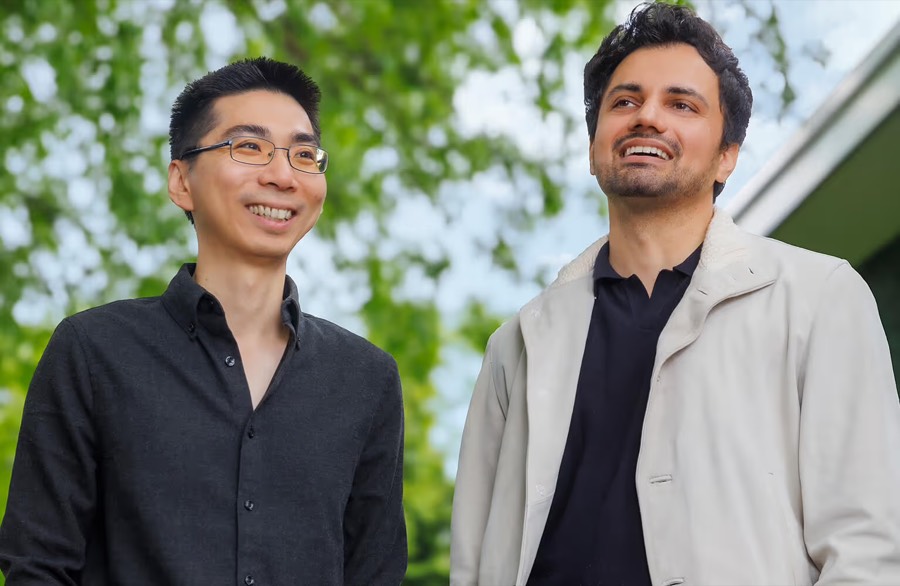
In late 2021, lights burned through the night in two New Jersey basements. Zhen Lu and Pardeep Singh were software engineers at Comcast by day, and GPU miners by night. Between them, they had sunk roughly $50,000 into graphics cards to mine Ethereum — a calculated investment, not a gamble: the returns covered electricity bills with money left over.
Pardeep had been writing code since high school, funding his college tuition with a free YouTube playlist app he built. Zhen was a machine learning engineer who worked with GPUs daily. Mining was simply their existing skills and hardware pointed at a new revenue stream.
Dead End: The Ethereum Merge
In September 2022, Ethereum executed "The Merge," switching from proof-of-work to proof-of-stake. GPU mining was shut out overnight. $50,000 worth of hardware, suddenly idle.
How do you explain that to your spouse?
Pardeep didn't despair — he scanned the market. Both he and Zhen worked with GPU infrastructure daily at Comcast. They knew exactly how painful it was to rent GPU compute: expensive, complex to configure, and not built for developers. No existing solution was worth recommending.
He spotted the opportunity: repurpose the mining rigs as AI servers, and build the GPU cloud platform that developers actually deserved.
Pardeep pitched Zhen repeatedly — Zhen's own words: "multiple date nights just talking about this thing." Zhen was skeptical at first, until he said something decisive: "If we do this, I want to be CEO." Pardeep handed over the role without hesitation. Roles clear, they got to work.
3-Month MVP and Reddit Cold Start
RunPod was officially incorporated on October 31, 2022. They built the first version in Golang over three months. One goal: let a developer spin up a GPU container in under 10 minutes, instead of spending half a day wrestling with configuration docs.
No ad budget. No VC. No press contacts. Zhen made the simplest possible decision: post on Reddit.
They offered free server access on AI-focused subreddits in exchange for feedback. Developers showed up, tried it, gave dense and real feedback. The product iterated fast. Something more important happened: Radhika Malik, an executive at Dell Technologies Capital, found the post and reached out.
Nine months after launch, RunPod hit $1 million in annual revenue. Both founders quit Comcast.
Two Years Bootstrapped to $24M — No VC Required
For the next two years, they took zero external investment. The business model was clean: revenue-sharing with data centers — RunPod provides the software platform and users, data centers provide the physical GPUs, everyone splits the revenue. This kept them nearly hardware-asset-free, with minimal capital requirements.
Over two years, the product iterated from a rough MVP into a platform covering 31 global regions, with customers expanding from early adopters to enterprise accounts.
By May 2024, RunPod had 100,000 developer users and $24 million in annual revenue. Dell Technologies Capital and Intel Capital co-led a $20 million seed round. They weren't fundraising out of desperation — they raised after validating the model, to accelerate what was already working.
The AI Wave Pays Out
ChatGPT launched in November 2022, and AI demand started surging. By 2023, GPU compute had become one of the scarcest resources in tech. RunPod — with two years of infrastructure and developer trust built before the wave hit — was perfectly positioned.
Cursor, Replit, OpenAI, Perplexity, Wix, Zillow. The customer list filled with names that meant serious business. 31 global regions. From indie builders to Fortune 500 companies.
In January 2026, RunPod disclosed $120 million in annual recurring revenue, serving over 500,000 developers.
Five years earlier, these two were in separate basements watching GPUs hash Ethereum blocks.
Source: TechCrunch · RunPod Founder Series · Entrepreneur
Thinking
RunPod's success follows a clear logic: sunk-cost hardware → forced pivot → accidentally timed perfectly for the AI wave. Pardeep and Zhen aren't visionaries. They're engineers who found a way out when one door closed.
- Product born from lived pain: they were the suffering customer before they were founders — this gives product judgment that can't be faked or bought
- Reddit is one of the highest-ROI cold-start channels for developer tools: real product, right community, free access for feedback — it even surfaced a VC
- Revenue-share model kills the capex problem: don't own hardware, let partners fund it, prove the model before raising money
- Two years ahead of ChatGPT: not luck — the engineering logic was clear (AI needs compute), only the timing was uncertain
Action
- Inventory your existing assets: GPU, server, bandwidth, domain expertise — what could be rented or sold to others?
- Build a 3-month MVP that solves your own worst problem: not perfect, just usable
- Post in the right community, offer free access for feedback: Reddit / Discord / Slack — more effective than paid ads, and you might surface an investor
- Find revenue-share partners instead of buying assets: turn fixed costs into variable costs so the model works even when you're small
- Bootstrap to real revenue before fundraising: $24M ARR is a completely different negotiating position than zero revenue