One Person, Zero Employees: Ben Cera Built Polsia to $10M ARR With AI Agents — Then Raised $30M at $250M Valuation
Columbia engineering grad, 5 years as Global GM at Travis Kalanick's CloudKitchens, then walked away to build a company completely alone. Polsia uses AI agents to run businesses: $1.5M ARR in 2 weeks, $9.5M in 3 months, $30M raised at $250M valuation — the fundraise itself was run by Polsia's AI.
Process
Ben Cera studied engineering at Columbia. He spent years in banking, then in product, then five years as a Global GM at Travis Kalanick's CloudKitchens — managing GMs, operations, and P&Ls across international markets. He built Future Foods, a virtual restaurant brand, to $100 million in revenue.
The standard next chapter would be: assemble a great team, write job descriptions, hire a CTO, a CMO, a COO. Instead, Ben quit and built Polsia alone.
The Question He Asked Himself
"How much of a company can software actually run by itself?"
His answer: most of it.
What Polsia Is
Polsia is an AI company-builder platform. A user inputs a business idea. Polsia's five AI agents take over all execution:
- CEO Agent: monitors financial metrics, churn, server costs; orchestrates other agents
- Engineering Agent: writes code, provisions infrastructure, deploys to production
- Marketing Agent: launches campaigns at optimal conversion moments
- Support Agent: handles customer inquiries with authority to issue refunds/credits
- Strategy Agent: daily briefings and recommendations
Ben calls this the "night shift model" — the agents execute while the founder sleeps, delivering morning reports on completed work and items requiring approval.
The Numbers
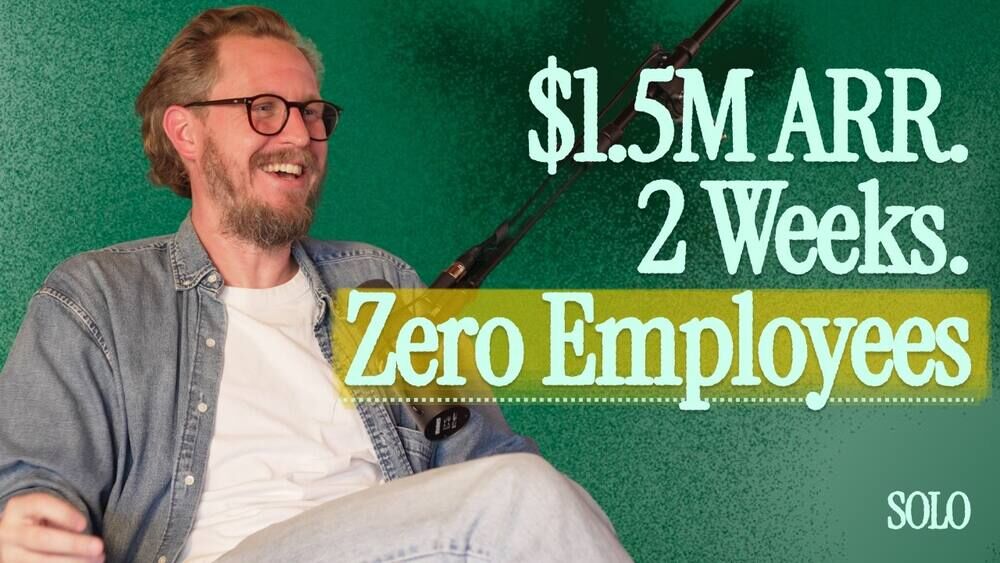
Two weeks after launch: $1.5M ARR. Three months later: $9.5M ARR (from $250K). The trajectory is among the steepest recorded for a bootstrapped SaaS product.
Pricing: $49/month flat fee + 20% revenue share. This isn't standard SaaS subscription logic — Polsia only profits when its customers profit. Ben calls it "radical alignment."
The Fundraise as Proof-of-Concept
In May 2026, Polsia closed a $30M Series A at a $250M valuation — investors included Sound Ventures, True Ventures, Vaynerfund, and others.
The fundraise process itself became the most compelling product demo imaginable: data room preparation, investor briefings, diligence follow-up — all executed by Polsia's AI agents. Ben Cera joined only the final calls with investors.
"The round itself is the clearest example of what I built." — Ben Cera
The Name
"Polsia" is roughly "AI Slop" reversed. Ben chose it deliberately — a public philosophical statement. The internet is flooded with low-quality AI-generated content ("AI Slop"). Polsia exists to transform raw AI capability into something with genuine direction and human soul.
The Radical Dogfooding Rule
"If I'm selling a zero-employee company builder, I refuse to hire human staff to run it."
Polsia is built using Polsia. Ben functions as what he calls the "Creative Director of AI" — the 20% of taste, creativity, and direction that AI cannot replace. Everything else: automated.
Key Metrics (May 2026)
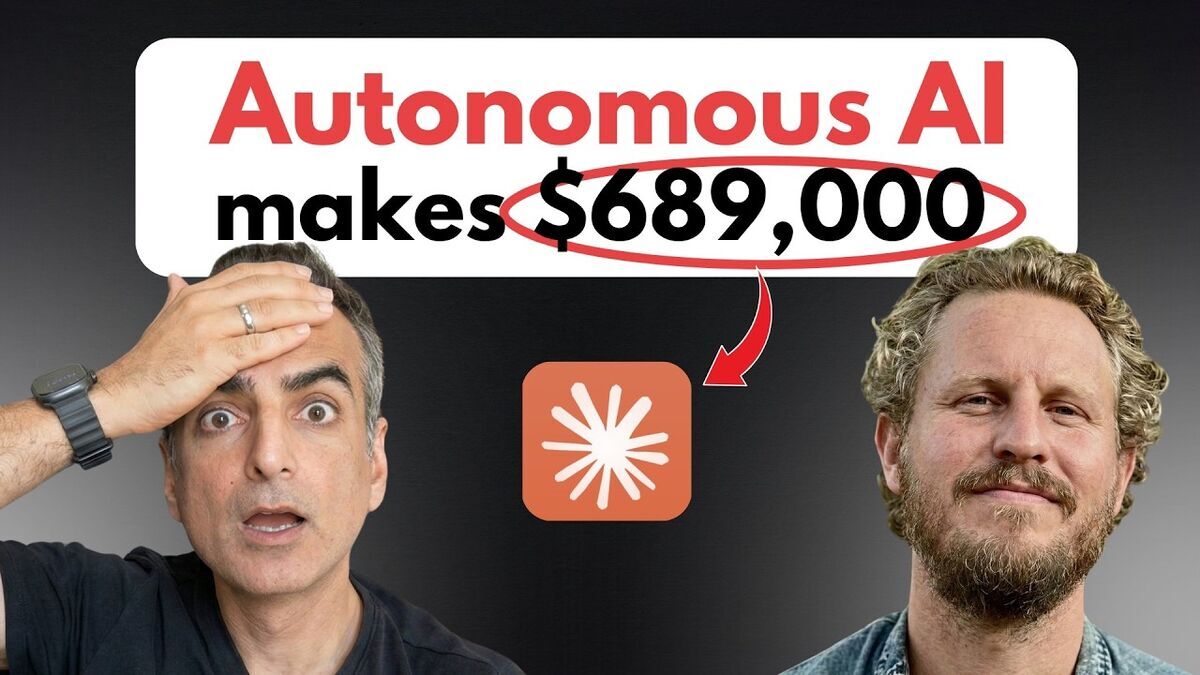
- ARR: Approaching $10M
- Customers: 7,600+ companies running on the platform
- Month-2 retention: 85%
- DAU/WAU: 65% (exceeds most consumer apps)
- Active users average 15 daily messages to their AI co-founder
Founder interview — $1.5M ARR, Zero Employees:
Source: Pulse2 · Antoine Buteau Analysis · SoloFounders Interview
Thinking
Moat 1: Extreme Self-Proof (Identity as Product)
Ben Cera's strongest competitive moat isn't technology — it's his own existence. He sells a "zero-employee AI-run company" product. If he hires employees, the core product claim collapses. This constraint looks like a limitation; it's actually the most powerful brand asset possible. Every LinkedIn post, every podcast appearance, every revenue milestone is live advertising. He doesn't need to buy traffic — he IS the traffic. This is "founder identity as product" taken to its logical extreme: he cannot hire not because he lacks capital, but because hiring destroys what he's selling.
Moat 2: Aligned Pricing — Only Profits When Customers Profit
The $49/month + 20% revenue share structure solves SaaS's most fundamental tension: platform incentives and user incentives are misaligned. Traditional SaaS charges monthly whether or not you succeed; the platform gains nothing extra when you grow dramatically. Polsia's structure means the platform only earns more when it actually builds more successful businesses. This creates a powerful trust signal in the sales process — "we only make more when you make more" faces almost zero resistance — and it filters toward customers with real growth potential.
Moat 3: The Fundraise as Highest-Possible-Stakes Product Demo
Running a $30M fundraise data room and investor follow-up through Polsia's AI agents was a product demonstration that no paid advertising budget can replicate. Every person who hears this story shares it, wonders "can this really work?", and considers signing up. The round didn't just bring capital — it was itself a multi-million-dollar content marketing event. The key insight: the most powerful product demos are real events, not staged marketing moments.
Moat 4: The 20% Philosophy — Competitive Advantage in the AI Era is Taste
Ben's core argument: competitive advantage in the AI era won't come from using AI (that quickly becomes table stakes), but from what you do with AI — taste, direction, creative judgment. This 20% is irreplaceable by AI itself because it requires a human value judgment system. For Polsia, this means the platform always needs a "Creative Director" to give agents direction — fully autonomous AI-run businesses without human direction don't exist, and this guarantees a built-in "irreplaceable role" for founders.
Action
Step 1: Find Your "Extreme Self-Proof" Opportunity
Ben refuses employees because his product is the zero-employee company. Does your product or service have a similar self-proof structure? If you sell a time management tool, do you yourself work 30-hour weeks? If you sell growth services, is your own business growing by the same methods? The founder's life is the cheapest possible advertising — but only when you genuinely live what you claim. When your existence is a walking proof-of-concept, you eliminate the single biggest friction in any sales conversation.
Step 2: Redesign Your Pricing to Align Your Incentives With Your Customer's
Most founders default to time-based billing or flat subscriptions. Consider adding a "success share" component: I only earn extra when you get results. This isn't just a pricing change — it's a trust statement. It makes sales easier, makes customers more invested in the product, and naturally filters toward customers with genuine growth potential rather than those spending fixed budgets with no accountability.
Step 3: Turn Your Highest-Value Deliverable Into a Media Event
Polsia used AI to run a $30M fundraise — then told the world, making it a media event. What's your equivalent? Using your product to accomplish something remarkable, then publicly narrating the experience, creates PR that money cannot buy. Critical caveat: the event must actually happen; a staged "marketing moment" lacks the credibility that makes this work.
Step 4: Install the "Night Shift Model" in Your Workflow
You don't need to be an AI company to use this pattern. Numerous tools can now execute tasks while you sleep — content distribution, email sequences, data cleaning, ad optimization, first-tier customer support filtering. Decompose your work: which tasks require your presence (creative decisions)? Which can be rule-executed or AI-executed in your absence? The higher the second ratio, the more scalable your operation becomes without proportional headcount.
Step 5: Lead With Your Industry's Biggest Criticism
"Polsia" = "AI Slop" reversed. Ben doesn't avoid the reality that AI tools are proliferating and output quality is inconsistent — he names his company after the problem and makes solving it his explicit mission. This is rare brand honesty: acknowledge the loudest criticism of your category, then declare your existence is the solution to it. When you can say this authentically, you win a segment of users' trust before the product conversation even begins.