AI Can Write Code for Anyone — So Why Is Lovable the One That Hit $500M ARR
Anton Osika and Fabian Hedin founded Lovable in Sweden, starting with open-source GPT-Engineer (52K GitHub stars). With 15 people they hit $10M ARR in 60 days. In 18 months: $200M ARR, $13.3B valuation — Europe's fastest-growing startup ever.
Process
The Beginning: A Swedish Engineer's Open-Source Experiment
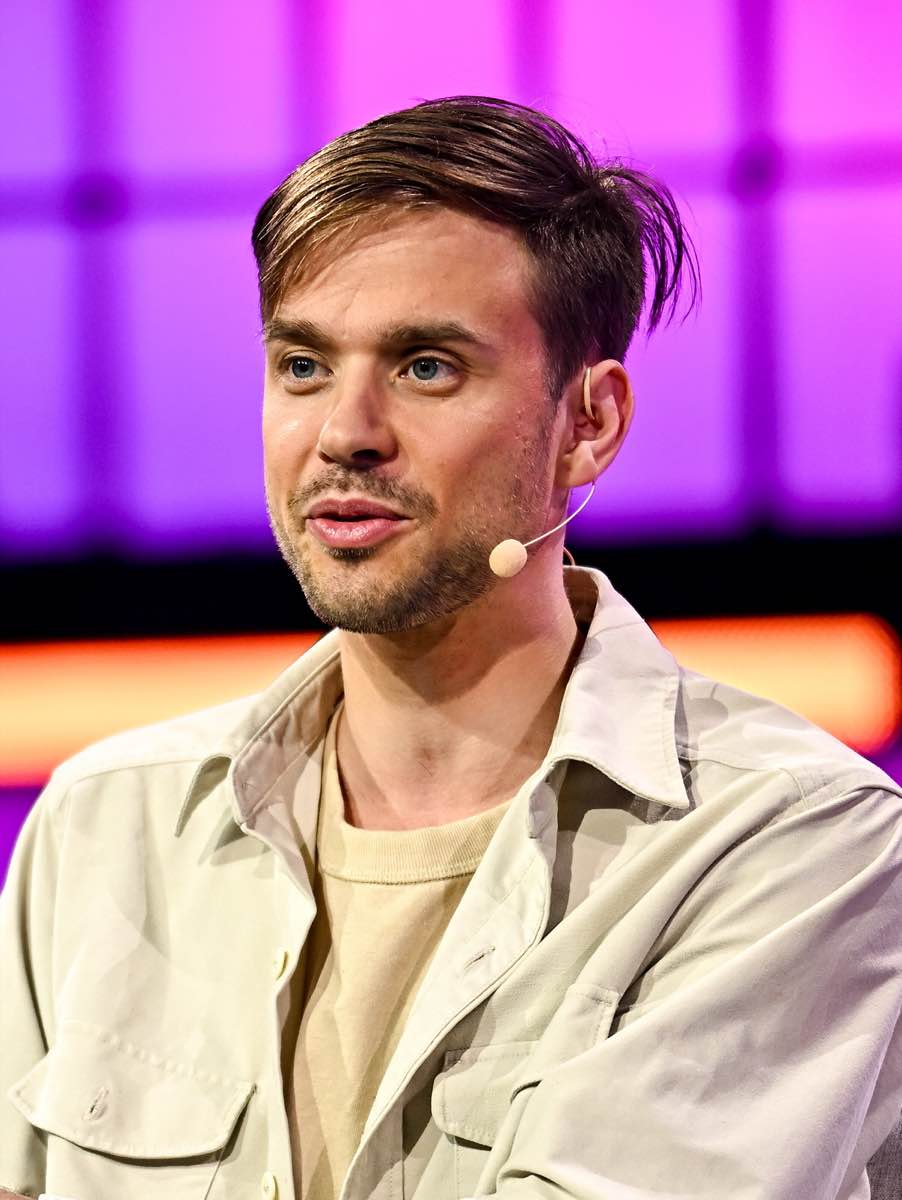
In 2023, Anton Osika sat in his Stockholm apartment and started what looked like an ordinary open-source project. He gave it a name so straightforward it was almost clunky: GPT-Engineer. The function was simple: users describe an app in natural language, AI generates the complete code.
This wasn't an original idea. 2023 was the year AI code generation exploded — GitHub Copilot, Cursor, Replit, and dozens of competitors were already fighting in this lane. But Anton made one decision that changed the entire competitive landscape: he made GPT-Engineer fully open-source. Not "partially open." Not "freemium." Not "free trial then pay." Completely open — anyone could download, modify, and use it.
The GitHub reaction exceeded everyone's expectations. Fifty-two thousand stars poured in. GPT-Engineer became one of the most-watched open-source AI projects of 2023. More importantly, those 52K stars weren't vanity metrics — they represented 52,000 early users actively testing the product, filing bug reports, and contributing improvement suggestions. Anton wasn't building a product alone — he had a free, full-time QA team.
Founder Backgrounds
Anton Osika (CEO), born 1990 in Sweden. BSc in Physics from Hong Kong University of Science and Technology, MSc in Engineering Physics from KTH Royal Institute of Technology. His career spans hardcore technical domains — he worked on CERN's ATLAS experiment, was an early engineer at Sana Labs ($500M valuation AI company), and co-founded Depict.ai (ML for e-commerce recommendations) as CTO. In 2023, his open-source GPT-Engineer project went viral. In 2025, he signed the Founders Pledge, committing to donate 50% of his net worth to meaningful causes.
Fabian Hedin (CTO), also Swedish. The two met in Stockholm's tech community. Hedin led the technical re-architecture of GPT-Engineer from an open-source CLI tool into Lovable's commercial visual platform. In 2025, he shared the KTH Innovation Award with Osika (judged by Spotify founder Daniel Ek).
Their combination is precisely complementary: Osika is the product visionary who knows what to build (validated by his track record at CERN, Sana Labs, and Depict.ai), while Hedin is the engineering architect who knows how to build it. This division of labor allowed them to achieve, with 15 people, what traditional companies couldn't do with 150.
Phase 1: From Open Source to Commercialization — GPT-Engineer Becomes Lovable
The open-source project gave Anton two of the scarcest startup resources: validated demand and a loyal early user base. When 52,000 developers voluntarily download and use your tool, you know they genuinely need it. But open-source has limits — you can only reach developers, not the vast population of people with ideas who can't write a line of code.
Anton realized that to turn this into a real business, he needed a commercial version — and a partner who could bring it to market. He found Fabian Hedin, another Swedish tech entrepreneur, who joined as CTO. Together they re-architected GPT-Engineer, adding a visual interface, one-click deployment, automatic error fixing — transforming it from a CLI tool for programmers into an AI app builder anyone could use.
In December 2024, they rebranded to Lovable and opened to the public. The name carried the product's core promise — "lovable," meaning the tool is so user-friendly it inspires genuine affection.
Phase 2: $10M ARR in 60 Days — With Only 15 People
Lovable's post-launch growth numbers silenced the entire SaaS industry.
First 4 weeks: $4M ARR. First 60 days: $10M ARR. Team size: 15 people.
Quick math: each employee contributed ~$667K in ARR. A typical mature SaaS company considers $100K-$200K per employee efficient. Lovable was 3-7× more capital-efficient than industry benchmarks. Not because they had superpowers — because the product itself was the growth engine. Every app built with Lovable became a living advertisement for Lovable. Every website or application generated by the platform could carry a "Built with Lovable" badge — a free, infinitely expanding acquisition channel.
More crucially, Lovable captured the cultural momentum of "vibe coding" — one of tech's hottest concepts in 2025, referring to the practice of describing intent to AI in natural language and letting AI generate the code. Lovable embedded itself into the definition of this concept: you don't need to know how to code. You just need to describe what you want. This positioning expanded their addressable market from tens of millions of developers to billions of people who can use language.
Phase 3: The Technical Moat — AI That Unsticks Itself
Lovable has one feature that stuns everyone who uses it: after generating code, the AI can find its own bugs, fix them, and redeploy — all without human intervention. Anton calls this capability "AI unsticking itself."
The traditional AI code generation workflow: user gives instruction → AI generates code → code throws errors → user debugs manually → user tells AI what's wrong → AI regenerates. The slowest step in this loop is "user debugs manually" — because the user might not be a programmer and can't even read the error messages. Lovable shattered this loop: AI auto-runs tests after generating code, auto-analyzes errors, auto-modifies code, and auto-redeploys. The user might perceive none of this — they just see "Building..." and then "Done, it's ready."
The significance of this technical breakthrough cannot be overstated. It transforms AI coding from "AI-assisted development" to "AI-autonomous development." The user shifts from "the person writing code" to "the person providing product requirements" — two fundamentally different types of people, with the latter being at least 100× more numerous.
Phase 4: Funding and Valuation — The Rocket from $1.8B to $13.3B
Lovable's fundraising velocity matched its revenue trajectory.
February 2025 — just over two months after launch: Series A, $200M at a $1.8B valuation, led by Accel. At this point Lovable's ARR was roughly $10M-$15M — meaning investors were willing to bet at over 100× ARR. In traditional SaaS investing logic, this is insane (10-15× ARR is normal). But in this AI wave, Accel was betting that Lovable could become the next billion-user product.
The bet paid off. By November 2025, Lovable's ARR reached $200M with nearly 8 million users. December 2025: Series B, $330M at a $6.6B valuation. CapitalG (Google's investment arm) and Menlo Ventures led the round, with participation from Khosla Ventures, Salesforce Ventures, and Databricks Ventures.
Growth didn't stop there: by May 2026, ARR hit $500M — faster than OpenAI, Cursor, Wiz, or any other software company in history reached $100M ARR, then doubling to $200M within four months, then doubling again toward $500M. Right after, the company closed another $400M round, jumping the valuation to $13.3B. Anton Osika and co-founder Fabian Hedin — two Swedish engineers who were posting open-source projects on GitHub just two years earlier — each became worth roughly $1.6B, among Europe's youngest self-made billionaires in history.
More notably, Lovable shattered the narrative that "Europe can't produce real AI companies." Before Lovable, virtually all AI unicorns clustered in Silicon Valley. Lovable proved: in the era of open-source + AI, geography is no longer a moat — the community is wherever the company is.
But the number has its critics. ARR is self-reported and unaudited; a $13.3B valuation implies roughly 50× ARR, which some call "aggressive." More worryingly, multiple traffic-analytics firms (Barclays, Luminix) found Lovable's website traffic dropped sharply after summer 2025, with one report citing a 76% drop in AI-coding-tool traffic industry-wide over 12 weeks in spring 2026 — a window in which Lovable's own growth curve swung from strongly positive to negative. The company has never published retention numbers: whether non-technical users who "ship one project and leave" churn faster than sticky professional-developer subscriptions (Cursor, Cognition) remains an open question. A February 2026 security incident also exposed data for 18,697 users. None of this erases what Lovable built — but it's a reason to read this as an industry case study to learn from, not a template guaranteed to work if copied.
Phase 4.5: Why Lovable — Not Cursor, v0, Bolt, or Replit?
This is the question worth dissecting most: since 2023, at least a dozen tools have let you "write code with AI" — Cursor, GitHub Copilot, Vercel's v0, Bolt.new, Replit Agent — each backed by well-funded companies or well-known teams. Why did the one that hit $500M ARR grow out of an open-source project in a Stockholm apartment?
Difference 1: A completely different target user. Cursor is a VS Code fork — fundamentally an efficiency tool for engineers who already know how to code, with no visual preview, no one-click deploy, and enterprise dev teams as buyers. Lovable did the opposite: it openly set out to serve "the 99% of people who can't code." This isn't competing in the same market — it's sidestepping the crowded lane entirely and cutting into an underserved audience 100× the size.
Difference 2: Complete applications, not code snippets. Vercel's v0 only generates frontend components — no backend, no database, no deployment. Bolt.new supports more frameworks but leaves backend and database wiring (Supabase/Firebase) to the user, and deployment isn't as smooth. Lovable packaged "frontend (React+TypeScript) + backend + database (Supabase: Postgres, auth, storage, edge functions, row-level security) + one-click deploy to a custom domain" into a single conversational loop — the user never needs to understand any layer of the technical stack.
Difference 3: A built-in viral loop that neither Cursor nor v0 has. Lovable has a "Remix" feature — any public project can be one-click copied and built upon by anyone with the link. That's a sharing loop architected into the product itself, not a marketing afterthought. The team also actively amplifies "a non-programmer shipped this" user stories, content that spreads on its own.
Difference 4: Claiming a new term before anyone else, then welding itself to it. In February 2025, AI researcher Andrej Karpathy coined "vibe coding." Lovable turned itself into the term's synonym almost overnight — when media and users discuss "vibe coding," Lovable is the first product that comes to mind. That's a free cognitive dividend that Cursor and v0 never claimed.
The one-sentence summary: once AI drove the cost of "writing code" toward free, the real competition stopped being technical and became four older business questions — who do you serve, how complete is the product, how does it spread itself, and who owns the mental category. Lovable didn't win on AI. It won on positioning and distribution.
Phase 5: The Lovable Doctrine — Knowing What to Build Matters More Than Knowing How
In his Lenny's Newsletter interview, Anton said something that got widely quoted: "The biggest bottleneck is shifting from who can build to who knows what to build."
This is the core of Lovable's business philosophy. When AI drives the cost of code generation toward zero, scarcity is no longer technical ability — it's product taste, user understanding, and the ability to define problems clearly. A product manager who can't code but deeply understands user pain points is more valuable in this era than an engineer who can code but doesn't understand users.
Anton's advice for anyone wanting to succeed in this era is simple: "Spend a full week using AI tools to solve a real problem end-to-end. Become a top 1% user of AI tools." He's not giving motivational fluff. He did exactly this — two years ago, used AI to build GPT-Engineer. Two years ago, used AI to build Lovable. Then watched the world reorganize around his product.
Sources: Wikipedia · Lenny's Newsletter · TechCrunch · Forbes · Lovable.dev
Thinking
Lovable's case isn't just another "AI startup success story." It's a strategic textbook on sequence, leverage, and positioning — especially on what actually becomes a moat once the technical barrier disappears.
Layer 1: Open-source isn't charity — it's the highest-ROI market validation. Anton open-sourced GPT-Engineer fully. On the surface, "giving it to the community for free." In reality, he traded code for three things via 52,000 GitHub stars: ① Demand validation — if nobody downloads, the direction is wrong. ② Free QA team — 52,000 users testing, filing bugs, suggesting improvements. ③ Brand equity — when Lovable commercialized, those 52K stars were the most powerful credential possible. In the AI era, open-source community is the most underrated GTM strategy. It's not "free first, figure out monetization later." It's "build trust and user base first, sell a better paid version second."
Layer 2: 15 people, $10M ARR — not because the tech is magical, but because the product IS the growth engine. Every app generated by Lovable can carry a "Built with Lovable" badge — free, infinite, self-replicating acquisition. Traditional SaaS needs sales and marketing teams to "find" customers. Lovable lets customers become the acquisition channel through using the product. This isn't growth hacking — it's growth baked into the product's DNA.
Layer 3: Once "can you write code" stops being the barrier, "who you serve, how complete the product is, how it spreads, and which mental category you own" becomes the new barrier. Cursor, v0, and Bolt.new are none of them short on technical talent or funding. Lovable didn't grow fastest because its code was better — it chose an audience nobody else was seriously serving (people who can't code), built the whole loop nobody else completed (frontend + backend + database + deploy), engineered a sharing mechanism nobody else had (one-click Remix), and claimed a new term first (vibe coding) before anyone else. AI erased the barrier of "writing code," but it didn't erase two older barriers — product judgment and distribution ability. Those are exactly where Lovable out-executed its rivals.
Layer 4: Anton's "bottleneck shift" thesis is the most important business insight of this era. When AI drives the cost of "making" toward zero, scarcity shifts from "who can build" to "who knows what to build." This means product managers, designers, and domain experts who deeply understand user pain — their value is skyrocketing. Pure execution engineers see their value declining. Anton himself is the best example: he wasn't the most brilliant AI engineer (GPT-Engineer's code wasn't technically superior to competitors). He was simply earlier than others at understanding what this product should look like, how it should be priced, and how to sell it to non-programmers.
Action
If you want to learn from Lovable's path, here's a five-step actionable framework:
1. Validate with open-source before building a commercial product. Before spending months on a commercial SaaS, build a minimal open-source tool. Ship it on GitHub. If you can't get 1,000 stars in 6 months — pivot. If you get 10,000 stars — you have something. Open-source is the lowest-cost, highest-leverage market validation available today.
2. Don't out-engineer a crowded lane — find an audience nobody's serving seriously. If your space already has a dozen similar competitors, don't ask "can I build this better?" Ask instead: "are all these tools serving the same people? Is there a group with real demand that everyone's ignoring because they're 'not technical enough'?"
3. Build the complete loop, not one piece of it. Most competitors solve one segment of the workflow (like generating frontend code alone). Look at your space: how many separate tools do users have to stitch together to finish one job? Packaging those steps into a single interaction is your differentiation.
4. Design growth and virality into the product itself — don't rely on a marketing team. "Built with Lovable" and one-click "Remix" weren't afterthought marketing tactics — they were architected into the product from day one. What auto-distribution mechanism can you embed in your product?
5. Claim a name for your category first, or attach yourself to a term that's about to take off. Lovable didn't invent AI coding, but it welded itself to "vibe coding" before anyone else. Is there a name forming in your category that nobody's claimed yet? Whoever attaches themselves to it first gets the cognitive dividend for free.
This isn't for you if: you just want to copy an "open-source-to-commercial" formula without actually solving a neglected audience's problem; or you're treating this case as a funding-path template — Lovable's $550M+ raised and its product playbook are two separate things. The former isn't replicable. The latter is what's actually worth learning here.